Spinal muscular atrophy with progressive myoclonic epilepsy
Última atualização 23 May 2022
Atende aos diretrizes editoriais
- BaixarBaixar
- Compartilhar
- Language
- Discussão
- Ask Patient
- Versão em Áudio
- Adicionar às fontes preferidas no Google
Spinal muscular atrophy with progressive myoclonic epilepsy (SMA-PME) is a neurological condition that begins in childhood. SMA-PME causes muscle weakness and wasting (atrophy) and a combination of seizures and uncontrollable muscle jerks (myoclonic epilepsy).
Descrição
Spinal muscular atrophy with progressive myoclonic epilepsy (SMA-PME) is a neurological condition that begins in childhood. SMA-PME causes muscle weakness and wasting (atrophy) and a combination of seizures and uncontrollable muscle jerks (myoclonic epilepsy).
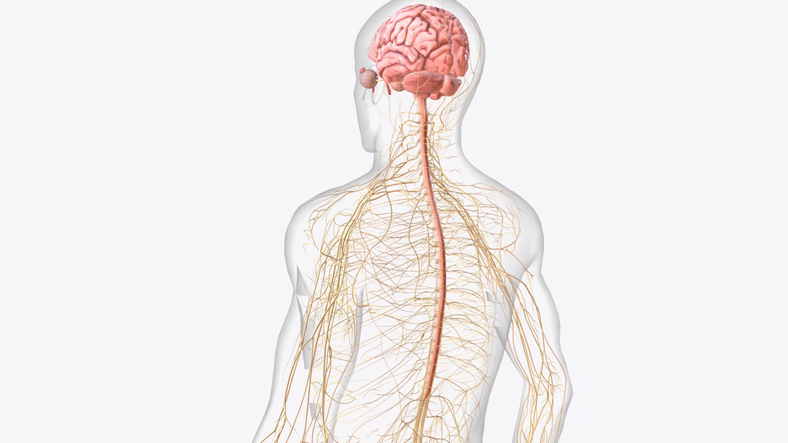
In individuals with SMA-PME, spinal muscular atrophy results from a loss of specialized nerve cells, called motor neurons, in the spinal cord and the part of the brain that is connected to the spinal cord (the brainstem). After a few years of normal development, affected children begin experiencing muscle weakness and atrophy in the lower limbs, causing difficulty walking and frequent falls. The muscles in the upper limbs are later affected, and soon the muscle weakness and atrophy spreads throughout the body. Once weakness reaches the muscles used for breathing and swallowing, affected individuals develop life-threatening breathing problems and increased susceptibility to pneumonia.
A few years after the muscle weakness begins, affected individuals start to experience recurrent seizures (epilepsy). Most people with SMA-PME have a variety of seizure types. In addition to myoclonic epilepsy, they may have generalized tonic-clonic seizures (also known as grand mal seizures), which cause muscle rigidity, convulsions, and loss of consciousness. Affected individuals can also have absence seizures, which cause loss of consciousness for a short period that may or may not be accompanied by muscle jerks. In SMA-PME, seizures often increase in frequency over time and are usually not well-controlled with medication. Individuals with SMA-PME may also have episodes of rhythmic shaking (tremors), usually in the hands; these tremors are not thought to be related to epilepsy. Some people with SMA-PME develop hearing loss caused by nerve damage in the inner ear (sensorineural hearing loss).
Individuals with SMA-PME have a shortened lifespan; they generally live into late childhood or early adulthood. Near the end of their lives, affected individuals often have limited mobility, difficulty swallowing, and decline in cognitive functioning. The cause of death is often respiratory failure or pneumonia.
Padrões de herança
The source lists the following possible inheritance patterns: Autosomal recessive. More than one pattern can apply in different cases.
Related genes
Other names
Hereditary myoclonus with progressive distal muscular atrophy
Jankovic-Rivera syndrome
SMA-PME
SMAPME
Related patient information and medicines

Patient information leaflet
Planejando engravidar
The aim is to plan ahead to reduce the risk of nenhuma harm to the para bebê and to reduce the risk of gravidez complications. Women on regular medication, or who have a long-term medical condition, may need to seek medical advice to discuss any changes which may need ... Hereditary conditions People with a history of a condition that runs in families may.
Patient information leaflet
Doença do neurônio motor
Doença do neurônio motor (DNM) is a neurological condition causes a progressive weakness e wasting of many of the muscles in the body. There are various types of motor neurone disease. This leaflet is mainly about amyotrophic lateral sclerosis (ALS), which is the most common type of motor neurone disease. Although there is no cure for motor neurone.

Patient information leaflet
Desmame guiado pelo bebê
You know your baby better than anyone but ther... Babies who can coordinate eyes, hands and mouth in order to look at food, pick it up and put it in their mouths are more likely to be ready for weaning. Read our feature on Spinal Muscular Atrophy Spinal muscular atrophy to see the muscular milestones your baby should go through. A baby who is.

Patient information leaflet
Fraqueza muscular
Fraqueza muscular is a common complaint but the word weakness can mean different things to different people - including tiredness, reduced power and failure to work at all. Spine-related conditions : When nerves are damaged as they emerge from the coluna (such as when people 'slip' a disc Slipped disc in the lower back or neck), weakness can result..

Patient information leaflet
Distrofia muscular
Distrofia muscular é um inherited (genetic) disorder causing muscle weakness. There are different types of muscular dystrophy, which vary as to how severe they are, ranging from very mild to severe. If muscular dystrophy is suspected, tests can help to make an accurate diagnosis. What is muscular dystrophy. Muscular dystrophy (MD) is the name.

Patient information leaflet
Espinha bífida
Espinha bífida é caused by an abnormal development of the spine and spinal cord which leaves a gap in the spine. Spina bifida can vary from causing no problems to causing severe physical disability. Spina bifida is usually diagnosed at the time of the routine pregnancy ultrasound scan. Treatment of spina bifida may not be needed or may include.
Leitura adicional e referências
- Spinal muscular atrophy with progressive myoclonic epilepsy; MedlinePlus, National Library of Medicine.
- Dyment DA, Sell E, Vanstone MR, Smith AC, Garandeau D, Garcia V, Carpentier S, Le Trionnaire E, Sabourdy F, Beaulieu CL, Schwartzentruber JA, McMillan HJ; FORGE Canada Consortium; Majewski J, Bulman DE, Levade T, Boycott KM. Evidence for clinical, genetic and biochemical variability in spinal muscular atrophy with progressive myoclonic epilepsy. Clin Genet. 2014 Dec;86(6):558-63. doi: 10.1111/cge.12307. Epub 2013 Nov 21.
- Striano P, Boccella P, Sarappa C, Striano S. Spinal muscular atrophy and progressive myoclonic epilepsy: one case report and characteristics of the epileptic syndrome. Seizure. 2004 Dec;13(8):582-6. doi: 10.1016/j.seizure.2004.01.008.
- Yu FPS, Amintas S, Levade T, Medin JA. Acid ceramidase deficiency: Farber disease and SMA-PME. Orphanet J Rare Dis. 2018 Jul 20;13(1):121. doi: 10.1186/s13023-018-0845-z.
- Zhou J, Tawk M, Tiziano FD, Veillet J, Bayes M, Nolent F, Garcia V, Servidei S, Bertini E, Castro-Giner F, Renda Y, Carpentier S, Andrieu-Abadie N, Gut I, Levade T, Topaloglu H, Melki J. Spinal muscular atrophy associated with progressive myoclonic epilepsy is caused by mutations in ASAH1. Am J Hum Genet. 2012 Jul 13;91(1):5-14. doi: 10.1016/j.ajhg.2012.05.001. Epub 2012 Jun 14.
Compartilhe seus pensamentos ou experiências com outros em nosso comunidades de pacientes.
Acesso simples a tratamentos confiáveis e serviços de saúde online.
Common conditions
Get help with common conditions through the NHS, without a GP appointment.
 Sinusite aguda
 Amigdalite bacteriana
 Impetigo
 Mordidas de insetos
 Herpes zosterInfecção do trato urinário (ITUs)
Inscreva-se no boletim informativo do Patient
Sua dose semanal de conselhos de saúde claros e confiáveis - escritos para ajudá-lo a se sentir informado, confiante e no controle.
Ao se inscrever, você aceita nossos Política de Privacidade. Você pode cancelar a inscrição a qualquer momento. Nunca vendemos seus dados.