MYH9-related disorder
Última atualização 22 de agosto de 2023
Atende aos diretrizes editoriais
- BaixarBaixar
- Compartilhar
- Language
- Discussão
- Versão em Áudio
- Adicionar às fontes preferidas no Google
MYH9-related disorder is a condition that can have many signs and symptoms, including bleeding problems, hearing loss, kidney (renal) disease, and clouding of the lens of the eyes (cataracts).
Descrição
MYH9-related disorder is a condition that can have many signs and symptoms, including bleeding problems, hearing loss, kidney (renal) disease, and clouding of the lens of the eyes (cataracts).
The bleeding problems in people with MYH9-related disorder are due to thrombocytopenia. Thrombocytopenia is a reduced level of circulating platelets, which are small cells that normally assist with blood clotting. People with MYH9-related disorder typically experience easy bruising, and affected women have excessive bleeding during menstruation (menorrhagia). The platelets in people with MYH9-related disorder are larger than normal. These enlarged platelets have difficulty moving into tiny blood vessels like capillaries. As a result, the platelet level is even lower in these small vessels, further impairing clotting.
Some people with MYH9-related disorder develop hearing loss caused by abnormalities of the inner ear (sensorineural hearing loss). Hearing loss may be present from birth or can develop anytime into late adulthood.
An estimated 30 to 70 percent of people with MYH9-related disorder develop renal disease, usually beginning in early adulthood. The first sign of renal disease in MYH9-related disorder is typically protein or blood in the urine. Renal disease in these individuals particularly affects structures called glomeruli, which are clusters of tiny blood vessels that help filter waste products from the blood. The resulting damage to the kidneys can lead to kidney failure and end-stage renal disease (ESRD).
Some affected individuals develop cataracts in early adulthood that worsen over time.
Not everyone with MYH9-related disorder has all of the major features. All individuals with MYH9-related disorder have thrombocytopenia and enlarged platelets. Most commonly, affected individuals will also have hearing loss and renal disease. Cataracts are the least common sign of this disorder.
MYH9-related disorder was previously thought to be four separate disorders: May-Hegglin anomaly, Epstein syndrome, Fechtner syndrome, and Sebastian syndrome. All of these disorders involved thrombocytopenia and enlarged platelets and were distinguished by some combination of hearing loss, renal disease, and cataracts. When it was discovered that these four conditions all had the same genetic cause, they were combined and renamed MYH9-related disorder.
Padrões de herança
The source lists the following possible inheritance patterns: Autosomal dominant. More than one pattern can apply in different cases.
Related genes
Other names
Autosomal dominant MYH9 spectrum disorders
MYH9-related macrothrombocytopenias
MYH9RD
Related patient information and medicines

Patient information leaflet
Somatização e transtornos funcionais
Somatização is no longer a commonly used term. What used to be considered somatising symptoms ou somatoform disorders are now more commonly termed "functional disorders" ou "functional symptoms". Terminology can be confusing; lots of different terms are used and some terms have been changed in recent years. Somatização is a word that means that.
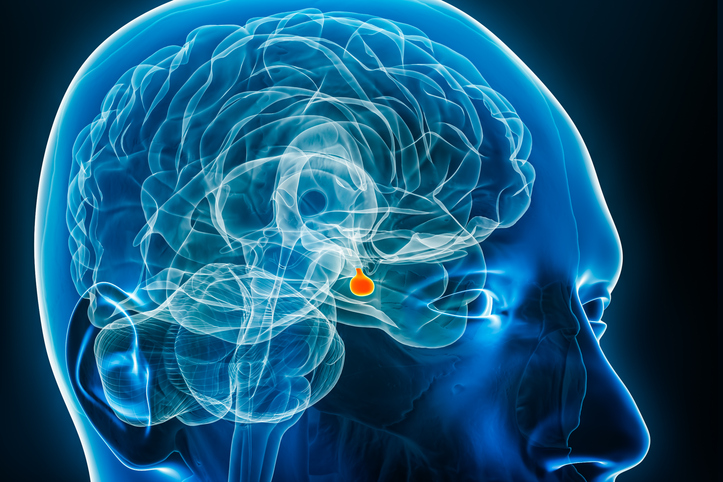
Patient information leaflet
Distúrbios da glândula pituitária
This leaflet gives a brief overview of the glândula pituitária and the hormones it makes. The pituitary gland is found at the base of the brain and is 'pea-sized'. The pituitary gland is an overall controller of a number of other glands in the body, overseeing the function of these organs through hormones. Some of the pituitary gland disorders.
Patient information leaflet
Transtorno neurológico funcional
O termo functional neurological disorder encompasses a wide range of symptoms that are often very debilitating. Doctors tend to categorise these symptoms according to their medical frame of reference, but often fail. Functional neurological disorders have no formal way of being diagnosed by doctors. They can, however, be treated. What are.

Patient information leaflet
Alcohol use disorder
For some, alcohol is something that they enjoy in moderation. Other people drink alcohol at levels that are likely to lead to physical or mental health problems. Some people can find it very... What is alcohol use disorder. Alcohol use disorder means drinking alcohol in a way that causes harm. If you or a family member has alcohol use disorder.
Patient information leaflet
Transtornos psicossomáticos
Psychosomatic means mind (psyche) and body (soma). A psychosomatic disorder is a doença which involves both mind and body. What are psychosomatic disorders. Psychosomatic disorders are conditions which cause troublesome, distressing physical symptoms, caused by the autonomic nervous system not functioning correctly. The autonomic nervous system.

Patient information leaflet
Distúrbios do espectro de hipermobilidade
Distúrbios do espectro de hipermobilidade include all people with what used to be called joint hypermobility syndrome, and before that benign joint hypermobility syndrome. Anyone who has symptoms... Distúrbios do espectro de hipermobilidade (HSDs) are a group of conditions that involve joint hypermobility (increased range of motion in the joints, sometimes referred.
Leitura adicional e referências
- MYH9-related disorder; MedlinePlus, National Library of Medicine.
- Althaus K, Greinacher A. MYH9-related platelet disorders. Semin Thromb Hemost. 2009 Mar;35(2):189-203. doi: 10.1055/s-0029-1220327. Epub 2009 Apr 30.
- Kunishima S, Saito H. Advances in the understanding of MYH9 disorders. Curr Opin Hematol. 2010 Sep;17(5):405-10. doi: 10.1097/MOH.0b013e32833c069c.
- Savoia A, Pecci A. MYH9-Related Disease. 2008 Nov 20 [updated 2021 Feb 18]. In: Adam MP, Bick S, Mirzaa GM, Wallace SE, Amemiya A, editors. GeneReviews(R) [Internet]. Seattle (WA): University of Washington, Seattle; 1993-2026. Available from http://www.ncbi.nlm.nih.gov/books/NBK2689/
- Sekine T, Konno M, Sasaki S, Moritani S, Miura T, Wong WS, Nishio H, Nishiguchi T, Ohuchi MY, Tsuchiya S, Matsuyama T, Kanegane H, Ida K, Miura K, Harita Y, Hattori M, Horita S, Igarashi T, Saito H, Kunishima S. Patients with Epstein-Fechtner syndromes owing to MYH9 R702 mutations develop progressive proteinuric renal disease. Kidney Int. 2010 Jul;78(2):207-14. doi: 10.1038/ki.2010.21. Epub 2010 Mar 3.
Participe da conversa
Compartilhe seus pensamentos ou experiências com outros em nosso comunidades de pacientes.

Pergunte, compartilhe, conecte-se.
Navegue por discussões, faça perguntas e compartilhe experiências em centenas de tópicos de saúde.
Inscreva-se no boletim informativo do Patient
Sua dose semanal de conselhos de saúde claros e confiáveis - escritos para ajudá-lo a se sentir informado, confiante e no controle.
Ao se inscrever, você aceita nossos Política de Privacidade. Você pode cancelar a inscrição a qualquer momento. Nunca vendemos seus dados.