X-linked Kx blood group antigen, Kell and VPS13A binding protein
Última atualização 1 Aug 2022
Atende aos diretrizes editoriais
- BaixarBaixar
- Compartilhar
- Language
- Discussão
- Ask Patient
- Versão em Áudio
- Adicionar às fontes preferidas no Google
A XK gene provides instructions for producing a protein that is found in various tissues of the body, particularly the brain, muscle, and heart. This protein is also present on the surface of red blood cells and carries a molecule known as the Kx blood group antigen. Blood group antigens are found on the surface of red blood cells and determine a number of blood types. When blood cells with unfamiliar antigens enter the bloodstream, the body's immune system recognizes the cells as foreign and may trigger an immune reaction that destroys the foreign blood cells.
Escolhas de vídeos para GenesBiblioteca de vídeos
Normal function
A XK gene provides instructions for producing a protein that is found in various tissues of the body, particularly the brain, muscle, and heart. This protein is also present on the surface of red blood cells and carries a molecule known as the Kx blood group antigen. Blood group antigens are found on the surface of red blood cells and determine a number of blood types. When blood cells with unfamiliar antigens enter the bloodstream, the body's immune system recognizes the cells as foreign and may trigger an immune reaction that destroys the foreign blood cells.
The function of the XK protein is unclear; researchers believe that it might play a role in transporting substances into and out of cells. On red blood cells, the XK protein attaches to another blood group protein, the Kell protein. The function of this blood group complex is unknown.
Conditions referring to this gene or chromosome
Other names
Kell blood group precursor (McLeod phenotype)
KX
Kx antigen
membrane transport protein XK
X-linked Kx blood group (McLeod syndrome)
X1k
XK, Kell blood group complex subunit (McLeod syndrome)
XK-related protein 1
XK_HUMAN
XKR1
Related patient information and medicines
Patient information leaflet
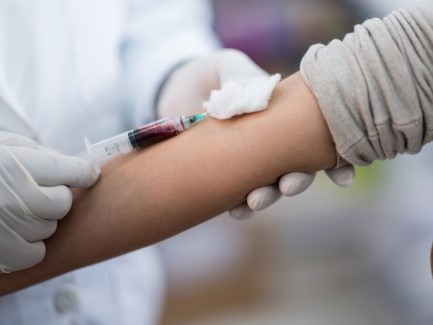
Exames de sangue
The main reasons to know your grupo sanguíneo are if you need to have a blood transfusion or if you are pregnant. You cannot request a blood test just to know your blood group on the NHS. What is blood made up of. Blood cells These can be seen under a microscope and make up about 40% of the blood's volume. Blood cells are made in the bone marrow by.

Patient information leaflet
O sistema imunológico
This leaflet gives a brief overview of the sistema imunológico and how it works. In autoimmune diseases the body is unable to tell what is its own and what is foreign, so it attacks itself. Autoimmune diseases can attack any part of the body - eg, type 1 diabetes (pancreas), multiple sclerosis (brain and nerves), systemic lupus erythematosus (skin and.

Patient information leaflet
Grupos e tipos sanguíneos
ABO and rhesus are both types of antigens found on the surface of red blood cells. There are lots of other types but these are the most important. The main reasons to know your blood group are if you need to have a blood transfusion or if you are pregnant. What is a blood group. Red blood cells (erythrocytes) já certain proteins on their.

Patient information leaflet
Hemofilia
Hemofilia is a rare bleeding disorder that affects your ability to make a clot. The blood contains substances called clotting factors that work with platelets to form a clot. When you injure yourself the clot stops you bleeding. Haemophilia is a condition where there is a deficiency of clotting factors, so people with this condition usually have.

Patient information leaflet
Teste de Coombs
A Coombs test é a type of blood test. It is named after the person who invented it, Dr Robin Coombs. There are two types of Coombs test. What is a Coombs test. However, in some conditions, known as autoimmune diseases, your own body can destroy your own red blood cells. Transfusion reaction Human sangue é grouped by the different types of.
Patient information leaflet
Testes de anticorpos e antígenos
Antibodies are part of the body's defence (immune) system. Antigens are the particles that cause the body to create an antibody. Tests to detect antibodies and antigens help to identify certain infections and some other medical conditions. What is the difference between antibodies and antigens. Antibodies are small proteins that circulate in the.
Leitura adicional e referências
- X-linked Kx blood group antigen, Kell and VPS13A binding protein; MedlinePlus, National Library of Medicine.
- Claperon A, Hattab C, Armand V, Trottier S, Bertrand O, Ouimet T. The Kell and XK proteins of the Kell blood group are not co-expressed in the central nervous system. Brain Res. 2007 May 25;1147:12-24. doi: 10.1016/j.brainres.2007.01.106. Epub 2007 Feb 2.
- Danek A, Rubio JP, Rampoldi L, Ho M, Dobson-Stone C, Tison F, Symmans WA, Oechsner M, Kalckreuth W, Watt JM, Corbett AJ, Hamdalla HH, Marshall AG, Sutton I, Dotti MT, Malandrini A, Walker RH, Daniels G, Monaco AP. McLeod neuroacanthocytosis: genotype and phenotype. Ann Neurol. 2001 Dec;50(6):755-64. doi: 10.1002/ana.10035.
- Lee S. The value of DNA analysis for antigens of the Kell and Kx blood group systems. Transfusion. 2007 Jul;47(1 Suppl):32S-9S. doi: 10.1111/j.1537-2995.2007.01308.x. No abstract available.
- Russo DC, Lee S, Reid ME, Redman CM. Point mutations causing the McLeod phenotype. Transfusion. 2002 Mar;42(3):287-93. doi: 10.1046/j.1537-2995.2002.00049.x.
Compartilhe seus pensamentos ou experiências com outros em nosso comunidades de pacientes.
Acesso simples a tratamentos confiáveis e serviços de saúde online.
Common conditions
Get help with common conditions through the NHS, without a GP appointment.
 Sinusite aguda
 Amigdalite bacteriana
 Impetigo
 Mordidas de insetos
 Herpes zosterInfecção do trato urinário (ITUs)
Inscreva-se no boletim informativo do Patient
Sua dose semanal de conselhos de saúde claros e confiáveis - escritos para ajudá-lo a se sentir informado, confiante e no controle.
Ao se inscrever, você aceita nossos Política de Privacidade. Você pode cancelar a inscrição a qualquer momento. Nunca vendemos seus dados.