PRICKLE1-related progressive myoclonus epilepsy with ataxia
Última atualização 18 de ago de 2020
Atende aos diretrizes editoriais
- BaixarBaixar
- Compartilhar
- Language
- Discussão
- Ask Patient
- Versão em Áudio
- Adicionar às fontes preferidas no Google
PRICKLE1-related progressive myoclonus epilepsy with ataxia is a rare inherited condition characterised by recurrent seizures (epilepsy) and problems with movement. The signs and symptoms of this disorder usually begin between the ages of 5 and 10.
Escolhas de vídeos para Condições genéticasBiblioteca de vídeos
Descrição
PRICKLE1-related progressive myoclonus epilepsy with ataxia is a rare inherited condition characterised by recurrent seizures (epilepsy) and problems with movement. The signs and symptoms of this disorder usually begin between the ages of 5 and 10.
Problems with balance and coordination (ataxia) are usually the first symptoms of PRICKLE1-related progressive myoclonus epilepsy with ataxia. Affected children often have trouble walking. Their gait is unbalanced and wide-based, and they may fall frequently. Later, children with this condition develop episodes of involuntary muscle jerking or twitching (myoclonus), which cause additional problems with movement. Myoclonus can also affect muscles in the face, leading to difficulty swallowing and slurred speech (dysarthria).
Beginning later in childhood, some affected individuals develop tonic-clonic or grand mal seizures. These seizures involve a loss of consciousness, muscle rigidity, and convulsions. They often occur at night (nocturnally) while the person is sleeping.
PRICKLE1-related progressive myoclonus epilepsy with ataxia does not seem to affect intellectual ability. Although a few affected individuals have died in childhood, many have lived into adulthood.
Padrões de herança
The source lists the following possible inheritance patterns: Autosomal dominant; Autosomal recessive. More than one pattern can apply in different cases.
Related genes
Other names
EPM1B
PME with ataxia
PRICKLE1-related progressive myoclonic epilepsy with ataxia
Progressive myoclonic epilepsy 1B
Progressive myoclonus epilepsy with ataxia
Related patient information and medicines

Patient information leaflet
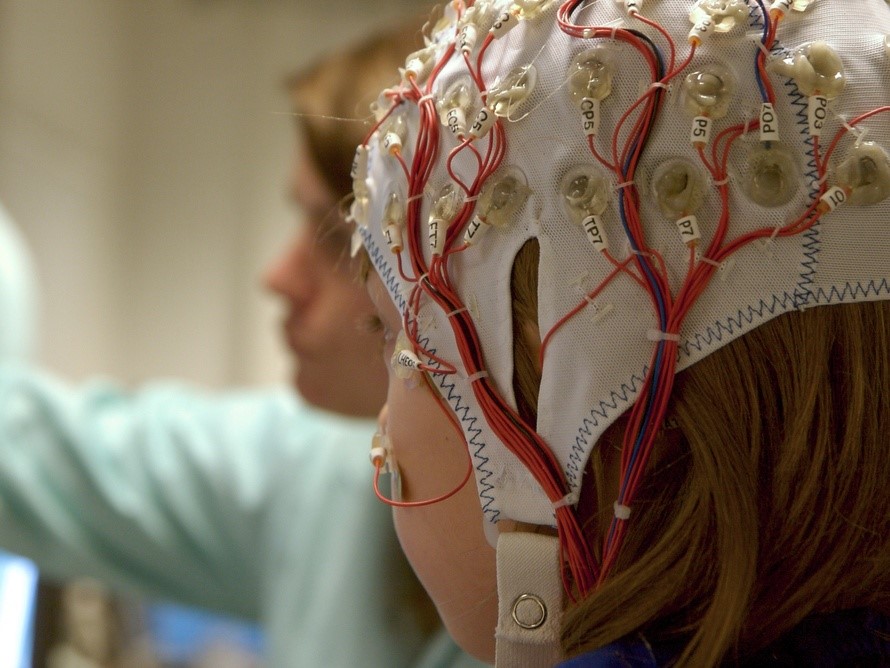
Eletroencefalograma
Uma electroencephalograph is a useful test to help diagnose epilepsy. It records the electrical activity of the brain. However, a normal result does not rule out epilepsy. Note : the information below is a general guide only. The arrangements, and the way tests are performed, may vary between different hospitals. Always follow the instructions.

Patient information leaflet
Epilepsia
About 1 in 30 people in the UK develop epilepsy at some stage in their lives. However, epilepsy can begin at any age. What is epilepsy. Epilepsy is a long-lasting brain condition that causes people to have repeated seizures. It can cause different symptoms, from someone becoming unconscious and shaking, to someone behaving unusually for a short.

Patient information leaflet
Vivendo com epilepsia
This leaflet is a brief introduction to the practical considerations of living with epilepsy. For more general information about epilepsy and seizures, see the separate leaflets called Epilepsy and Seizures Epilepsy and Types of Epilepsy and Seizures Types of seizures. Dr Sarah Jarvis , 4th June 2021 Updated guidance on medications for epilepsy.
Patient information leaflet
Tipos de convulsões
About 1 in 20 people have a seizure at some time in t... It may be the only one that occurs. The definition of epilepsy is more than one seizure. For more information, see the separate leaflet called Epilepsy and seizures Epilepsy. ServiceUpsellPlaceholder Types of epileptic seizures Seizures are divided into two main types - generalised and focal.

Patient information leaflet
Medicação para epilepsia e efeitos colaterais
Medicines that are used to treat epilepsy work by stabilising the electrical activity of the brain. There are different types of epilepsy. There are separate leaflets on Epilepsy and Seizures , Types of Epilepsy and Seizures , Epilepsy and Contraception , Epilepsy and Planning Pregnancy. Epilepsy medication Epilepsy cannot be cured with.

Patient information leaflet
Epilepsia e contracepção
It's best to seek advice from a doctor or epilepsy nurse when you are planning to start using contraception or when considering starting a family. Some anti-epilepsy medicines have a side-effect of increasing the speed in which some contraceptive pills and injections are processed by the liver. These medicines are known as liver enzyme inducers,.
Leitura adicional e referências
- PRICKLE1-related progressive myoclonus epilepsy with ataxia; MedlinePlus, National Library of Medicine.
- Bassuk AG, Wallace RH, Buhr A, Buller AR, Afawi Z, Shimojo M, Miyata S, Chen S, Gonzalez-Alegre P, Griesbach HL, Wu S, Nashelsky M, Vladar EK, Antic D, Ferguson PJ, Cirak S, Voit T, Scott MP, Axelrod JD, Gurnett C, Daoud AS, Kivity S, Neufeld MY, Mazarib A, Straussberg R, Walid S, Korczyn AD, Slusarski DC, Berkovic SF, El-Shanti HI. A homozygous mutation in human PRICKLE1 causes an autosomal-recessive progressive myoclonus epilepsy-ataxia syndrome. Am J Hum Genet. 2008 Nov;83(5):572-81. doi: 10.1016/j.ajhg.2008.10.003. Epub 2008 Oct 30.
- Berkovic SF, Mazarib A, Walid S, Neufeld MY, Manelis J, Nevo Y, Korczyn AD, Yin J, Xiong L, Pandolfo M, Mulley JC, Wallace RH. A new clinical and molecular form of Unverricht-Lundborg disease localized by homozygosity mapping. Brain. 2005 Mar;128(Pt 3):652-8. doi: 10.1093/brain/awh377. Epub 2005 Jan 5.
- El-Shanti H, Daoud A, Sadoon AA, Leal SM, Chen S, Lee K, Spiegel R. A distinct autosomal recessive ataxia maps to chromosome 12 in an inbred family from Jordan. Brain Dev. 2006 Jul;28(6):353-7. doi: 10.1016/j.braindev.2005.11.003. Epub 2006 Jan 10.
- Mastrangelo M, Caputi C, Esposito D, Leuzzi V. PRICKLE1-Related Disorders. 2009 Sep 8 [updated 2022 Apr 21]. In: Adam MP, Bick S, Mirzaa GM, Wallace SE, Amemiya A, editors. GeneReviews(R) [Internet]. Seattle (WA): University of Washington, Seattle; 1993-2026. Available from http://www.ncbi.nlm.nih.gov/books/NBK9674/
- Straussberg R, Basel-Vanagaite L, Kivity S, Dabby R, Cirak S, Nurnberg P, Voit T, Mahajnah M, Inbar D, Saifi GM, Lupski JR, Delague V, Megarbane A, Richter A, Leshinsky E, Berkovic SF. An autosomal recessive cerebellar ataxia syndrome with upward gaze palsy, neuropathy, and seizures. Neurology. 2005 Jan 11;64(1):142-4. doi: 10.1212/01.WNL.0000148600.60470.E6.
Compartilhe seus pensamentos ou experiências com outros em nosso comunidades de pacientes.
Acesso simples a tratamentos confiáveis e serviços de saúde online.
Common conditions
Get help with common conditions through the NHS, without a GP appointment.
 Sinusite aguda
 Amigdalite bacteriana
 Impetigo
 Mordidas de insetos
 Herpes zosterInfecção do trato urinário (ITUs)
Inscreva-se no boletim informativo do Patient
Sua dose semanal de conselhos de saúde claros e confiáveis - escritos para ajudá-lo a se sentir informado, confiante e no controle.
Ao se inscrever, você aceita nossos Política de Privacidade. Você pode cancelar a inscrição a qualquer momento. Nunca vendemos seus dados.