Epilepsy of infancy with migrating focal seizures
Última atualização 2 Jul 2025
Atende aos diretrizes editoriais
- BaixarBaixar
- Compartilhar
- Language
- Discussão
- Versão em Áudio
- Adicionar às fontes preferidas no Google
Epilepsy of infancy with migrating focal seizures (EIMFS) is a form of recurrent seizures (epilepsy) that begins early in life. Seizures typically start before the age of 6 months. Babies with this condition can reach early developmental milestones, such as the ability to follow movement with their eyes or control their head movement. However, as seizure activity develops, children with EIMFS typically stop developing new skills and may experience a gradual loss of existing skills (developmental regression).
Descrição
Epilepsy of infancy with migrating focal seizures (EIMFS) is a form of recurrent seizures (epilepsy) that begins early in life. Seizures typically start before the age of 6 months. Babies with this condition can reach early developmental milestones, such as the ability to follow movement with their eyes or control their head movement. However, as seizure activity develops, children with EIMFS typically stop developing new skills and may experience a gradual loss of existing skills (developmental regression).
Focal motor seizures are the most common type of seizure seen in children with EIMFS. Focal motor seizures start in one area of the brain and affect muscle (motor) activity on one side of the body. Affected individuals may have more than one focal seizure at a time, and seizure activity can spread (migrate) from one brain region to another during an episode.
Although the seizures that are associated with EIMFS may be relatively infrequent at first, the seizure frequency increases rapidly. Affected individuals often experience several seizures per day; in some cases, the seizures may seem almost continuous. Children with EIMFS may also have individual seizures that last for several minutes (status epilepticus). After a year or more of persistent seizures, the episodes may become less frequent.
In children with EIMFS, seizures can affect the growth of the brain, leading to a small head size (microcephaly). The problems with brain development can also cause significant developmental delays and intellectual disabilities. Many affected individuals do not learn to walk or talk. Additional signs and symptoms of EIMFS may include weak muscle tone (hypotonia), abnormal tensing of the muscles (spasticity), and abnormal involuntary muscle movements.
EIMFS is one of a group of severe epilepsies called developmental and epileptic encephalopathies (DEEs). These disorders are characterised by significant developmental delays and seizures that begin early in life and may be difficult to treat.
Though some people with EIMFS have had milder signs and symptoms, many affected individuals do not survive past early childhood because of the serious health problems that are associated with this condition.
Padrões de herança
The source lists the following possible inheritance patterns: X-linked; Autosomal recessive; Autosomal dominant. More than one pattern can apply in different cases.
Related genes
Other names
DEE 14
Developmental and epileptic encephalopathy 14
Early infantile epileptic encephalopathy 14
EIEE14
EIMFS
Epilepsy with migrating focal seizure in infancy
Malignant migrating partial epilepsy of infancy
Malignant migrating partial seizures of infancy
MFSI
Migrating focal seizures of infancy
Migrating partial epilepsy of infancy
Migrating partial seizures of infancy
MMPEI
MMPSI
MPEI
MPSI
Related patient information and medicines
Patient information leaflet
Crises focais
Existem different types of epilepsy, e diferente tipos of seizures. This leaflet is about focal seizures, which used to be called partial seizures. What is a focal seizure. A seizure is a problem caused by a sudden burst of electrical activity in the brain. With a focal seizure, the burst of electrical activity stays in one part of the brain..
Patient information leaflet
Vivendo com epilepsia
This leaflet is a brief introduction to the practical considerations of living with epilepsy. They may wish to learn about the recovery position if you have the type of epilepsy tha... If you have the type of epilepsy where your behaviour pode appear to change (complex focal seizures - used to be called complex partial seizures), other people may.

Patient information leaflet
Epilepsia
Sobre 1 in 30 pessoas no UK develop epilepsy at some stage in their lives. However, epilepsy can begin at any age. In general, seizures are well controlled by treatment in about 4 in 5 cases. What is epilepsy. A epilepsia é uma condição cerebral duradoura que faz com que as pessoas tenham convulsões repetidas. It can cause different symptoms, from someone.
Patient information leaflet
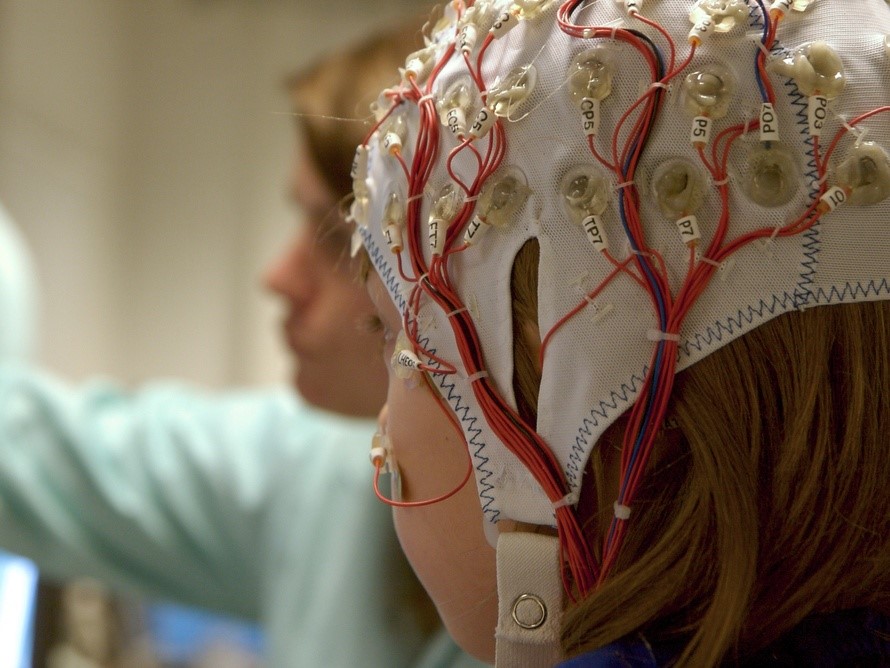
Tipos de convulsões
A seizure is a condition caused by a sudden burst of electrical activity in the brain. There are different types of seizures. What is a seizure. Tonic seizures c... Atonic seizures cause you to become limp and to collapse, often with only a brief loss of consciousness. Focal seizures In focal seizures the burst of electrical activity starts in,.
Patient information leaflet
Crises tônico-clônicas
At least 1 in 30 people in the UK develop epilepsy at some stage. It most commonly starts in infancy and in people over the age of 50. However, epilepsy can begin at any age. Seizures are well controlled by treatment for most people with epilepsy. There are different types of epilepsy. This leaflet is about epilepsy with tonic-clonic seizures..
Patient information leaflet
Convulsão febril
A febrile seizure is a convulsion that occurs in some children with a alta temperatura (fever). The vast majority of febrile seizures are not serious. Having the febrile seizure does not cause the epilepsy but a child who is going to develop epilepsy may b... Novo studies suggest that crianças com convulsões febris are more likely to have.
Leitura adicional e referências
- Epilepsy of infancy with migrating focal seizures ; MedlinePlus, National Library of Medicine.
- Barcia G, Chemaly N, Kuchenbuch M, Eisermann M, Gobin-Limballe S, Ciorna V, Macaya A, Lambert L, Dubois F, Doummar D, Billette de Villemeur T, Villeneuve N, Barthez MA, Nava C, Boddaert N, Kaminska A, Bahi-Buisson N, Milh M, Auvin S, Bonnefont JP, Nabbout R. Epilepsy with migrating focal seizures: KCNT1 mutation hotspots and phenotype variability. Neurol Genet. 2019 Oct 25;5(6):e363. doi: 10.1212/NXG.0000000000000363. eCollection 2019 Dec.
- Barcia G, Fleming MR, Deligniere A, Gazula VR, Brown MR, Langouet M, Chen H, Kronengold J, Abhyankar A, Cilio R, Nitschke P, Kaminska A, Boddaert N, Casanova JL, Desguerre I, Munnich A, Dulac O, Kaczmarek LK, Colleaux L, Nabbout R. De novo gain-of-function KCNT1 channel mutations cause malignant migrating partial seizures of infancy. Nat Genet. 2012 Nov;44(11):1255-9. doi: 10.1038/ng.2441. Epub 2012 Oct 21.
- Burgess R, Wang S, McTague A, Boysen KE, Yang X, Zeng Q, Myers KA, Rochtus A, Trivisano M, Gill D; EIMFS Consortium; Sadleir LG, Specchio N, Guerrini R, Marini C, Zhang YH, Mefford HC, Kurian MA, Poduri AH, Scheffer IE. The Genetic Landscape of Epilepsy of Infancy with Migrating Focal Seizures. Ann Neurol. 2019 Dec;86(6):821-831. doi: 10.1002/ana.25619.
- Coppola G. Malignant migrating partial seizures in infancy: an epilepsy syndrome of unknown etiology. Epilepsia. 2009 May;50 Suppl 5:49-51. doi: 10.1111/j.1528-1167.2009.02121.x.
- Fang ZX, Xie LL, Yan LS, Lin H, Pan YN, Liu BK, Jiang Y, Cheng M, Li XJ, Jiang L. Clinical and genetic characteristics of epilepsy of infancy with migrating focal seizures in Chinese children. Epilepsy Res. 2021 Aug;174:106669. doi: 10.1016/j.eplepsyres.2021.106669. Epub 2021 May 12.
- Gertler T, Bearden D, Bhattacharjee A, Carvill G. KCNT1-Related Epilepsy. 2018 Sep 20. In: Adam MP, Bick S, Mirzaa GM, Wallace SE, Amemiya A, editors. GeneReviews(R) [Internet]. Seattle (WA): University of Washington, Seattle; 1993-2026. Available from http://www.ncbi.nlm.nih.gov/books/NBK525917/
- Howell KB, McMahon JM, Carvill GL, Tambunan D, Mackay MT, Rodriguez-Casero V, Webster R, Clark D, Freeman JL, Calvert S, Olson HE, Mandelstam S, Poduri A, Mefford HC, Harvey AS, Scheffer IE. SCN2A encephalopathy: A major cause of epilepsy of infancy with migrating focal seizures. Neurology. 2015 Sep 15;85(11):958-66. doi: 10.1212/WNL.0000000000001926. Epub 2015 Aug 19.
- Ishii A, Shioda M, Okumura A, Kidokoro H, Sakauchi M, Shimada S, Shimizu T, Osawa M, Hirose S, Yamamoto T. A recurrent KCNT1 mutation in two sporadic cases with malignant migrating partial seizures in infancy. Gene. 2013 Dec 1;531(2):467-71. doi: 10.1016/j.gene.2013.08.096. Epub 2013 Sep 10.
- McTague A, Appleton R, Avula S, Cross JH, King MD, Jacques TS, Bhate S, Cronin A, Curran A, Desurkar A, Farrell MA, Hughes E, Jefferson R, Lascelles K, Livingston J, Meyer E, McLellan A, Poduri A, Scheffer IE, Spinty S, Kurian MA, Kneen R. Migrating partial seizures of infancy: expansion of the electroclinical, radiological and pathological disease spectrum. Brain. 2013 May;136(Pt 5):1578-91. doi: 10.1093/brain/awt073. Epub 2013 Apr 18.
- McTague A, Kurian MA. SLC12A5-Related Epilepsy of Infancy with Migrating Focal Seizures. 2019 Feb 14. In: Adam MP, Bick S, Mirzaa GM, Wallace SE, Amemiya A, editors. GeneReviews(R) [Internet]. Seattle (WA): University of Washington, Seattle; 1993-2026. Available from http://www.ncbi.nlm.nih.gov/books/NBK537476/
- Yang H, Yang X, Cai F, Gan S, Yang S, Wu L. Analysis of clinical phenotypic and genotypic spectra in 36 children patients with Epilepsy of Infancy with Migrating Focal Seizures. Sci Rep. 2022 Jun 17;12(1):10187. doi: 10.1038/s41598-022-13974-9.
- Zeng Q, Yang Y, Duan J, Niu X, Chen Y, Wang D, Zhang J, Chen J, Yang X, Li J, Yang Z, Jiang Y, Liao J, Zhang Y. SCN2A-Related Epilepsy: The Phenotypic Spectrum, Treatment and Prognosis. Front Mol Neurosci. 2022 Mar 30;15:809951. doi: 10.3389/fnmol.2022.809951. eCollection 2022.
Participe da conversa
Compartilhe seus pensamentos ou experiências com outros em nosso comunidades de pacientes.

Pergunte, compartilhe, conecte-se.
Navegue por discussões, faça perguntas e compartilhe experiências em centenas de tópicos de saúde.
Inscreva-se no boletim informativo do Patient
Sua dose semanal de conselhos de saúde claros e confiáveis - escritos para ajudá-lo a se sentir informado, confiante e no controle.
Ao se inscrever, você aceita nossos Política de Privacidade. Você pode cancelar a inscrição a qualquer momento. Nunca vendemos seus dados.