Chronic atrial and intestinal dysrhythmia
Última atualização 21 Mar 2023
Atende aos diretrizes editoriais
- BaixarBaixar
- Compartilhar
- Language
- Discussão
- Ask Patient
- Versão em Áudio
- Adicionar às fontes preferidas no Google
Chronic atrial and intestinal dysrhythmia (CAID) is a disorder affecting the heart and the digestive system. CAID disrupts the normal rhythm of the heartbeat; affected individuals have a heart rhythm abnormality called sick sinus syndrome. The disorder also impairs the rhythmic muscle contractions that propel food through the intestines (peristalsis), causing a digestive condition called intestinal pseudo-obstruction. The heart and digestive issues develop at the same time, usually by age 20.
Escolhas de vídeos para Condições genéticasBiblioteca de vídeos
Descrição
Chronic atrial and intestinal dysrhythmia (CAID) is a disorder affecting the heart and the digestive system. CAID disrupts the normal rhythm of the heartbeat; affected individuals have a heart rhythm abnormality called sick sinus syndrome. The disorder also impairs the rhythmic muscle contractions that propel food through the intestines (peristalsis), causing a digestive condition called intestinal pseudo-obstruction. The heart and digestive issues develop at the same time, usually by age 20.
Sick sinus syndrome (also known as sinus node dysfunction) is an abnormality of the sinoatrial (SA) node, which is an area of specialized cells in the heart that functions as a natural pacemaker. The SA node generates electrical impulses that start each heartbeat. These signals travel from the SA node to the rest of the heart, signaling the heart (cardiac) muscle to contract and pump blood. In people with sick sinus syndrome, the SA node does not function normally, which usually causes the heartbeat to be too slow (bradycardia), although occasionally the heartbeat is too fast (tachycardia) or rapidly switches from being too fast to being too slow (tachycardia-bradycardia syndrome). Symptoms related to abnormal heartbeats can include dizziness, light-headedness, fainting (syncope), a sensation of fluttering or pounding in the chest (palpitations), and confusion or memory problems. During exercise, many affected individuals experience chest pain, difficulty breathing, or excessive tiredness (fatigue).
In intestinal pseudo-obstruction, impairment of peristalsis leads to a buildup of partially digested food in the intestines, abdominal swelling (distention) and pain, nausea, vomiting, and constipation or diarrhea. Affected individuals experience loss of appetite and impaired ability to absorb nutrients, which may lead to malnutrition. These symptoms resemble those caused by an intestinal blockage (obstruction) such as a tumour, but in intestinal pseudo-obstruction no such blockage is found.
Padrões de herança
The source lists the following possible inheritance patterns: Autosomal recessive. More than one pattern can apply in different cases.
Related genes
Other names
CAID
Cohesinopathy affecting heart and gut rhythm
Related patient information and medicines
Patient information leaflet
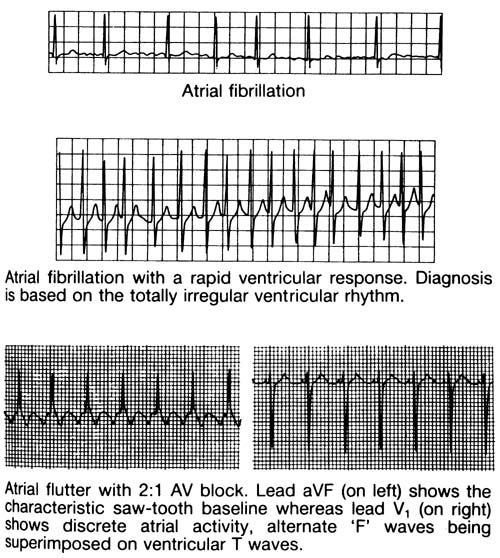
Fibrilação atrial
Atrial fibrillation (AF) is an abnormal fast irregular heartbeat. An abnormal heartbeat rhythm is called an arrhythmia. A normal heart rate is between 60 and 100 beats a minute (bpm) when you're resting. What is atrial fibrillation. Atrial fibrillation Atrial fibrillation explained is a type of abnormal heart rhythm (arrhythmia). AF can cause.
Patient information leaflet
Doença da válvula cardíaca
Heart valves sit in between the chambers of the coração and control the blood flow through the heart. There are four common types of heart valve problem - mitral stenosis, mitral regurgitation , aortic stenosis and aortic regurgitation. The leaflet called Anatomy of the heart includes details about the function of the heart and how the heart beats..
Patient information leaflet
Regurgitação mitral
The mitral valve é a heart valve that lies between the left atrium and left ventricle. The heart - mitral valve incompetence i88_l.jpg What is mitral regurgitation. Mitral regurgitation is sometimes called mitral insufficiency or mitral incompetence. In mitral regurgitation the valve does not close properly. This causes blood to leak back.
Patient information leaflet
Defeito do septo atrial
Defeito do septo atrial (DSA) is a hole (defect) in the wall (septum) between the heart's two upper, or collecting, chambers (atria). One chamber is known as an atrium. The septum separates the heart's left and right side. A septal defect is sometime called a 'hole' in the heart. It is the third most common heart problem that babies are born with..

Patient information leaflet
Falta de ar e dificuldade para respirar
A medical term is dyspnoea. Your chest may feel tight and breathing may hurt. ... It is due to the heart pumping inefficiently. Heart rhythm problems Ritmos cardíacos anormais - for example, an irregular heartbeat ( atrial fibrillation Atrial fibrillation ) may make the coração work less well so oxygen isn't pumped around the body properly. This.
Patient information leaflet
Posso tomar Flecainida e Rivaroxabana juntos?
However, because both drugs are used to treat heart rhythm problems (like atrial fibrillation), they are often prescribed together. Fibrilação atrial permanente This medicine should not be used if you have long-standing (permanent) fibrilação atrial that has not been corrected, as it can paradoxically cause the heart rate to become dangerously.
Leitura adicional e referências
- Chronic atrial and intestinal dysrhythmia; MedlinePlus, National Library of Medicine.
- Brooker AS, Berkowitz KM. The roles of cohesins in mitosis, meiosis, and human health and disease. Methods Mol Biol. 2014;1170:229-66. doi: 10.1007/978-1-4939-0888-2_11.
- Chetaille P, Preuss C, Burkhard S, Cote JM, Houde C, Castilloux J, Piche J, Gosset N, Leclerc S, Wunnemann F, Thibeault M, Gagnon C, Galli A, Tuck E, Hickson GR, El Amine N, Boufaied I, Lemyre E, de Santa Barbara P, Faure S, Jonzon A, Cameron M, Dietz HC, Gallo-McFarlane E, Benson DW, Moreau C, Labuda D; FORGE Canada Consortium; Zhan SH, Shen Y, Jomphe M, Jones SJ, Bakkers J, Andelfinger G. Mutations in SGOL1 cause a novel cohesinopathy affecting heart and gut rhythm. Nat Genet. 2014 Nov;46(11):1245-9. doi: 10.1038/ng.3113. Epub 2014 Oct 5.
- Krantz ID. Cohesin embraces new phenotypes. Nat Genet. 2014 Nov;46(11):1157-8. doi: 10.1038/ng.3123.
Compartilhe seus pensamentos ou experiências com outros em nosso comunidades de pacientes.
Acesso simples a tratamentos confiáveis e serviços de saúde online.
Common conditions
Get help with common conditions through the NHS, without a GP appointment.
 Sinusite aguda
 Amigdalite bacteriana
 Impetigo
 Mordidas de insetos
 Herpes zosterInfecção do trato urinário (ITUs)
Inscreva-se no boletim informativo do Patient
Sua dose semanal de conselhos de saúde claros e confiáveis - escritos para ajudá-lo a se sentir informado, confiante e no controle.
Ao se inscrever, você aceita nossos Política de Privacidade. Você pode cancelar a inscrição a qualquer momento. Nunca vendemos seus dados.