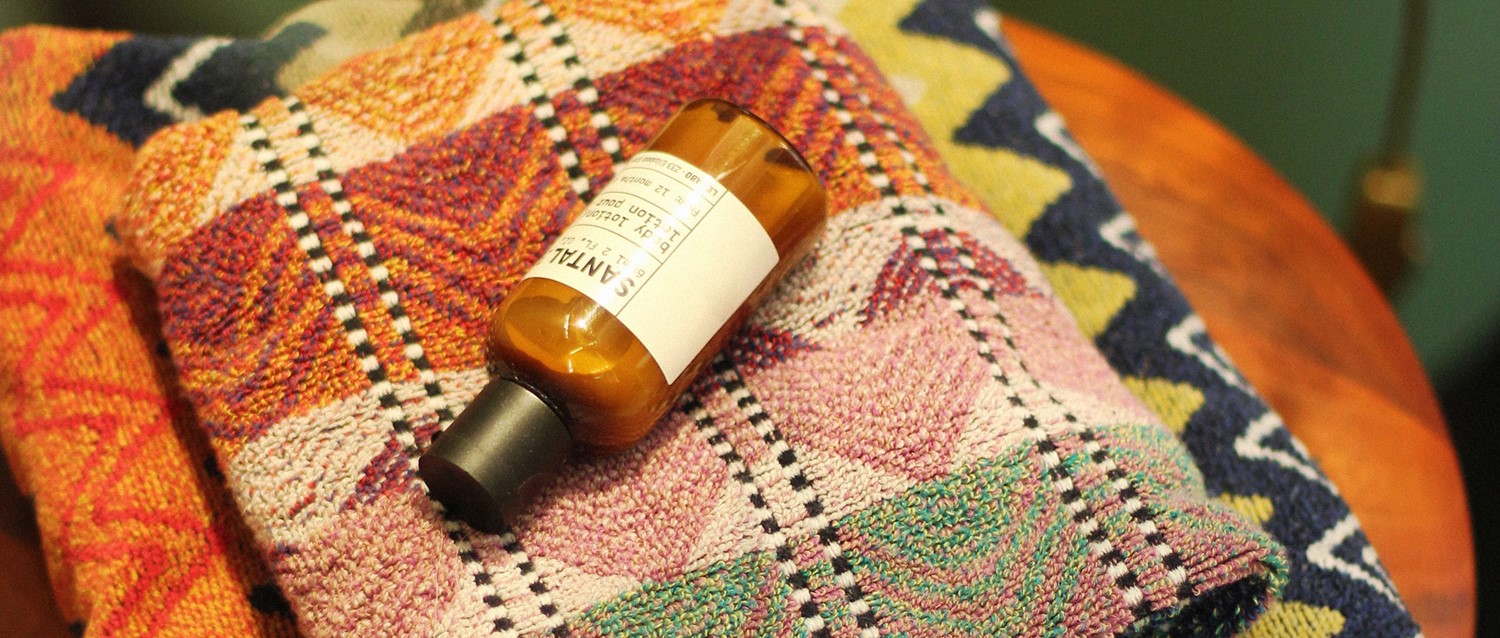
O hidratante com FPS oferece proteção solar suficiente?
Revisado por Dr Sarah JarvisÚltima atualização por Abi MillarLast updated 23 May 2019
Atende aos diretrizes editoriais
- BaixarBaixar
- Compartilhar
- Language
- Discussão
- Versão em Áudio
- Add to preferred sources on Google
We all know that sunscreen is a must on a sunny day. Although the kind you need will depend on the weather conditions and your skin type, only the most foolhardy of us would skimp on sun protection.
Neste artigo:
Video picks for Sol e queimaduras solares
The one exception to the rule might be if you're already wearing an SPF moisturiser. In this case, it may seem futile to double up on protection and add a sunscreen on top. In fact, out of the two, SPF moisturisers might seem like the better bet - protecting you from harmful UV rays and hydrating your skin to boot.
Unfortunately, new research has cast doubt on this wisdom, suggesting that an SPF moisturiser isn't as effective as it might seem.
Continue lendo abaixo
SPF moisturiser vs sunscreen
In a recent estudo, the University of Liverpool used UV photography to assess how well sunscreen was being applied. The darker the resulting image, the more UV rays had been blocked and the better the sun protection.
The volunteers were imaged on two separate occasions - one time after applying SPF30 moisturiser, one time after applying SPF30 sunscreen. Theoretically, these two products should offer the same protection. However, the images were much darker with sunscreen than with SPF moisturiser - suggesting that, in real world scenarios, people don't apply enough moisturiser to have the full effect.
On top of that, SPF moisturiser wasn't being applied as uniformly, particularly around the eyelids. In this case, participants missed out 16% of their face and 21% of their eyelid region, compared to just 11% of the face and 14% of the eyelid region for sunscreen. Since the skin on the eyelids is particularly prone to câncer de pele, this finding should give pause for thought.
"The data demonstrates that areas of the face that are more vulnerable to skin cancer are also more likely to be missed during application of SPF moisturisers than with sunscreens, and, importantly, that people applying these products are unaware that they are failing to cover these at-risk regions," stated the researchers.
Summer skincare
Voltar ao conteúdoSo what does this mean for your summer skincare regime? According to Dr Rachel Abbott, consultant dermatologist and Fundação Britânica da Pele spokesperson, it's important to wear a sunscreen on hot days, whether or not you've also moisturised.
"You can use a moisturiser containing SPF in the morning, but if you're going to be exposed to direct sunlight when the UV index is over 3, then I recommend using high-factor, broad-spectrum sunscreen," she says. "This means an SPF over 30 and UVA and UVB protection."
Of course, this may not be the news you want to hear if you like to keep your skincare simple. However, if you're really committed to applying one product only, you should go for the sunscreen as opposed to the moisturiser. (Or you could apply your moisturiser first thing in the morning, and the sunscreen 15 minutes before going out, reapplying the sunscreen at regular intervals throughout the day.)
"If moisturisers contain sunscreen then they can be marketed as 'anti-ageing'," says Abbott. "However often they do not contain or provide adequate UV protection to both UVB (>SPF30) and UVA (>4****). They're also generally applied in the morning and so by the time the UV index reaches its peak (around 12-1 pm) then the UV protection will not be as effective."
For background, UVA and UVB rays are two different types of sun radiation, which damage the skin in different ways. To put it simply, UVA rays (which are more prevalent but less intense than UVB), play a major role in skin ageing and wrinkling, while UVB contribute more intensely to skin reddening and queimadura solar. Since both types of rays are implicated in skin cancer, it is crucial to protect against them both.
"As well as using sunscreen for sun protection, I recommend seeking shade, and wearing long-sleeved clothing, a broad-brimmed hat and sunglasses when the UV index is over 3," says Abbott. "Check the UV index if you are planning to be outside during the middle of the day and plan to seek shade then if the UV index is high. And never use a sunbed."
Continue lendo abaixo
Further tips
Voltar ao conteúdoOf course, none of this is to say that your SPF moisturiser is completely useless. It's just that you probably aren't applying a thick enough layer to get the full benefit.
This is understandable enough: moisturisers can be expensive, and really piling on the product can cause a claggy sensation on the skin. On top of that, your moisturiser may not be water-resistant - an important consideration if it's a hot, sweaty day or you're planning on being active.
These days, there is a huge range of sunscreens out there, so take your time to find one that fits your needs. Make sure to apply it as uniformly and thoroughly as possible, especially around that much-neglected eye area.
"Although skin moisturiser with SPF does provide sun protection, our research suggests that it's not to the same degree as sunscreen," said Austin McCormick, one of the researchers. "We do recommend moisturisers and makeup that contain UV protection - it is better than no protection at all, but for prolonged periods in the sun we recommend the application of sunscreen with high SPF."
Patient picks for Sol e queimaduras solares
Saúde da pele, unhas e cabelos
Como escolher o protetor solar certo
O verão significa churrascos e tempo ao ar livre com amigos e família. Mas com o sol extra vem a possibilidade de queimaduras solares - algo que todos precisam evitar. Usar protetor solar é a melhor maneira de prevenir danos graves à pele, mas todos os protetores solares são adequados para você? Aqui está como garantir que você está recebendo a proteção certa do protetor solar que está usando.
por Victoria Raw
Saúde da pele, unhas e cabelos
Como manter seus filhos protegidos do sol neste verão
The sunshine and hot weather are a much needed chance for kids to play outside in the fresh air. But children and babies are particularly vulnerable to the sun's harmful rays, so it's important to protect their skin and make sure they enjoy the sun safely.
por Allie Anderson
Continue lendo abaixo
About the authorView full bio

Abi Millar
Jornalista Freelancer
BA (Hons), MA
Abi is a freelance journalist with a special interest in health and medicine writing.
About the reviewerView full bio

Dra. Sarah Jarvis
Executivo de SEO
MA (Cantab), BM, BCh (Oxon), DRCOG, FRCGP, MBE
After training in medicine at Cambridge and Oxford, Dr Sarah Jarvis MBE became a GP.
Histórico do artigo
As informações nesta página são revisadas por pares por clínicos qualificados.
23 May 2019 | Última versão
23 May 2019 | Publicado originalmente

Pergunte, compartilhe, conecte-se.
Navegue por discussões, faça perguntas e compartilhe experiências em centenas de tópicos de saúde.

Sentindo-se mal?
Avalie seus sintomas online gratuitamente
Inscreva-se no boletim informativo do Patient
Sua dose semanal de conselhos de saúde claros e confiáveis - escritos para ajudá-lo a se sentir informado, confiante e no controle.
By subscribing you accept our Política de Privacidade. Você pode cancelar a inscrição a qualquer momento. Nunca vendemos seus dados.