Esclerose múltipla
Última atualização 17 Mar 2026
Atende aos diretrizes editoriais
- BaixarBaixar
- Compartilhar
- Language
- Discussão
- Ask Patient
- Versão em Áudio
- Adicionar às fontes preferidas no Google
Multiple sclerosis is a condition characterised by areas of damage (lesions) on the brain and spinal cord. These lesions are associated with destruction of the covering that protects nerves and promotes the efficient transmission of nerve impulses (the myelin sheath) and damage to nerve cells. Multiple sclerosis is considered an autoimmune disorder; autoimmune disorders occur when the immune system malfunctions and attacks the body's own tissues and organs, in this case tissues of the nervous system.
Escolhas de vídeos para Condições genéticasBiblioteca de vídeos
Descrição
Multiple sclerosis is a condition characterised by areas of damage (lesions) on the brain and spinal cord. These lesions are associated with destruction of the covering that protects nerves and promotes the efficient transmission of nerve impulses (the myelin sheath) and damage to nerve cells. Multiple sclerosis is considered an autoimmune disorder; autoimmune disorders occur when the immune system malfunctions and attacks the body's own tissues and organs, in this case tissues of the nervous system.
Multiple sclerosis usually begins in early adulthood, between ages 20 and 40. The symptoms vary widely, and affected individuals can experience one or more effects of nervous system damage. Multiple sclerosis often causes sensory disturbances in the limbs, including a prickling or tingling sensation (paresthesia), numbness, pain, and itching. Some people experience Lhermitte sign, which is an electrical shock-like sensation that runs down the back and into the limbs. This sensation usually occurs when the head is bent forward. Problems with muscle control are common in people with multiple sclerosis. Affected individuals may have tremors, muscle stiffness (spasticity), exaggerated reflexes (hyperreflexia), weakness or partial paralysis of the muscles of the limbs, difficulty walking, or poor bladder control. Multiple sclerosis is also associated with vision problems, such as blurred or double vision or partial or complete vision loss. Infections that cause fever can make the symptoms worse.
There are several forms of multiple sclerosis: relapsing-remitting MS, secondary progressive MS, primary progressive MS, and progressive relapsing MS. The most common is the relapsing-remitting form, which affects approximately 80 percent of people with multiple sclerosis. Individuals with this form of the condition have periods during which they experience symptoms, called clinical attacks, followed by periods without any symptoms (remission). The triggers of clinical attacks and remissions are unknown. After about 10 years, relapsing-remitting MS usually develops into another form of the disorder called secondary progressive MS. In this form, there are no remissions, and symptoms of the condition continually worsen.
Primary progressive MS is the next most common form, affecting approximately 10 to 20 percent of people with multiple sclerosis. This form is characterised by constant symptoms that worsen over time, with no clinical attacks or remissions. Primary progressive MS typically begins later than the other forms, around age 40.
Progressive relapsing MS is a rare form of multiple sclerosis that initially appears like primary progressive MS, with constant symptoms. However, people with progressive relapsing MS also experience clinical attacks of more severe symptoms.
Padrões de herança
The source lists the following possible inheritance patterns: Pattern unknown. More than one pattern can apply in different cases.
Related genes
Other names
Disseminated sclerosis
MS
Related patient information and medicines

Patient information leaflet
Esclerose múltipla
Multiple sclerosis is a disorder of the brain and spinal cord. It can cause various symptoms. What is multiple sclerosis. Multiple sclerosis (MS) is a disease where patches of inflammation occur in parts of your brain and/or spinal cord. This can cause damage to parts of your brain and lead to various symptoms (described below). How common is.

Patient information leaflet
Imunização contra a gripe
Chronic kidney disease Chronic kidney disease. Chronic liver diseases. Neurological problems, including strokes Stroke , multiple sclerosis Multiple sclerosis , cerebral palsy, and severe learning disabilities, including Down's syndrome Down's syndrome. Diabetes Diabetes and adrenal insufficiency (for example, Addison's disease Addison's disease.

Patient information leaflet
Gastroparesia
What is gastroparesis. Gastroparesis is a rare complication of some auto-immune conditions such as hypothyroidism Underactive thyroid gland or systemic sclerosis. Systemic sclerosis Other conditions. Some neurological conditions such as multiple sclerosis Multiple sclerosis , Parkinson's disease Parkinson's disease , or following a stroke Stroke ,.

Patient information leaflet
Lesões do lobo temporal
Progressive worsening of language can be part of a type of dementia Memory loss and deme... Frontotemporal dementia The temporal lobe can be affected by an infection of the brain (encephalitis) Encephalitis , especially encephalitis due to herpes simplex virus. Other conditions affecting the brain, such as multiple sclerosis Multiple sclerosis ,.

Patient information leaflet
Pneumonia por aspiração
Aspiration pneumonia is a lower respiratory tract (chest) infection caused by bacteria which have leaked into the lungs from fluid from the stomach or mouth. This liquid causes a bacterial infection in the lungs. It is most common in people who have a condition making swallowing difficult - typically the very elderly, the very young or people with.
Patient information leaflet
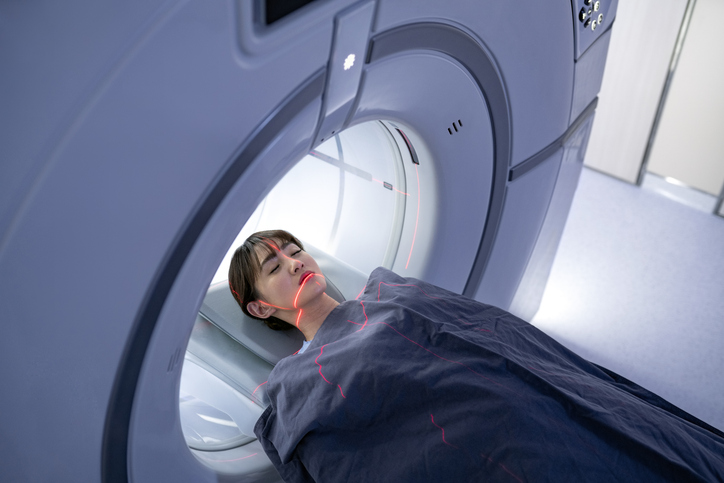
ressonância magnética
An MRI scan is a safe and painless test that can provide detailed pictures of organs and other structures inside your body. Note : the information below is a general guide only. There is clear contrast between grey and white matter parts of the brain and this makes MRI the best choice for many other conditions, including multiple sclerosis.
Leitura adicional e referências
- Esclerose múltipla; MedlinePlus, National Library of Medicine.
- Albelo-Martinez M, Rizvi S. Progressive multiple sclerosis: Evaluating current therapies and exploring future treatment strategies. Neurotherapeutics. 2025 Jul;22(4):e00601. doi: 10.1016/j.neurot.2025.e00601. Epub 2025 May 9.
- Alcina A, Abad-Grau Mdel M, Fedetz M, Izquierdo G, Lucas M, Fernandez O, Ndagire D, Catala-Rabasa A, Ruiz A, Gayan J, Delgado C, Arnal C, Matesanz F. Multiple sclerosis risk variant HLA-DRB1*1501 associates with high expression of DRB1 gene in different human populations. PLoS One. 2012;7(1):e29819. doi: 10.1371/journal.pone.0029819. Epub 2012 Jan 13.
- Balcerac A, Louapre C. Genetics and familial distribution of multiple sclerosis: A review. Rev Neurol (Paris). 2022 Jun;178(6):512-520. doi: 10.1016/j.neurol.2021.11.009. Epub 2022 Feb 9.
- Barkhof F, Reich DS, Oh J, Rocca MA, Li DKB, Sati P, Azevedo CJ, Bagnato F, Calabresi PA, Ciccarelli O, Dwyer MG, DeLuca GC, De Stefano N, Enzinger C, Filippi M, Granziera C, Halper J, Henry RG, Gasperini C, Gauthier S, Kappos L, Laule C, Newsome SD, Montalban X, Morrow SA, Schoonheim MM, Sicotte N, Toosy A, Wilken J, Yousry T, Sastre-Garriga J, Traboulsee A, Ontaneda D, Rovira A; Magnetic Resonance Imaging Network in Multiple Sclerosis; Consortium of Multiple Sclerosis Centers; North American Imaging in Multiple Sclerosis Cooperative MRI guidelines working group. 2024 MAGNIMS-CMSC-NAIMS consensus recommendations on the use of MRI for the diagnosis of multiple sclerosis. Lancet Neurol. 2025 Oct;24(10):866-879. doi: 10.1016/S1474-4422(25)00304-7.
- Goris A, Vandebergh M, McCauley JL, Saarela J, Cotsapas C. Genetics of multiple sclerosis: lessons from polygenicity. Lancet Neurol. 2022 Sep;21(9):830-842. doi: 10.1016/S1474-4422(22)00255-1.
- International Multiple Sclerosis Genetics Consortium. Multiple sclerosis genomic map implicates peripheral immune cells and microglia in susceptibility. Science. 2019 Sep 27;365(6460):eaav7188. doi: 10.1126/science.aav7188.
- International Multiple Sclerosis Genetics Consortium; MultipleMS Consortium. Locus for severity implicates CNS resilience in progression of multiple sclerosis. Nature. 2023 Jul;619(7969):323-331. doi: 10.1038/s41586-023-06250-x. Epub 2023 Jun 28.
- Kiani RA, Wattoo FH, Khan MU, Munir M, Sattar S, Kazmi M, Jamila, Rehman R, Shan MA, Ali Q, Iqbal A, Ali D. Impact of the CYP27B1 p.R389H mutation on protein stability and function: implications for multiple sclerosis pathogenesis. Sci Rep. 2025 Sep 26;15(1):33047. doi: 10.1038/s41598-025-07199-9.
- Kuhlmann T, Moccia M, Coetzee T, Cohen JA, Correale J, Graves J, Marrie RA, Montalban X, Yong VW, Thompson AJ, Reich DS; International Advisory Committee on Clinical Trials in Multiple Sclerosis. Multiple sclerosis progression: time for a new mechanism-driven framework. Lancet Neurol. 2023 Jan;22(1):78-88. doi: 10.1016/S1474-4422(22)00289-7. Epub 2022 Nov 18.
- Patsopoulos NA. Genetics of Multiple Sclerosis: An Overview and New Directions. Cold Spring Harb Perspect Med. 2018 Jul 2;8(7):a028951. doi: 10.1101/cshperspect.a028951.
- Sahi N, Ciccarelli O, Houlden H, Chard DT. Unlocking Multiple Sclerosis Genetics: From Susceptibility to Severity. Neurology. 2025 Oct 21;105(8):e214141. doi: 10.1212/WNL.0000000000214141. Epub 2025 Sep 26.
- Sorosina M, Santoro S, Ferre L, Mascia E, Clarelli F, Giordano A, Cannizzaro M, Lucia M, Martinelli V, Filippi M, Esposito F. Risk HLA Variants Affect the T-Cell Repertoire in Multiple Sclerosis. Neurol Neuroimmunol Neuroinflamm. 2023 Feb 15;10(3):e200093. doi: 10.1212/NXI.0000000000200093. Print 2023 May.
- Vitturi BK, Cellerino M, Boccia D, Leray E, Correale J, Dobson R, van der Mei I, Fujihara K, Inglese M. Childhood and Adolescent Environmental Risk Factors for Multiple Sclerosis: A Systematic Review With Meta-Analysis. Eur J Neurol. 2025 Nov;32(11):e70398. doi: 10.1111/ene.70398.
- Walton C, King R, Rechtman L, Kaye W, Leray E, Marrie RA, Robertson N, La Rocca N, Uitdehaag B, van der Mei I, Wallin M, Helme A, Angood Napier C, Rijke N, Baneke P. Rising prevalence of multiple sclerosis worldwide: Insights from the Atlas of MS, third edition. Mult Scler. 2020 Dec;26(14):1816-1821. doi: 10.1177/1352458520970841. Epub 2020 Nov 11.
- Ward M, Goldman MD. Epidemiology and Pathophysiology of Multiple Sclerosis. Continuum (Minneap Minn). 2022 Aug 1;28(4):988-1005. doi: 10.1212/CON.0000000000001136.
Compartilhe seus pensamentos ou experiências com outros em nosso comunidades de pacientes.
Acesso simples a tratamentos confiáveis e serviços de saúde online.
Common conditions
Get help with common conditions through the NHS, without a GP appointment.
 Sinusite aguda
 Amigdalite bacteriana
 Impetigo
 Mordidas de insetos
 Herpes zosterInfecção do trato urinário (ITUs)
Inscreva-se no boletim informativo do Patient
Sua dose semanal de conselhos de saúde claros e confiáveis - escritos para ajudá-lo a se sentir informado, confiante e no controle.
Ao se inscrever, você aceita nossos Política de Privacidade. Você pode cancelar a inscrição a qualquer momento. Nunca vendemos seus dados.