Childhood absence epilepsy
Última atualização 18 de ago de 2020
Atende aos diretrizes editoriais
- BaixarBaixar
- Compartilhar
- Language
- Discussão
- Versão em Áudio
- Adicionar às fontes preferidas no Google
Childhood absence epilepsy is a condition characterised by recurrent seizures (epilepsy). This condition begins in childhood, usually between ages 3 and 8. Affected children have absence seizures (also known as petit mal seizures), which are brief episodes of impaired consciousness that look like staring spells. During seizures, children are not aware of and do not respond to people or activities around them. The seizures usually last several seconds and they occur often, up to 200 times each day.
Descrição
Childhood absence epilepsy is a condition characterised by recurrent seizures (epilepsy). This condition begins in childhood, usually between ages 3 and 8. Affected children have absence seizures (also known as petit mal seizures), which are brief episodes of impaired consciousness that look like staring spells. During seizures, children are not aware of and do not respond to people or activities around them. The seizures usually last several seconds and they occur often, up to 200 times each day.
Some affected individuals have febrile seizures before they develop childhood absence epilepsy. Febrile seizures are involuntary muscle contractions (convulsions) brought on by a high body temperature (fever).
In most people with childhood absence epilepsy, the absence seizures disappear in adolescence. However, some affected individuals continue to have absence seizures into adulthood, or they may develop generalized tonic-clonic seizures, which cause muscle rigidity, convulsions, and loss of consciousness, or myoclonic seizures, which are characterised by rapid, uncontrolled muscle jerks.
Padrões de herança
The source lists the following possible inheritance patterns: Autosomal dominant. More than one pattern can apply in different cases.
Related genes
Other names
Absence epilepsy, childhood
Petit mal epilepsy
Pykno-epilepsy
Pyknolepsy
Related patient information and medicines
Patient information leaflet
Crises de ausência
Absence seizures usually occur only in children and young people. Most people with this type of epilepsy grow out of it by the time they are adults. This leaflet discusses only the type of epilepsy with typical absence seizures. There are other types of 'atypical' absence seizures not dealt w... What is an absence seizure. Absence seizure.
Patient information leaflet
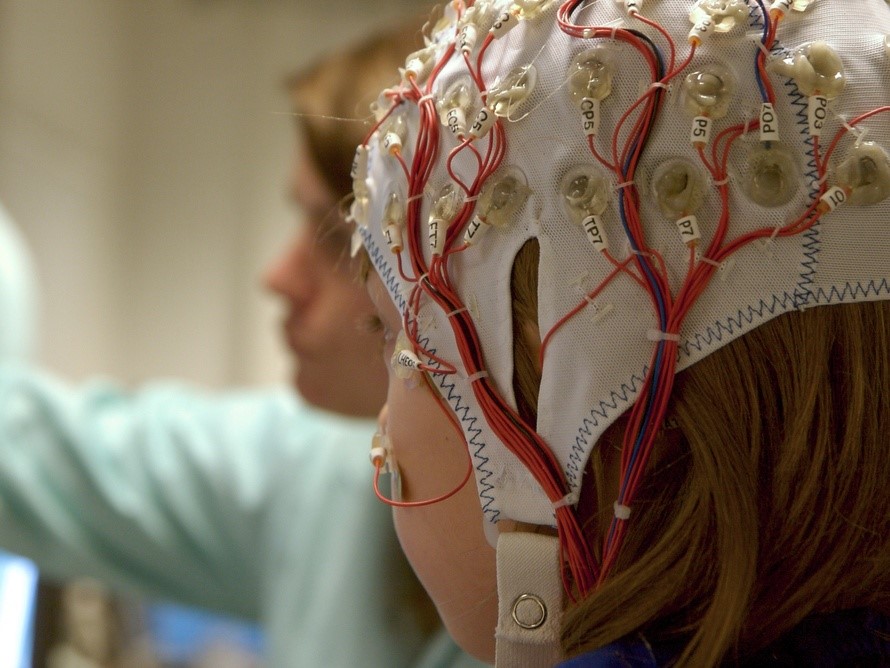
Tipos de convulsões
This is the type of seizure that most people are familiar with, and is usually what they mean if they s... Crises de ausência (previously sometimes known as petit mal seizures) lead to briefly losing consciousness or awareness. There is no convulsion, you do not fall over and they usually last only seconds. Even though there is no shaking, absence.

Patient information leaflet
Epilepsia
About 1 in 30 people in the UK develop epilepsy at some stage in their lives. It most commonly starts in childhood and in people aged over 60. Epilepsy is a long-lasting brain condition that causes people to have repeated seizures. Afterwards, you usually feel drowsy or confused, and it takes some time until your thinking and awareness r... There.
Patient information leaflet
Convulsão febril
Any illness that causes a alta temperatura (fever) can cause a febrile seizure. Most occur with common illnesses such as ear infections , tonsillitis , colds , flu and other viral infections. There is a separate set of leaflets explaining epilepsy in more detail. Sobre 2 in 100 children who have a febrile seizure develop epilepsy in later.
Patient information leaflet
Medicação para epilepsia e efeitos colaterais
The risk of harm to the mother and baby from epi... If you have an unplanned pregnancy, you should not stop epilepsy medication, which may risk a seizure occurring. Editor's note Dr Krishna Vakharia , 13th September 2024 The Medicines and Healthcare products Regulatory agency has issued an alert to the use of valproate in men around the time of.
Patient information leaflet
Vivendo com epilepsia
This leaflet is a brief introduction to the practical considerations of living with epilepsy. For more general information about epilepsy and seizures, see the separate leaflets called Epilepsy and Seizures and Types of Epilepsy and Seizures. Medication It is important that you take your medication regularly to reduce the risk of having seizures..
Leitura adicional e referências
- Childhood absence epilepsy; MedlinePlus, National Library of Medicine.
- Crunelli V, Leresche N. Childhood absence epilepsy: genes, channels, neurons and networks. Nat Rev Neurosci. 2002 May;3(5):371-82. doi: 10.1038/nrn811.
- Hirose S. Mutant GABA(A) receptor subunits in genetic (idiopathic) epilepsy. Prog Brain Res. 2014;213:55-85. doi: 10.1016/B978-0-444-63326-2.00003-X.
- Kang JQ, Macdonald RL. Molecular Pathogenic Basis for GABRG2 Mutations Associated With a Spectrum of Epilepsy Syndromes, From Generalized Absence Epilepsy to Dravet Syndrome. JAMA Neurol. 2016 Aug 1;73(8):1009-16. doi: 10.1001/jamaneurol.2016.0449.
- Yalcin O. Genes and molecular mechanisms involved in the epileptogenesis of idiopathic absence epilepsies. Seizure. 2012 Mar;21(2):79-86. doi: 10.1016/j.seizure.2011.12.002. Epub 2011 Dec 27.
Participe da conversa
Compartilhe seus pensamentos ou experiências com outros em nosso comunidades de pacientes.

Pergunte, compartilhe, conecte-se.
Navegue por discussões, faça perguntas e compartilhe experiências em centenas de tópicos de saúde.
Inscreva-se no boletim informativo do Patient
Sua dose semanal de conselhos de saúde claros e confiáveis - escritos para ajudá-lo a se sentir informado, confiante e no controle.
Ao se inscrever, você aceita nossos Política de Privacidade. Você pode cancelar a inscrição a qualquer momento. Nunca vendemos seus dados.