
Dosette box vs blister pack vs pouches: which is right for you?
Revisado por Dr Colin Tidy, MRCGPÚltima atualização 19 Nov 2029
Atende aos diretrizes editoriais
- BaixarBaixar
- Compartilhar
- Language
- Discussão
- Ask Patient
- Versão em Áudio
- Adicionar às fontes preferidas no Google
Managing medication at home can get complicated, especially if you, or someone you care for, take several medicines at different times of the day. The good news is that there are tools and services designed to make this easier and safer, and to support a steady medication routine.
In this article we compare three common ways to organise medication at home - pouching, blister packs, and dosette boxes. We explain what each involves, who it might suit, and the pros and cons of each, so you can have a more informed conversation with your pharmacist or GP.
Patrocinado
The simplest way to stay on top of your medication
No more sorting pills, checking blister packs, or wondering whether you’ve already taken today’s dose. PillTime is an NHS pharmacy that delivers your medication pre-sorted in clearly dated, labelled, easy-to-open pouches delivered straight to your door, all for free. Trusted by over 10,000 people across England. Sign up online, keep your GP, then just tear and take.

Escolhas de vídeos para Informações sobre medicamentosBiblioteca de vídeos
Pouching
What is pouching?
Pouching is a service where your medication is sorted and packed by a pharmacy into small, clearly labelled pouches. Each pouch holds everything you need to take at one specific time, for example Monday at 8 am or Thursday at 6 pm.
The pouches come on a roll. You tear off the next one when it's due, so it's easy to see what to take and when. They're delivered to your door by a pharmacy service such as PillTime - a free NHS pharmacy service.
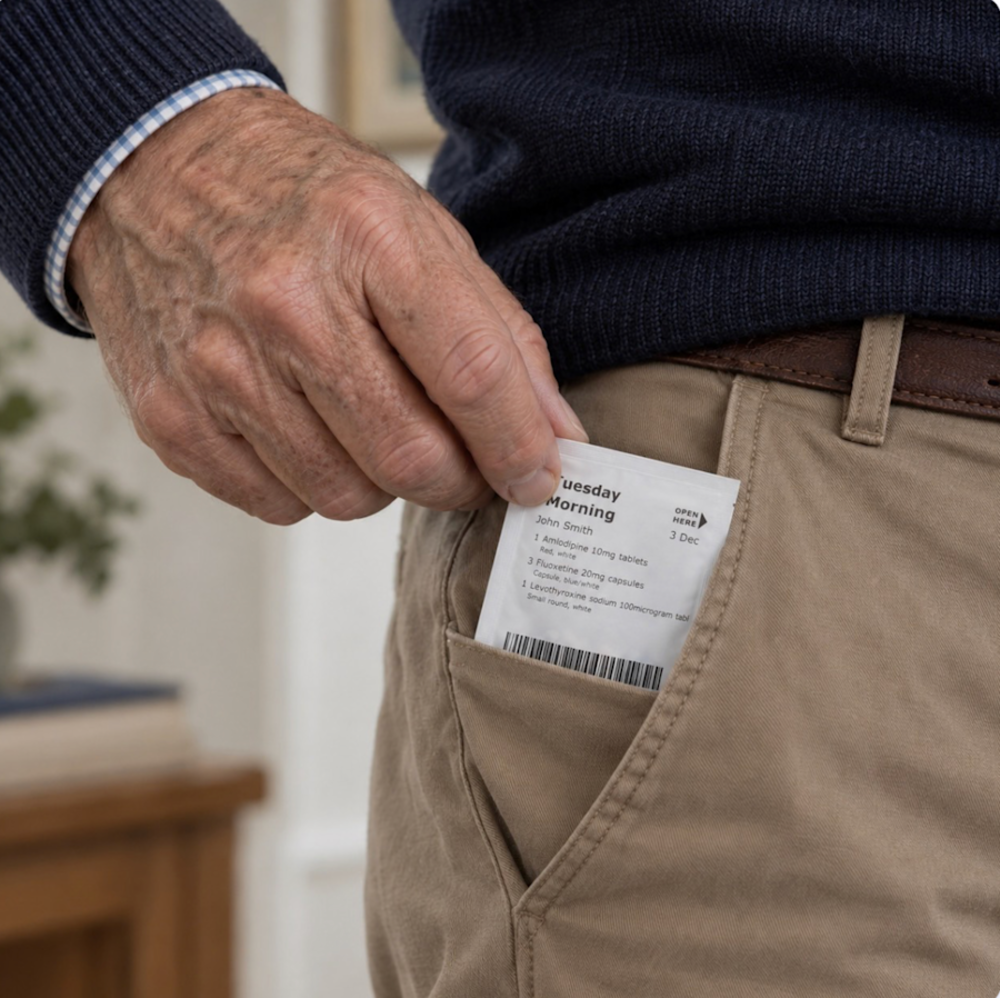
The benefits of pouching
Your medication is sorted by professionals, not at home - pouches are prepared at the pharmacy according to your prescription and then checked for accuracy. That takes away the worry of mixing up tablets at home, which can be particularly helpful if you or the person you care for has memory problems, sight loss, or simply a busy life.
It suits complex routines - if you take medicines at several points in the day, such as morning, lunchtime, evening, and bedtime, each pouch is labelled with the day and time, so there's no need to work out what comes next.
It's easy to take with you - tearing off the pouches you need for the day is simpler than carrying bottles or a bulky box. Each pouch also lists the medicines and doses inside, which can be handy if you're away from home.
It can support independence - many people find that having everything pre-sorted gives them the confidence to manage their own medication or reduces how much help they need from others.
Delivery is built in - prescriptions are delivered already pouched, so there's no sorting or organising to do at home.
Things to bear in mind
Not every medicine can be pouched - some medicines, such as liquids, as-needed medicines or those that are sensitive to moisture or light, will need to be supplied separately but always in the same delivery. Your pharmacist can tell you what's suitable.
Changes take time - if your dose changes, a new supply of pouches will need to be prepared, rather than adjusting things yourself.
Curious how pouching works in practice? See how PillTime works
Blister pack medication
Blister packs have some similarities with pouching, in that different medicines are grouped to be taken on set days and times. They're usually made of plastic with a foil backing so you can push each dose out when it's due. A pack often holds a full week's worth of medication and is filled by a pharmacy.
The benefits of blister packs
You can see at a glance whether a dose has been taken.
The medication is sorted and checked by a pharmacy.
They can be delivered to your door by a pharmacy service.
The potential downsides
Less flexibility for complex routines - some packs are divided into time slots, but if you need doses at unusual times, the pack may not be able to show it clearly.
Environmental impact- combining plastic and foil makes blister packs difficult to recycle.
Bulky to carry - a week or more of medication in one pack isn't very practical for days out or travel.
They can be misread - if a pack is read in the wrong direction, for example across the rows instead of down the columns, doses can be taken at the wrong time. Ask your pharmacy to show you how to read yours.
Dosette boxes
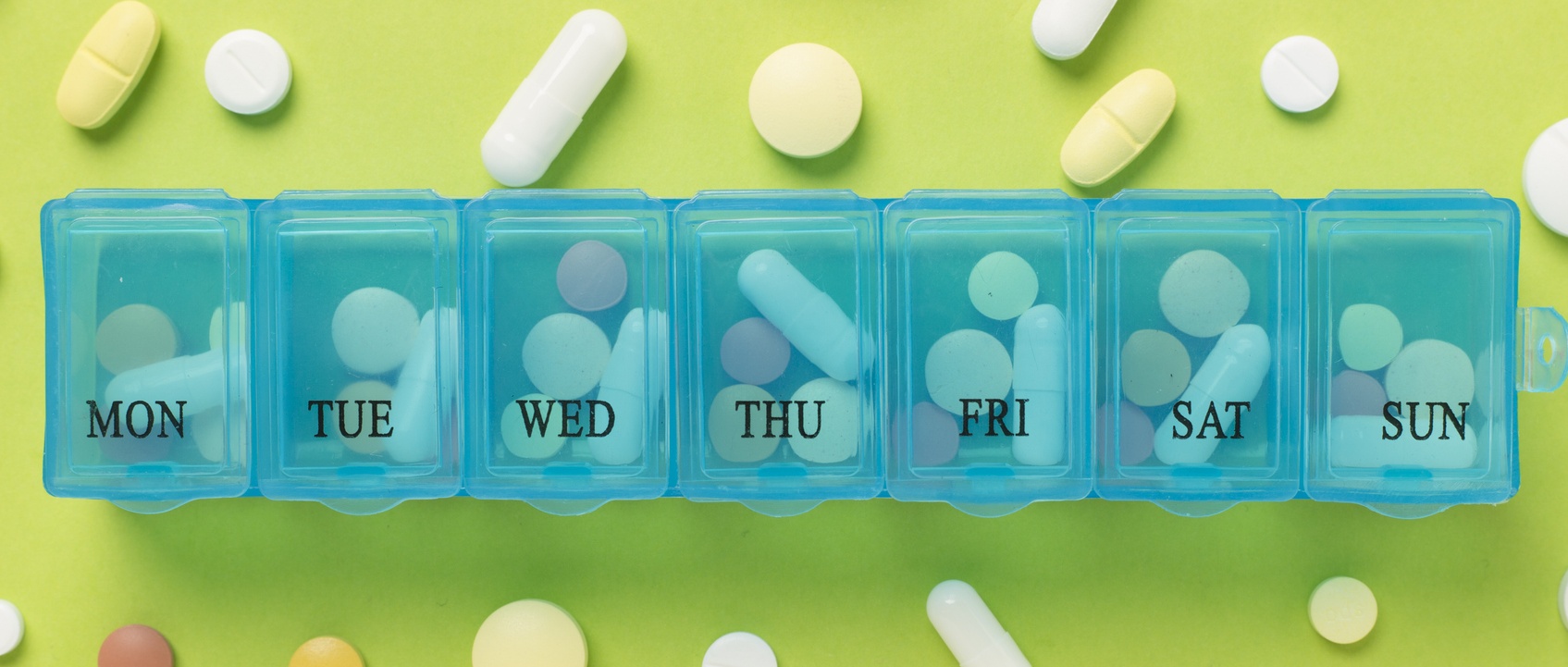
Dosette boxes - also called pill organisers or pill boxes - are reusable plastic boxes divided into compartments labelled with the day and time. Unlike the other two options, someone at home - either you or a carer - needs to fill the compartments.
The benefits of dosette boxes
Reusable - they can be refilled each week, so they create minimal waste.
Flexible - if your medication changes, you can adjust the compartments straight away.
Available in different sizes - a small daily box can be easy to carry, while a larger weekly box suits use at home.
The potential downsides
More room for error - with no pharmacist checking the contents, there's a higher chance of a tablet ending up in the wrong compartment.
A lot rests on the person filling it - if that person is also elderly or has their own health needs, an unintended mistake is more likely, and worrying about it can cause real anxiety.
It takes time - sorting a week of medication into the box can be fiddly and time-consuming.
Not tamper-proof - compartments can sometimes open by accident, so medication can be spilled or lost.
Not suitable for every medicine - some medicines should stay in their original packaging, so check with your pharmacist before moving anything into a box.
Which option is right for you?
There's no single right answer. It depends on your medication, your routine, and the support you have at home. These questions can help you think it through.
How many times a day do you take medication?
If it's more than two or three, a pre-sorted option such as pouching may be clearer and easier to manage.
Do your medicines or timings change often?
A dosette box can be updated straight away at home, without waiting for a new supply, though this also increases the chance of mistakes.
Are you confident filling a dosette box yourself?
If you're unsure, PillTime pouches, which are prepared by a pharmacy, can reduce the risk of errors.
Are you often out when doses are due, or do you travel?
Tear-off pouches are very portable, while a weekly blister pack is not.
Do you have difficulty with sight, dexterity, or memory?
Tell your pharmacist. Pharmacies are expected to consider reasonable adjustments for people with disabilities, so it's worth asking what they can offer.
Not sure if pouching is right for you? Give us a call
Give us a call and we can talk you through whether pouching is right for your specific medication.
You can also speak to your GP or pharmacist at any time before changing how you take your medicines.

Ready to take the guesswork out of daily medication?
If pouching sounds like a good fit, find out how PillTime works, who it's available for, and how to get started.
Escolhas do paciente para Informações sobre medicamentos

Tratamento e medicação
Garantindo que seu medicamento esteja seguro em casa
Se você já vasculhou o fundo do seu armário de remédios em busca de analgésicos, pode encontrar embalagens de comprimidos pela metade, que tomou há algum tempo por causa de uma dor nas costas, ou uma garrafa de remédio que abriu há algumas semanas. Para a #SemanaDaSegurançaDosMedicamentos, vamos ver o que você precisa saber para garantir que seus medicamentos sejam seguros e eficazes para uso.
por Victoria Raw
Tratamento e medicação
O que fazer se o seu medicamento não estiver disponível
Se você toma remédios, então não é estranho pegar uma receita regularmente - mas o que acontece quando ela não está disponível? Existem muitas razões pelas quais um medicamento pode ficar indisponível e é importante que você saiba o que fazer se isso acontecer com sua receita.
por Victoria Raw

Saúde do coração e vasos sanguíneos
What happens to your blood pressure when you're not measuring it?
Think about the last time you had your blood pressure checked. Perhaps you were sitting in your GP's surgery, waiting for the cuff to inflate. Seconds later, two numbers appeared on the screen. Those numbers provide useful information about your blood pressure at that moment. But blood pressure changes throughout the day and night. Some people even have higher readings at the GP's surgery than at home - known as white coat hypertension - while others have normal readings in the surgery but higher blood pressure elsewhere (masked hypertension).
by Hilo

Gravidez
O que levar na sua viagem de babymoon
Se você acabou de reservar sua 'babymoon' (ou seja, a última viagem que você fará antes do bebê chegar), provavelmente tem altas expectativas. Mais do que uma viagem comum, a babymoon está sob pressão para cumprir - afinal, esta pode ser sua última pausa sem filhos por um bom tempo.
por Abi Millar

Tratamento e medicação
Verifique se seus medicamentos têm interações
Use este verificador de interações de medicamentos para ver se seus medicamentos, suplementos, vitaminas, alimentos ou certas condições de saúde podem interagir entre si. Ele pode ajudá-lo a entender os riscos potenciais, evitar efeitos colaterais indesejados e decidir quando é importante falar com um farmacêutico, médico ou outro profissional de saúde. A ferramenta é adequada para verificar tanto medicamentos prescritos quanto de venda livre, assim como suplementos comuns e remédios à base de ervas. Abrir em uma nova janela

Vida saudável
O que é rucking e é adequado para você?
É bem conhecido que uma caminhada rápida beneficia sua saúde, mas se você quiser elevar sua rotina de caminhada a outro nível, pode se interessar por rucking. Neste guia, vamos explicar o que é rucking, explorar seus benefícios para a saúde e ajudá-lo a decidir se é a escolha certa para você.
por Victoria Raw
Sobre o autorVer biografia completa
Autoria de

PillTime
Sobre o revisorVer biografia completa

Dr Colin Tidy, MRCGP
Médico Generalista, Autor Médico
MBBS, MRCGP, MRCP (Paediatrics), DCH
Dr Colin Tidy é um médico do NHS, baseado em Oxfordshire.
Histórico do artigo
Artigo também disponível em Inglês, Alemão, Espanhol, Francês, Italiano, Português, Hindi, Hebraico, Árabe, e Sueco.
19 Nov 2029 | Última versão
19 Nov 2026 | Publicado originalmente
Escrito por:
PillTimeRevisado por
Dr Colin Tidy, MRCGP
Compartilhe seus pensamentos ou experiências com outros em nosso comunidades de pacientes.
Inscreva-se no boletim informativo do Patient
Sua dose semanal de conselhos de saúde claros e confiáveis - escritos para ajudá-lo a se sentir informado, confiante e no controle.
Ao se inscrever, você aceita nossos Política de Privacidade. Você pode cancelar a inscrição a qualquer momento. Nunca vendemos seus dados.