Viral rashes
Peer reviewed by Dr Rosalyn Adleman, MRCGPLast updated by Dr Toni Hazell, FRCGPLast updated 20 Oct 2023
Meets Patient’s editorial guidelines
- DownloadDownload
- Share
- Language
- Discussion
- Audio Version
- Add to preferred sources on Google
In this series:MeaslesChickenpox in childrenChickenpox in adults and teenagersScarlet feverHand, foot and mouth diseaseSchool exclusion for infections
Many viral infections can cause a rash in addition to other symptoms. Rashes are very common with viral infections, especially in young children. It is very important to make sure the rash is not part of a serious infection - eg, meningococcal infection which is a bacterial infection and can be associated with meningitis.
At a glance
A viral rash is a skin rash caused by a viral infection.
It often appears as blotchy red spots that can cover most of your body.
Most viral rashes are not serious and usually clear up within a few days.
Some viral rashes, like rubella or chickenpox, can be serious for pregnant women.
See a doctor if you feel unwell, the rash blisters or spreads rapidly, or if it doesn't improve.
If a rash does not fade with the glass test, seek immediate medical help.
If you or your child suddenly develops a rash that does not disappear with the glass test, you should call 999 or attend the nearest Emergency Department straight away.
What is a viral rash?
The symptoms caused by viral infections can vary depending upon the virus. One of the symptoms that may occur is a rash. There are some well-known viral rashes.
For example, the measles virus and the chickenpox virus cause characteristic rashes along with other symptoms. Sometimes a typical rash helps a doctor to diagnose which virus is causing an illness.
Measles
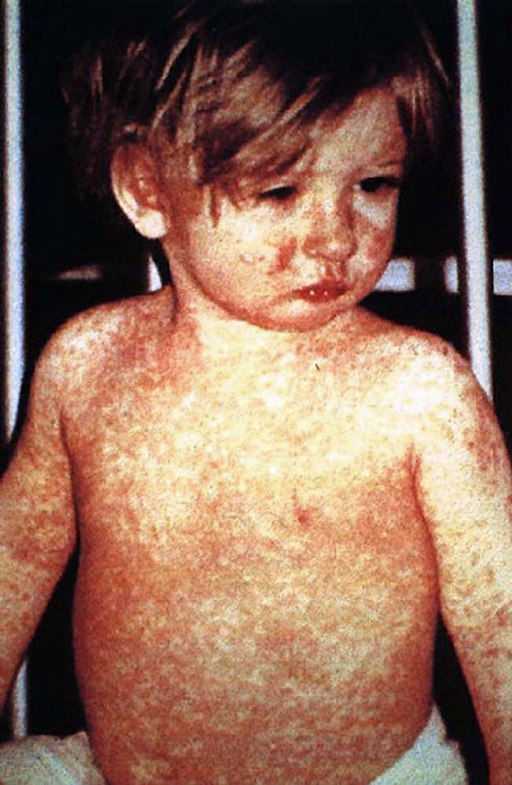
© CDC/NIP/Barbara Rice, Public domain, via Wikimedia Commons
Other viral rashes include:
Rubella
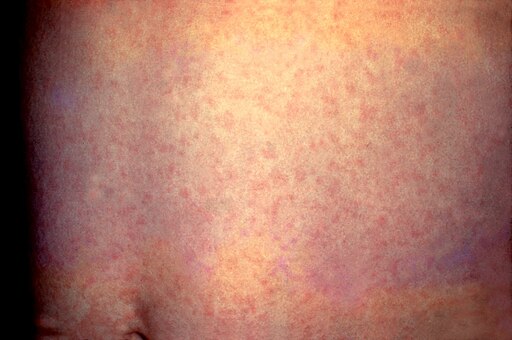
© Photo Credit:Content Providers(s): CDC, Public domain, via Wikimedia Commons
Shingles
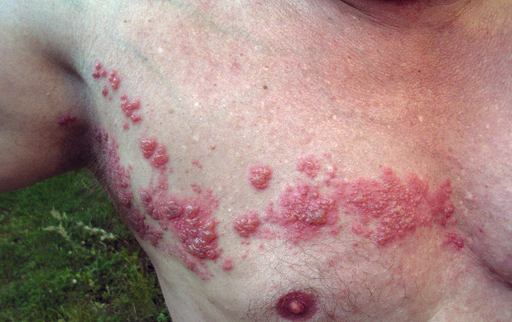
© Fisle, CC BY-SA 3.0, via Wikimedia Commons
Hand, foot, and mouth disease.
Hand, foot and mouth disease
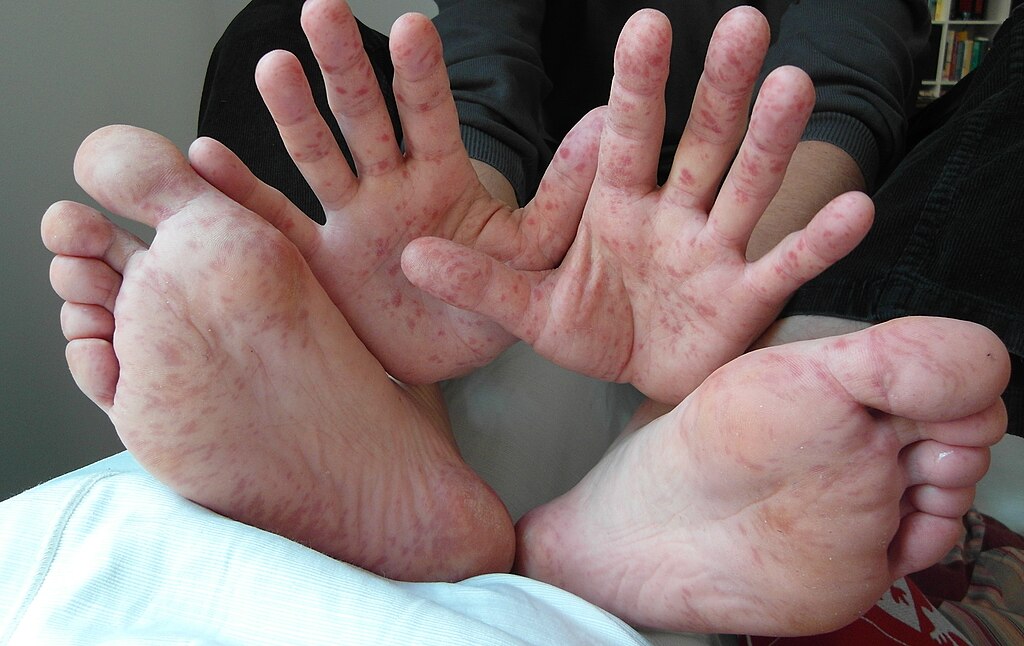
© KlatschmohnAcker, CC BY-SA 3.0, via Wikimedia Commons
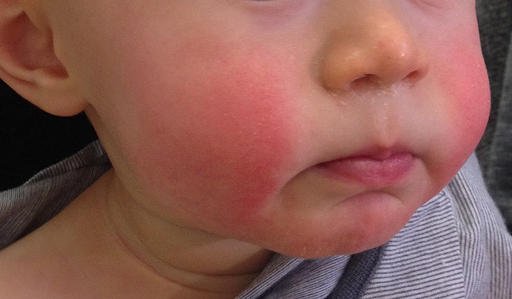
Fifth disease (slapped cheek disease).
Slapped cheek
© Gzzz, CC BY-SA 4.0, via Wikimedia Commons
Roseola
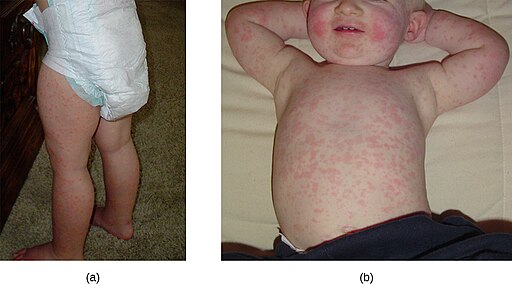
© CNX OpenStax, CC BY 4.0, via Wikimedia Commons
Child with chickenpox
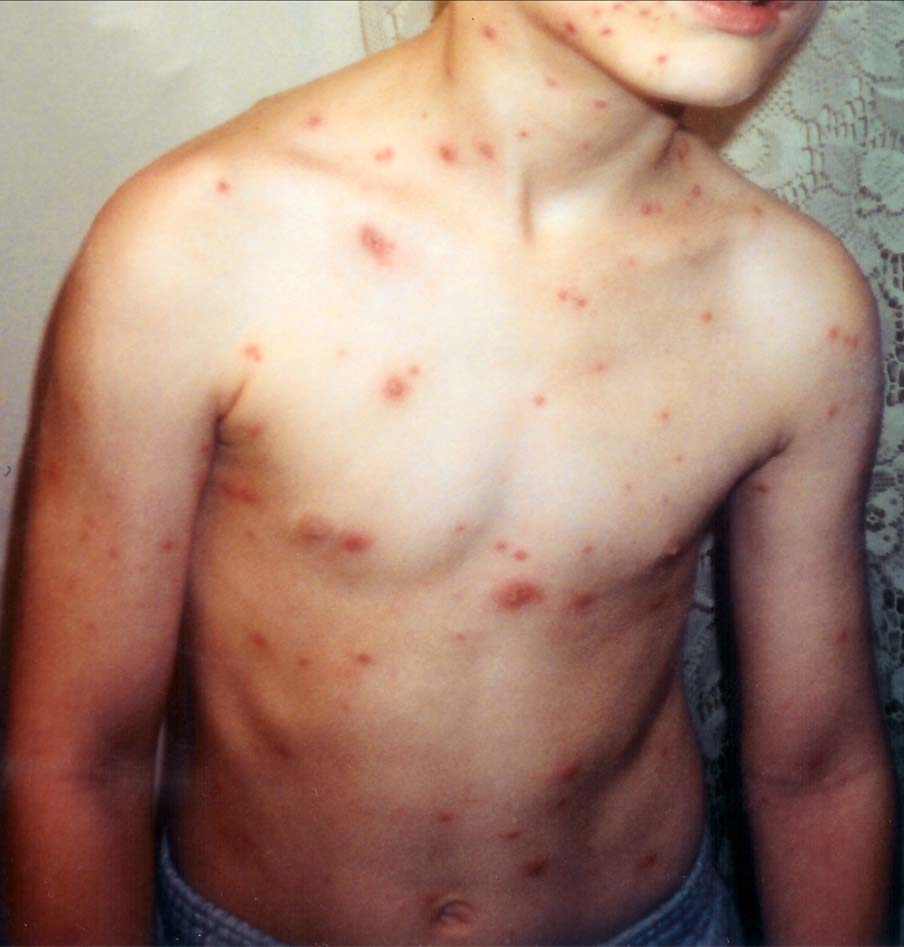
© CC BY-SA 3.0
For those who have recently travelled abroad, there are many other possible causes of a viral rash, including those transmitted by mosquitos, eg, West Nile virus, Zika virus, and dengue fever.
Many viruses can cause a rash in addition to other symptoms such as high temperature (fever) and cough. Many of these rashes are 'nonspecific'. This means the rash is not specific or characteristic enough to identify the virus that is causing the rash.
The doctor cannot say which virus is the culprit, but can say that some virus is a likely cause of the rash.
What do viral rashes look like?
Viral rashes vary in shape and size. However, they often appear as blotchy red spots. Commonly they affect most of your body.
Sometimes they appear dramatically. For example, you may wake up in the morning to find yourself covered in a rash.
How long do they last?
It usually lasts only a few days. Sometimes the rash is slightly itchy. Usually the rash disappears without trace within a few days. There is a great variety of types.
Conditions mistaken for a viral rash
Some skin conditions, such as eczema or hives (urticaria), can cause rashes that look similar to a viral rash.
Are viral rashes serious?
Most viral rashes are not serious. They clear up on their own without any treatment. However, rashes may much less often be caused by serious virus infections such as HIV and those transmitted by mosquitos when travelling abroad.
Therefore, it is very important to make sure the rash is not part of a serious virus infection, or any other serious cause, such as meningococcal infection, which is caused by a bacterial infection.
Other signs suggestive of meningococcal infection in babies and young children include becoming floppy and unresponsive, unusual crying, being very sleepy and having a very high temperature (fever).
The rash of meningococcal infection is usually purple or red spots that don't fade when put under pressure (for example, by pressing a clear glass against your skin).
Glass test for meningitis rash
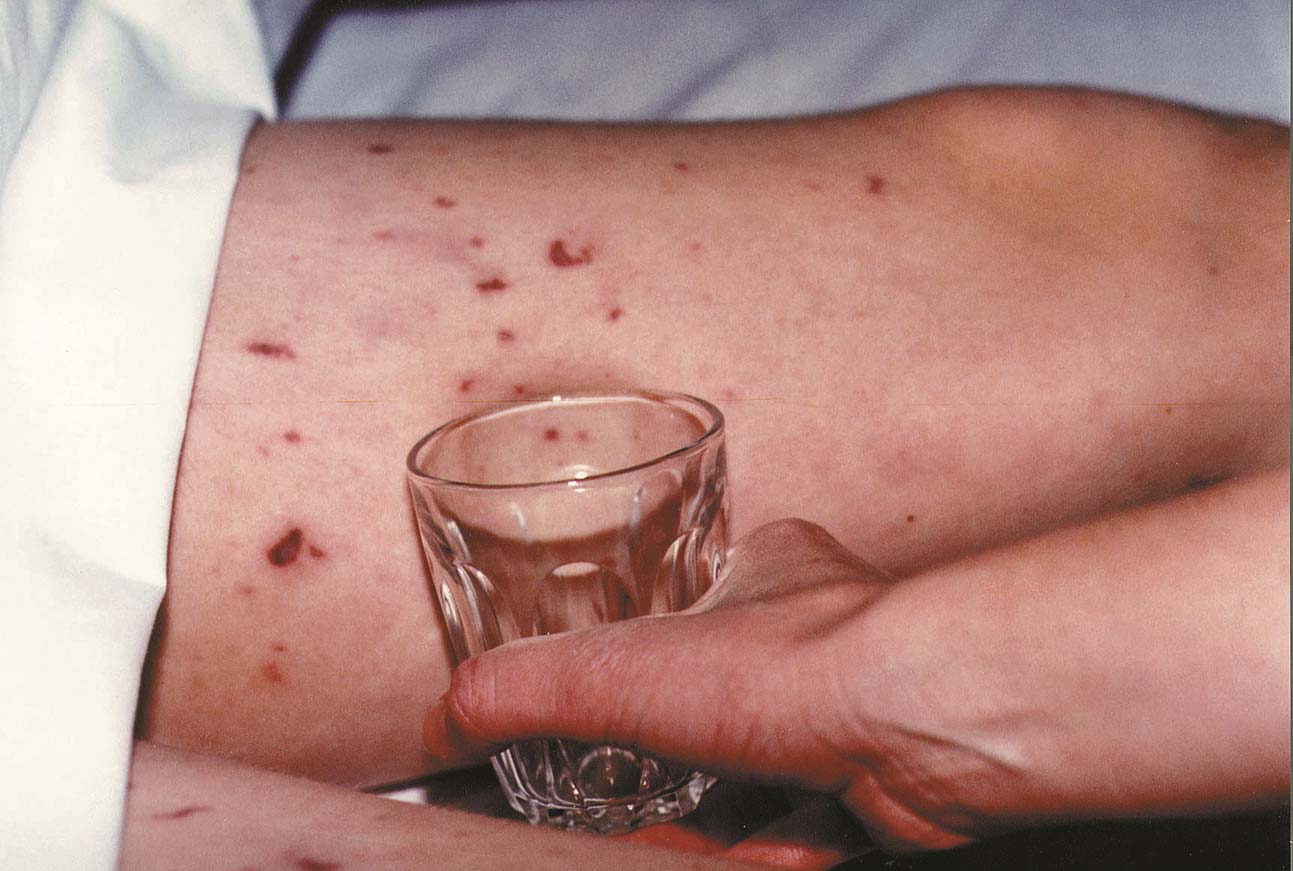
What matters is whether other symptoms or problems occur. For example, the measles virus can cause a nasty illness with a chest infection, severe diarrhoea, etc, in addition to a rash.
However, many viruses cause only minor symptoms - perhaps a mild fever or slight cough - but the rash may look quite dramatic. Sometimes the rash appears just as the other symptoms are improving.
Viral rashes and pregnant women
Most viral infections causing a rash will do no harm to your developing baby. However, some may do. For example, the rubella (German measles) virus and chickenpox. In particular, if you catch chickenpox in pregnancy and have not had it before, you should seek advice from your midwife urgently (usually via the maternity day unit), as you may need treatment to protect your baby.
It is therefore often best for pregnant women to avoid people who have an infectious rash. Also, if you are pregnant and develop a rash, it is advisable to see a doctor for advice.
Should I worry about a viral rash?
The sudden appearance of a widespread blotchy rash is quite common. It is often due to a viral infection. It is the other symptoms that may be of more concern. If other symptoms are mild then there is usually little to worry about. It will usually go in a few days.
Viral rash treatment
There is no specific treatment for the rash itself. Treatment should be aimed at the other symptoms. For example, paracetamol can be used for a high temperature (fever). Some conditions which cause a rash, such as measles, can be extremely dangerous and cause severe illness and death. It is therefore very important to be vaccinated against these conditions - vaccinations are safe and do not cause autism.
Rashes that are itchy often respond to an antihistamine tablet which can be obtained from your doctor or a chemist. There are also various creams available which can work to reduce itching.
When to see a doctor or nurse about viral rashes
If you have any concerns then you should contact a doctor immediately. It’s always a good idea to talk with a healthcare professional when you notice a new rash. It is important to make an appointment if:
You feel generally unwell or feverish.
The rash lasts longer than a week, especially if it doesn’t seem to be improving.
The rash starts to blister.
The rash spreads rapidly or is all over your body.
The rash shows signs of redness, swelling, and oozing.
The rash is painful.
The are any concerns that the rash may indicate a serious illness.
Patient picks for Skin infections

Infections
Viral skin infections
Viral skin infections are a wide group of conditions. They can be a reaction to a virus inside your body, or they can be an actual infection of your skin. They range from the entirely harmless, to the quite serious (but not usually life-threatening). Some are contagious; others you can touch without catching.
by Dr Toni Hazell, FRCGP

Infections
Cat scratch disease
Cat scratch disease is a bacterial infection caused by cat scratches or bites. It causes swollen lymph nodes and other symptoms such as a fever. It usually goes away without treatment, but antibiotics are often used to help clear the infection quicker.
by Dr Doug McKechnie, MRCGP
Frequently asked questions
Can a viral rash affect specific parts of the body?
While viral rashes commonly affect most of the body as blotchy red spots, some specific viral rashes are known to appear in particular areas. For example, shingles typically appears in a localised band. However, many viral rashes are non-specific and can appear anywhere.
Are there any specific home remedies or over-the-counter options to soothe an itchy viral rash?
There is no specific treatment for the rash itself, but if the rash is itchy, antihistamine tablets can often help. These can be obtained from your doctor or a chemist. Additionally, various creams are available that can work to reduce itching.
How can I tell the difference between a serious rash and a common viral rash that will clear on its own?
Most viral rashes are not serious and clear up on their own. However, it's crucial to distinguish them from serious infections. Signs that a rash might be serious include feeling generally unwell or feverish, the rash lasting longer than a week without improvement, blistering, rapid spreading, redness, swelling, oozing, or pain. For babies and young children, signs like being floppy, unresponsive, unusual crying, extreme sleepiness, or a very high temperature along with a rash should prompt immediate medical attention. A critical test for some serious bacterial infections, like meningococcal infection, is the 'glass test': if the rash (purple or red spots) does not fade when pressed with a glass, it requires emergency care.
How can I protect my baby from a viral rash if I'm pregnant?
If you are pregnant, it is often best to avoid people who have an infectious rash, as some viral infections can affect your developing baby. If you develop a rash during pregnancy, it is advisable to see a doctor for advice, especially if you have not had chickenpox before and suspect you might have caught it, as you may need treatment to protect your baby.
Does a viral rash mean I'm contagious?
The article primarily focuses on the presence and characteristics of viral rashes and when to seek medical advice. It doesn't specifically address the duration of contagiousness for all viral rashes. However, it mentions avoiding people with infectious rashes if pregnant, implying that viruses causing rashes can be contagious.
Further reading and references
- Viral skin infections; DermNet NZ
- Viral rash in pregnancy; UK Health Security Agency.
- Fever in under 5s: assessment and initial management; NICE Guidance (last updated November 2021)
About the authorView full bio

Dr Toni Hazell, FRCGP
MBBS, BSc, FRCGP, DFSRH, Dip GU med, DRCOG, DCH (London, UK, 2000)
Dr. Toni Hazell qualified from St. Mary’s Hospital Medical School and did her VTS at Northwick Park Hospital.
About the reviewerView full bio

Dr Rosalyn Adleman, MRCGP
MRCGP
Dr Rosalyn Adleman, is an NHS GP working in north London.
Article history
Article also available in English, German, Spanish, French, Italian, Portuguese, Hindi, Hebrew, Arabic, and Swedish.
Next review due: 18 Oct 2028
20 Oct 2023 | Latest version
Join the conversation
Share your thoughts or experiences with others in our patient communities.

Ask, share, connect.
Browse discussions, ask questions, and share experiences across hundreds of health topics.

Feeling unwell?
Assess your symptoms online for free
Sign up to the Patient newsletter
Your weekly dose of clear, trustworthy health advice - written to help you feel informed, confident and in control.
By subscribing you accept our Privacy Policy. You can unsubscribe at any time. We never sell your data.
More in infections
- Clostridioides difficile
- Genital herpes
- Head lice and nits
- Helicobacter pylori
- Hepatitis A vaccine
- Hepatitis B
- HPV vaccine
- Japanese encephalitis vaccine
- Osteomyelitis
- Pityriasis versicolor
- Polio and polio vaccine
- Roseola
- Scabies
- Strep A
- Symptoms of sepsis in adults
- Syphilis
- Toxoplasmosis
- Typhoid vaccine
- Yeast infection