Swollen legs
Peer reviewed by Dr Philippa Vincent, MRCGPLast updated by Dr Doug McKechnie, MRCGPLast updated 29 May 2024
Meets Patient’s editorial guidelines
- DownloadDownload
- Share
- Language
- Discussion
- Audio Version
- Add to preferred sources on Google
In this series:OedemaIdiopathic oedemaLymphoedema and lipoedema
Legs may swell for numerous reasons. Some of the possible diagnoses are listed in this leaflet.
At a glance
Swollen legs can be caused by various factors, including excess fluid build-up (oedema).
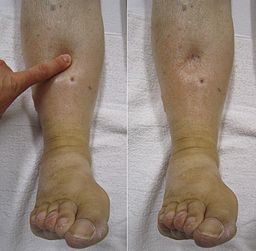
Oedema can affect one or both legs and may be pitting, meaning a dent remains after pressing the skin.
Swelling can be painful or painless, and the skin colour may be red or normal.
Pitting oedema is common and can be caused by heat, long journeys, or pregnancy.
One-sided swelling may be due to injury, infection, arthritis, or a deep vein thrombosis (DVT).
See a doctor urgently if you suspect a DVT, feel out of breath, have a high temperature, or severe pain.
Treatment for swollen legs depends on the cause and may include medication or compression stockings.
Types of swollen legs
There are many different kinds of swelling of the legs. One leg or both legs could be swollen. If both legs, it could be symmetrical or worse on one side. A specific part of the leg(s) could be swollen, or the entire leg(s).
It could have come on suddenly or gradually. It could be there all the time, or it could come and go. It could be painful nor not. Taking into account all these things will help narrow down the likely cause.
What causes swollen legs?
Oedema
The most common cause of swollen legs is oedema. This is a collection of excess fluid in between the cells, which are the building blocks of the tissues of our body.
Oedema can occur in one particular part of the body, or it can be generalised. If generalised, gravity takes the fluid to the part of you which is hanging down, or 'dependent'. This type may be called 'dependent oedema' by a healthcare professional.
For most people, this oedema affects their legs and tends to improve overnight after you have had your legs up. See the separate leaflet called Oedema (Swelling).
If both legs are swollen to the same level, this is likely to be oedema. It is called pitting oedema if a dent made when you press with your fingertip stays in the skin after you have taken the fingertip away.
Causes of oedema
Causes of oedema affecting both legs symmetrically include:
Heat. Some people will find their legs swell up a little in hot weather. Usually this is nothing to worry about and does not need treatment.
Long journeys or being immobile for other reasons. If your legs are hanging down and not moving for long periods of time, you can develop swollen legs. This improves once you are walking about again, or once you lie down at night.
Pregnancy. Pregnant women may have swollen legs in late pregnancy. Usually this is nothing to worry about, but if you are pregnant, your midwife will be doing regular checks to be sure you don't have a blood pressure problem (pre-eclampsia) causing it.
Heart failure. If you have this condition, your heart is not working as effectively to push the blood around your circulation. You may also feel out of breath, and this can be worse when lying down flat at night or on walking.
Anaemia. This is a problem with the red blood cells of your body.
Venous insufficiency (which also causes varicose veins).
Kidney diseases such as nephrotic syndrome, acute kidney injury and chronic kidney disease.
Conditions where there are low levels of protein. If there are low levels of protein in the blood, less fluid is drawn into the blood from the surrounding areas. Conditions causing low protein levels include malnutrition, nephrotic syndrome, liver failure, and a gut condition called protein-losing enteropathy.
Side-effects of medicines such as calcium-channel blockers.
Having very low thyroid levels (hypothyroidism). This is normally accompanied by other symptoms such as tiredness and gaining weight.
Idiopathic oedema. This means there is oedema but no specific cause has been found for it.
What causes one swollen leg?
There are numerous causes including:
Injuries - for example, fractures, sprains, large bruises.
Wear and tear arthritis (osteoarthritis) - in particular this might affect a knee (or both knees) or the big toe(s).
Joint problems caused by inflammation - for example, gout, rheumatoid arthritis, psoriatic arthritis. One or more joints would be warm, red and painful.
Skin infections - for example collections of pus (abscesses) or cellulitis.
Skin reactions - for example an allergy to a bite or sting or medicine.
Deep vein thrombosis (DVT). This is a blood clot in the deep blood vessels, which most commonly affects the calf. You are more at risk of a DVT if you have recently had a period of time when you didn't move very much. Examples include a long plane journey, an illness, an operation. If you have cancer, your risk is also increased.
Lymphoedema. In this condition lymph fluid collects in the tissues because it can't drain very well. This is usually because the lymph nodes are blocked for some reason. This can happen after an operation, after radiotherapy, or due to cancer, injury or infection.
Baker's cyst. This is a soft swelling at the back of your knee.
Peripheral oedema
What are the symptoms of swollen legs?
Having 'swollen legs' is a symptom itself, but legs can be swollen in different ways. The clue to the cause (and therefore the treatment) may well be in the type of swelling. The swelling can be:
One-sided or both-sided. Oedema due to conditions of general body systems is usually on both sides and is symmetrical (for example, if due to heart failure or pregnancy or kidney problems.) One-sided swelling is more likely to be due to a problem with a particular part of that leg.
In a specific area or generalised. Swelling around joints is usually caused by injury or a type of arthritis. Swelling in specific areas of skin may be caused by allergy or infection. Swelling around the back of the heel suggests a problem of the Achilles tendon, etc. Generalised swelling, especially if on both sides, is likely to be oedema.
Painful or painless. Painful conditions include infections, deep vein thrombosis (DVT), injuries and joint problems. Oedema is not usually painful, although legs can ache and feel tight.
Accompanied by red (inflamed) or normal skin colour. If the skin is reddened, it may be due to an infection (such as cellulitis), or inflammation (for example, gout, rheumatoid arthritis or DVT). However if both legs are red then infection as a cause is very unlikely.
Pitting or not. Pitting means that if you press a fingertip into the swollen area and then take your fingertip away, a dent remains in the skin. (See photo earlier in leaflet.) Oedema tends to be pitting. Lymphoedema, a condition where there is a blockage to lymph fluid, does not usually pit so much.
Are there any other symptoms?
In addition to the leg or legs being swollen, there may be other associated symptoms. Again, these help give a clue to the cause of the leg swelling. For example:
Breathlessness which started at the same time as the leg swelling might suggest heart failure (if both legs) or DVT (if one leg) spreading to the lungs (pulmonary embolism).
A high temperature (fever) suggests infection.
Tiredness might suggest a more general illness, such as anaemia or kidney problems.
Diarrhoea might suggest a gut problem affecting the amount of protein being absorbed in the guts.
Being yellow (jaundiced) suggests a liver problem, such as cirrhosis.
Swelling in other places other than the legs - for example, in the tummy, hands or around the eyes. This would suggest a problem with another or a general body system rather than a problem with the leg or legs.
When to see a doctor for swollen legs
You should see your GP urgently if you:
Think you might have a deep vein thrombosis (DVT). This might be the case if one calf is warm, swollen, red and tender. You might have swelling in the foot of that leg.
Feel out of breath.
Have a high temperature.
Feel generally unwell in yourself.
Are in severe pain.
Notice your skin has turned a yellow colour.
If your legs swell up a little in the hot weather but go down again overnight, you don't need to see a doctor. Or if both ankles are a little puffy after a long flight but there is no pain or redness of the calf, and the puffiness settles quickly then you do not need to see a doctor.
Minor swellings from bites or trivial injuries don't usually need medical attention. In most other situations, it is wise to consult a health professional.
If you have swollen legs and are pregnant, make sure you keep your regular appointment with your midwife. Your midwife will regularly check your blood pressure, and check your wee (urine) for protein to make sure your swollen ankles are not a sign of anything serious.
What tests will be done for swollen legs?
This will depend on the information the doctor has obtained by listening to you and examining you. In some cases, no further tests will be needed. In others, tests will be advised. These might include:
Testing your urine. This can usually be done in the doctor's surgery. The urine is tested with a dipstick to see if there is any protein in it, which might suggest a kidney problem, for example.
Blood tests. You might have blood tests to check you for anaemia or heart failure . Tests may be done to check the function of your kidney, liver or thyroid gland.
A chest X-ray. This would check you for medical conditions such as heart failure or a pulmonary embolism.
An ultrasound scan of the leg. This can look at the nature of the swelling and establish where it is coming from. It can be helpful to diagnose tendon problems (such as Achilles tendinopathy), DVT and other problems in the veins of the legs.
An X-ray if a fracture or infection of the bone is suspected.
Depending on the results of these tests, other investigations may be needed in some cases.
What is the treatment for swollen legs?
Treatment will be different depending on the cause. If the cause is fluid in the legs (oedema), this can often be relieved in the short term by taking tablets called 'water tablets' (diuretics).
Diuretics increase the amount of fluid that the kidney filters off to be passed in your wee (urine). So when you take diuretics you eventually pee away some of the fluid which was collecting around your legs.
Diuretics are useful when swollen legs occur due to too much fluid in the body (for example, in heart failure). However, when the cause is something else (such as venous insufficiency, which causes fluid to pool in the legs, but not elsewhere in the body), they are usually not helpful, and can potentially cause problems, such as dehydration or kidney issues.
A few examples of some treatments of some common causes are as follows.
DVT is treated with medicines to thin the blood. These help to stop the blood clot from enlarging, and from spreading to the lungs, whilst the body slowly breaks down the clot itself.
Heart failure is usually treated with a number of medications to improve your heart function, including diuretic medicines.
Skin infections (cellulitis) or bone infections (osteomyelitis) are treated with antibiotics.
Where the cause is a medicine, that medicine can usually be changed, or stopped, or the dose reduced.
Sometimes, doctors may recommend wearing compression stockings to reduce swelling of the legs; for example, when venous insufficiency is the cause.
Are there any complications of swollen legs?
This depends on the cause. The most common complication in swollen tissue is infection.
Where the skin is stretched, it is more prone to be dry. If it is dry, it is more prone to breaks in the skin, allowing germs from the outside of the skin underneath. This can result in cellulitis of the legs. If this is the case a large area of the skin of the legs becomes hot and red. It may cause a high temperature (fever).
Patient picks for Swelling

Signs and symptoms
Idiopathic oedema
Idiopathic oedema is the term for fluid retention which it not caused by a known medical condition. It is most common in women and can sometimes worsen as you get older. Although there is no cure for idiopathic oedema, having a healthy diet which is low in salt can make a real difference. Support stockings and regular exercise are also beneficial.
by Dr Colin Tidy, MRCGP

Signs and symptoms
Oedema
Oedema is fluid retention. Oedema can be most easily seen around the feet and ankles, often after standing for long periods (peripheral oedema). After lying down for a while, the skin around the eyes may look puffy and swollen. In severe cases, oedema can also collect in the lungs causing shortness of breath. Mild oedema is common and usually harmless. Oedema may be due to medication, allergies or more serious underlying disease. Often no particular cause will be found. The most common causes are mentioned below.
by Dr Philippa Vincent, MRCGP
Frequently asked questions
Why do my legs swell at night?
If you experience oedema, which is a collection of excess fluid in between the body's cells, gravity causes this fluid to accumulate in dependent areas like your legs during the day. This type of swelling, called 'dependent oedema', typically improves overnight after you have had your legs elevated.
Can allergies cause swelling in legs?
Yes, skin reactions due to allergies, such as a reaction to a bite, a sting, or a medicine, can cause one of your legs to swell. This would typically be a localised swelling in a specific area of the skin rather than generalised oedema.
Does arthritis cause swollen legs?
Yes, certain types of arthritis can cause swollen legs. Wear and tear arthritis, like osteoarthritis, can affect a knee or both knees, or the big toe(s). Inflammatory joint problems such as gout, rheumatoid arthritis, or psoriatic arthritis can also lead to swelling, often accompanied by the affected joint(s) becoming warm, red, and painful.
What is lymphoedema?
Lymphoedema is a condition where lymph fluid collects in the tissues because it cannot drain properly. This issue typically arises because the lymph nodes are blocked, which can occur after surgery, radiotherapy, or due to cancer, injury, or infection. Unlike regular oedema, lymphoedema usually doesn't leave a dent when pressed.
What is a Baker's cyst?
A Baker's cyst is a soft swelling that can occur at the back of your knee. It is one of the potential causes of a swollen leg.
What are 'water tablets' (diuretics) and how do they help swollen legs?
'Water tablets', or diuretics, are medications that increase the amount of fluid your kidneys filter out to be passed as urine. This helps to remove some of the excess fluid that has collected in areas like your legs, particularly when the swelling is due to too much fluid in the body, such as with heart failure.
Further reading and references
- Cellulitis - acute; NICE CKS, March 2024 (UK access only)
- Deep vein thrombosis; NICE CKS, June 2023 (UK access only)
- Chronic heart failure in adults - diagnosis and management; NICE Guidance (Sept 2018)
About the authorView full bio
Updated by

Dr Doug McKechnie, MRCGP
Medical Writer
MA, MBBS, MSc, DRCOG, MRCP(UK), MRCGP(2021), FHEA
Dr Doug McKechnie is an NHS GP working in London. He works full-time clinically and is also the Deputy Lead for the Clinical and Professional Practice module at University College London Medical School.
Authored by

Dr Mary Harding, MRCGP
General Practitioner, Medical Author
BA, MA, MB, BChir, MRCGP, DFFP
Dr Mary Harding qualified from Cambridge University medical school in 1989.
About the reviewerView full bio

Dr Philippa Vincent, MRCGP
General Practitioner, Medical Author
MB BS, Bsc, MRCGP (2000), DCH, DFSRH, DRCOG
Dr Philippa Vincent is an NHS GP working in North London.
Article history
Article also available in English, German, Spanish, French, Italian, Portuguese, Hindi, Hebrew, Arabic, and Swedish.
Next review due: 28 May 2027
29 May 2024 | Latest version
4 Jul 2017 | Originally published
Authored by:
Dr Mary Harding, MRCGP
Join the conversation
Share your thoughts or experiences with others in our patient communities.

Ask, share, connect.
Browse discussions, ask questions, and share experiences across hundreds of health topics.

Feeling unwell?
Assess your symptoms online for free
Sign up to the Patient newsletter
Your weekly dose of clear, trustworthy health advice - written to help you feel informed, confident and in control.
By subscribing you accept our Privacy Policy. You can unsubscribe at any time. We never sell your data.