Pregnancy and smoking
Peer reviewed by Dr Jacqueline Payne, FRCGPLast updated by Dr Mary Harding, MRCGPLast updated 9 Aug 2017
Meets Patient’s editorial guidelines
- DownloadDownload
- Share
- Language
- Discussion
- Audio Version
- Add to preferred sources on Google
In this series:Diet and lifestyle during pregnancyPregnancy and physical activityFetal alcohol syndrome
This page has been archived.
It has not been reviewed recently and is not up to date. External links and references may no longer work.
If you smoke and you are pregnant or planning to become pregnant, you are strongly advised to stop to benefit your health and the health of your baby.
At a glance
Smoking in pregnancy exposes your baby to harmful chemicals.
Smoking during pregnancy increases the risk of miscarriage, premature birth, and low birth weight.
Children of smoking parents have higher risks of chest infections, asthma, and cot death.
Stopping smoking before or during pregnancy significantly reduces these risks.
Nicotine Replacement Therapy may be an option if you are struggling to stop.
Discuss any difficulties with your pharmacist, practice nurse, or GP.
Sign up for our free 8-week Healthy Pregnancy course!
Each week we’ll share useful information and essential tips on topics such as nutrition, exercise, mental health, symptoms to look out for, and preparing for childbirth, to help you navigate your pregnancy journey whatever stage you are at.
By subscribing you accept our Privacy Policy. You can unsubscribe at any time. We never sell your data.
If you smoke and you are pregnant or planning to become pregnant, you are strongly advised to stop smoking. This is to benefit your health and the health of your baby. Seek help from your pharmacist, practice nurse or GP if you find it difficult to stop smoking, or contact national stop smoking services.
Why is smoking harmful in pregnancy?
Tobacco smoke contains poisonous chemicals which pass into your bloodstream when you smoke, and then on into the growing baby's blood. Smoking when you are pregnant gives a higher risk of:
Having a miscarriage.
Having a pregnancy which does not develop in the normal place (ectopic pregnancy).
Slow growth of the baby leading to a low birth weight.
Bleeding towards the end of pregnancy, due to the placenta coming away from the wall of the womb (uterus) early. This is called placental abruption. The placenta is the tissue which supplies the nutrients the baby needs, so this may harm the baby.
Stillbirth.
Your baby having abnormalities such as a cleft lip or palate.
Even after the birth, children of smoking parents have an increased risk of:
Doing less well at school.
Behavioural problems such as attention deficit hyperactivity disorder (ADHD).
Stopping smoking reduces all these risks. Of course, there are many other risks with smoking, such as the increased risk of developing chest and heart disorders. See the separate leaflet called Quit Smoking (Smoking Cessation) for more details.
When should pregnant women stop smoking?
You and your baby will get most benefit and the risks will be most reduced if you stop before you become pregnant. Planning to become pregnant is a good incentive to stop smoking for many women. It is also often a good time to persuade partners to give up too. However, your baby will still gain some benefit if you stop at any point during pregnancy.
How can I stop smoking when pregnant?
For many people it is not easy to stop. Below are some tips which may help:
Write a list of all the reasons why you want to stop, and keep it with you. Refer to the list when you are tempted to light up.
Set a date for stopping and stop completely. Studies suggest that stopping completely is more effective than reducing gradually.
Tell everyone. Friends and family often give support and may help you.
Get rid of ashtrays, lighters and all cigarettes.
Be prepared for some withdrawal symptoms. When you stop smoking, you are likely to get symptoms which may include feeling sick (nausea), headaches, anxiety, irritability, craving and just feeling awful. These symptoms are caused by the lack of nicotine that your body has been used to. They tend to peak after 12-24 hours and then gradually ease over 2-4 weeks.
Be aware of situations in which you are most likely to want to smoke. (Remember, even though UK pubs have No Smoking policies, there may be outdoor smoking areas.) Try changing your routine for the first few weeks. If drinking tea and coffee are difficult times, try drinking mainly fruit juice and plenty of water.
Take one day at a time. Mark off each successful day on a calendar. Look at it when you feel tempted to smoke, and tell yourself you don't want to start all over again.
Be positive. You can tell people that you don't smoke. You will smell better. After a few weeks you should feel better, taste your food more and cough less. You will have more money.
Food. Some people worry about gaining weight when they give up smoking, as the appetite may improve. Anticipate an increase in appetite and try not to increase fatty or sugary foods as snacks. Try fruit and sugar-free gum instead.
Don't despair if you fail and have a cigarette. You don't have to start smoking again. Pick yourself up and try again. Examine the reasons why you felt it was more difficult at that particular time. It will make you stronger next time.
Get support. Specialist advisers from national stop smoking services can help with support, strategies and information. Contact details are available online.
Can medicines that can help you stop smoking be used in pregnancy?
Nicotine replacement therapy
If withdrawal symptoms are troublesome, nicotine replacement therapy (NRT) may help. Nicotine gum, sprays, patches, tablets, lozenges and inhalers are available to buy, and on prescription. Using one of these increases your chance of stopping smoking if you really want to stop. A pharmacist, GP or practice nurse can advise about NRT:
If you are not yet pregnant but are planning a pregnancy, an option is to try a course of NRT before becoming pregnant.
If you are pregnant, you can still consider using NRT. NRT is a medicine and may have effects on the baby. But, many people argue that NRT is safer than smoking as, unlike smoking, NRT just gives you nicotine. Smoking gives you nicotine plus a lot of toxic chemicals. So, if NRT does enable you to stop smoking, it may be worthwhile to take it even if you are pregnant.
See the separate leaflet called Nicotine Replacement Therapy (NRT) for more details.
Other medicines - can be used before you become pregnant
Medicines called bupropion (Zyban®) and varenicline (Champix®) can help. These are available on prescription. One of these may be useful before you become pregnant. These medicines roughly double your chance of stopping smoking if you really want to stop. They help to reduce the symptoms of nicotine withdrawal. But note:
You should not take these medicines when you are pregnant, as the risk to the unborn child is not known.
If you take one of these medicines, the course should be completed before you become pregnant.
See the separate leaflets called Bupropion (Zyban®) and Varenicline (Champix®).
Can I use electronic cigarettes if I am pregnant?
You will get different advice from different authorities on this one, so be prepared for confusion! Some authorities, such as the Royal College of Obstetricians and Gynaecologists (RCOG) in the UK, or the Centers for Disease Control and Prevention (CDC) in the USA, advise against the use of e-cigarettes in pregnancy. This is because there is not currently enough evidence to be sure they are safe when you are pregnant. Other authorities, however, such as the Smoking in Pregnancy Challenge Group, feel the risk of e-cigarettes is lower than the risk of continuing smoking.
This group advises that although nicotine replacement therapy (NRT) is the preferred method of quitting, if a medicinal product is needed, e-cigarettes are safer than continuing to smoke. It is likely that more information will become available in the next few years about safety in pregnancy. Meanwhile the safest approach is probably to see it as a last resort if you are unable to stop smoking any other way in pregnancy.
Patient picks for General pregnancy information
Pregnancy
Multiple pregnancy
In a multiple pregnancy, there is more than one baby growing in the womb (uterus) at the same time. Being pregnant with twins is the most common example. Both mother and babies need extra monitoring during pregnancy as the risks are higher than in a singleton pregnancy.
by Dr Toni Hazell, FRCGP
Pregnancy
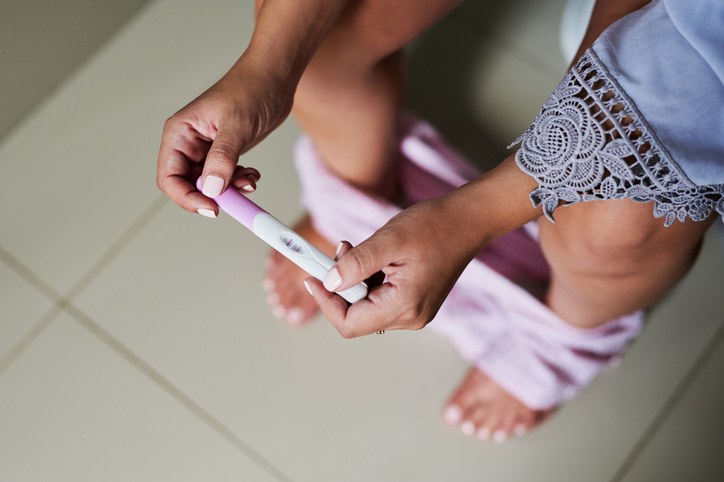
Early pregnancy signs and symptoms
Pregnancy tests are very sensitive so it is common to find out that you are pregnant before you develop any signs or symptoms of pregnancy. However, as your pregnancy continues you may experience these early symptoms and signs of pregnancy. For further advice about having a healthy pregnancy, see also the leaflet Planning to Become Pregnant, which includes information about prenatal vitamin recommendations.
by Dr Colin Tidy, MRCGP
Frequently asked questions
Can I use bupropion (Zyban®) or varenicline (Champix®) to help me stop smoking if I am pregnant?
No, you should not take bupropion (Zyban®) or varenicline (Champix®) when you are pregnant because the potential risks to the unborn child are not fully understood. If you are using either of these medications, the treatment course should be completed before you become pregnant.
If I successfully stop smoking during pregnancy, how quickly do the risks to my baby reduce?
While the article primarily advises stopping before conception for maximum benefit, it states that even stopping at any point during pregnancy will still provide some benefit to your baby by reducing the associated risks.
Do I need to worry about weight gain if I stop smoking while pregnant?
Some people find their appetite improves after giving up smoking. To manage this during pregnancy, try to anticipate an increase in appetite and avoid reaching for fatty or sugary snacks. Instead, opt for healthier choices like fruit or sugar-free gum.
Is it better to gradually cut down on cigarettes or stop completely?
Studies suggest that stopping smoking completely is more effective than trying to reduce gradually. The article recommends setting a date and stopping entirely.
What support is available to me to help me stop smoking during pregnancy?
You can seek help from your pharmacist, practice nurse, or GP. There are also national stop smoking services staffed by specialist advisors who can offer support, strategies, and information. Contact details for these services are often available online.
Further reading and references
- Antenatal care for uncomplicated pregnancies; NICE Clinical Guideline (March 2008 - updated February 2019)
- Management of women with obesity in pregnancy; Royal College of Obstetricians and Gynaecologists and Centre for Maternal and Child Enquiries (March 2010)
- Smoking: stopping in pregnancy and after childbirth; NICE Public health guideline, June 2010
- Weight management before, during and after pregnancy; NICE Public Health Guideline (July 2010)
- Pregnancy: occupational aspects of management, Royal College of Physicians and the Faculty of Occupational Medicine (2013)
- Fetal Alcohol Spectrum Disorders; Centers for Disease Control and Prevention
- Blackburn C et al; Facing the challenge and shaping the future for primary and secondary aged students with Foetal Alcohol Spectrum Disorders (FAS-eDProject) Literature Review, National Organisation for Foetal Alcohol Syndrome - UK, September 2009
- Pattemore PK; Tobacco or healthy children: the two cannot co-exist. Front Pediatr. 2013 Aug 23;1:20. doi: 10.3389/fped.2013.00020.
- De-Regil LM, Pena-Rosas JP, Fernandez-Gaxiola AC, et al; Effects and safety of periconceptional oral folate supplementation for preventing birth defects. Cochrane Database Syst Rev. 2015 Dec 14;12:CD007950. doi: 10.1002/14651858.CD007950.pub3.
- Monahan M, Boelaert K, Jolly K, et al; Costs and benefits of iodine supplementation for pregnant women in a mildly to moderately iodine-deficient population: a modelling analysis. Lancet Diabetes Endocrinol. 2015 Sep;3(9):715-22. doi: 10.1016/S2213-8587(15)00212-0. Epub 2015 Aug 9.
- Leaflets and Resources; National Organisation for Foetal Alcohol Syndrome - UK (NOFAS-UK)
- Antenatal care - uncomplicated pregnancy; NICE CKS, July 2016 (UK access only)
- E-cigarettes: an evidence update; Public Health England, August 2015
- Chamberlain C, O'Mara-Eves A, Porter J, et al; Psychosocial interventions for supporting women to stop smoking in pregnancy. Cochrane Database Syst Rev. 2017 Feb 14;2:CD001055. doi: 10.1002/14651858.CD001055.pub5.
- Use of electronic cigarettes in pregnancy: A guide for midwives and other health professionals; The Smoking in Pregnancy Challenge Group
- E cigarettes in pregnancy; The Centers for Disease Control and Prevention (CDC)
- Evenson KR, Barakat R, Brown WJ, et al; Guidelines for Physical Activity during Pregnancy: Comparisons From Around the World. Am J Lifestyle Med. 2014 Mar;8(2):102-121.
- Physical Activity and Exercise During Pregnancy and the Postpartum Period; The American College of Obstetricians and Gynaecologists (ACOG) Committee Opinion, December 2015
- Newton ER, May L; Adaptation of Maternal-Fetal Physiology to Exercise in Pregnancy: The Basis of Guidelines for Physical Activity in Pregnancy. Clin Med Insights Womens Health. 2017 Feb 23;10:1179562X17693224. doi: 10.1177/1179562X17693224. eCollection 2017.
- Harrison AL, Shields N, Taylor NF, et al; Exercise improves glycaemic control in women diagnosed with gestational diabetes mellitus: a systematic review. J Physiother. 2016 Oct;62(4):188-96. doi: 10.1016/j.jphys.2016.08.003. Epub 2016 Aug 22.
- De-Regil LM, Palacios C, Lombardo LK, et al; Vitamin D supplementation for women during pregnancy. Cochrane Database Syst Rev. 2016 Jan 14;(1):CD008873. doi: 10.1002/14651858.CD008873.pub3.
- The Pregnancy Book; Dept of Health, 2009 (archived content)
- UK Chief Medical Officers’ Low Risk Drinking Guidelines; GOV.UK, August 2016
- Jahanfar S, Jaafar SH; Effects of restricted caffeine intake by mother on fetal, neonatal and pregnancy outcomes. Cochrane Database Syst Rev. 2015 Jun 9;(6):CD006965. doi: 10.1002/14651858.CD006965.pub4.
- Chen LW, Wu Y, Neelakantan N, et al; Maternal caffeine intake during pregnancy is associated with risk of low birth weight: a systematic review and dose-response meta-analysis. BMC Med. 2014 Sep 19;12:174. doi: 10.1186/s12916-014-0174-6.
About the authorView full bio

Dr Mary Harding, MRCGP
General Practitioner, Medical Author
BA, MA, MB, BChir, MRCGP, DFFP
Dr Mary Harding qualified from Cambridge University medical school in 1989.
About the reviewerView full bio

Dr Jacqueline Payne, FRCGP
General Practitioner, Medical Author
MB, BS, DFFP, DRCOG, FRCGP
Jacqueline was a GP in Kendal, Cumbria for 25 years, where she trained young GPs for the RCGP and was an Instructing Doctor for the FSRH.
Article history
Article also available in English, German, Spanish, French, Italian, Portuguese, Hindi, Hebrew, Arabic, and Swedish.
9 Aug 2017 | Latest version
Join the conversation
Share your thoughts or experiences with others in our patient communities.

Ask, share, connect.
Browse discussions, ask questions, and share experiences across hundreds of health topics.

Feeling unwell?
Assess your symptoms online for free
Sign up to the Patient newsletter
Your weekly dose of clear, trustworthy health advice - written to help you feel informed, confident and in control.
By subscribing you accept our Privacy Policy. You can unsubscribe at any time. We never sell your data.
More in pregnancy
- Abortion
- Amniocentesis
- Cardiotocography
- Common side-effects of pregnancy
- Contraception barrier methods
- Contraception for women over 40
- Contraceptive injection
- Feeding your toddler
- Fetal anticonvulsant syndrome
- Long-acting reversible contraceptives
- Natural family planning methods
- Nausea and vomiting in pregnancy
- Neonatal jaundice
- Planning to become pregnant
- Pregnancy screening tests
- Premature babies
- Right lower quadrant pain in pregnancy
- Rubella and pregnancy
- Spina bifida
- Sterilisation