Clareamento dental
Revisado por Dr Hayley Willacy, FRCGP Autoria de Toothpick Publicado originalmente 23 Fev 2015
Atende aos diretrizes editoriais
- BaixarBaixar
- Compartilhar
- Language
- Discussão
- Versão em Áudio
- Adicionar às fontes preferidas no Google
Aviso sobre o conteúdo
Esta página não foi revisada recentemente, portanto, algumas informações ou links externos podem ter mudado.
Quando se trata de dentes mais brancos, mesmo aqueles com uma rotina de higiene bucal impecável acabarão sofrendo algum nível de descoloração eventualmente. Felizmente, existem vários métodos rápidos e fáceis de clareamento dental para iluminar a cor dos seus dentes sem causar danos à saúde bucal. A maioria dos kits de clareamento dental funciona usando um agente de branqueamento, normalmente contendo peróxido. Este, quando usado em níveis seguros, é uma maneira eficaz de remover as manchas de dentro do dente que causam a descoloração.
Em resumo
Tooth whitening is a way to lighten the shade of your natural teeth.
Professional whitening methods include chair-side, dentist-supervised home, and laser treatments.
A dentist will assess if you are suitable for tooth whitening, especially if you have gum disease.
Whitening only works on natural teeth; false teeth, crowns, or fillings will not change colour.
After treatment, teeth can be sensitive, so avoid very hot or cold food and drink.
Only a qualified dental professional can legally perform or supervise tooth whitening in the UK.
The effects of teeth whitening are not permanent and can fade, especially with certain foods or smoking.
There are a number of ways you can have a tooth whitening treatment administered:
Chair-side whitening
This method will take a couple of weeks and require multiple trips to your dentist. After a consultation, your first appointment will involve having a mould of your teeth cast using dental putty. Over the next 5-10 days a technician will use this mould to create a custom-made tooth whitening tray for you. Once the tray is ready, you’ll go back to the dentist who will perform the whitening process.
teeth whitening
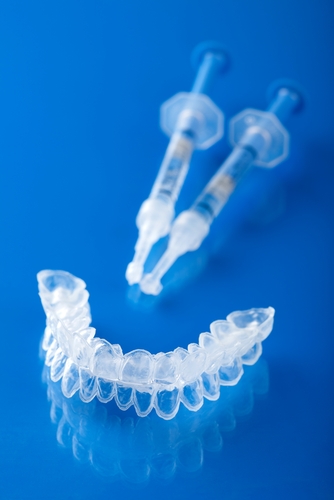
First, a protective gel or a rubber shield will be applied to your gums. Then, the tooth whitening tray is filled with a bleaching agent and worn like a mouth guard. The agent will oxidise stains and get into the enamel and dentine of the teeth, lightening their shade. This will take 30 minutes to an hour. Depending on the look you are trying to achieve, you may need to come back a few more times. This treatment is used less these days as more effective methods are available.
Dentist-supervised home whitening
This is essentially the same as chair-side whitening except that, once you’ve had your mould made, your dentist will instruct you how to perform the rest of the whitening treatment in your own home. This home teeth whitening option is less expensive than chair-side whitening and useful for those with busy schedule who are unable to make repeated visits to the dentist.
Laser whitening
Laser teeth whitening, sometimes known as 'power whitening', is a quicker, if more expensive treatment. Like other whitening methods, the teeth are bleached so as to appear whiter. However, in the case of laser treatment, this is achieved by applying a teeth whitening gel and then shining a powerful light on your teeth to accelerate the process of removing the internal tooth stains.
The bleaching solution used for a laser whitening treatment usually contains a higher concentration of peroxide than would be used in other methods, so a protective gel will be applied to your lips and gums. In addition, the gums will be covered with rolls of cotton wool and a retractor will be used to keep your lips and cheeks a safe distance from your teeth.
The whole process is very quick and you can be in and out of the dentist’s practice within the space of two hours. Some patients may experience an instant improvement but require dentist-supervised home whitening in addition, particularly when the level of staining is advanced.
Who is whitening appropriate for?
Anyone with a healthy mouth should benefit from a teeth whitening treatment. However, if you have gum disease or other dental problems, your dentist may decide that teeth whitening will not be suitable, until successfully treated. You should also be aware that whitening will only work on natural teeth; false teeth, crowns, bridges, fillings and veneers will be unresponsive to the process. This could potentially leave your with teeth with uneven colouration. If you have de-calcifications (white spots) on your teeth, these might actually become more noticeable after bleaching. It's important that during the pre-treatment consultation you understand the need and cost for additional treatment to replace crowns, veneers and fillings.
Treatment has been successfully carried out by professionals for decades and millions of people worldwide have benefited from this treatment.
Is teeth whitening painful?
Most people find that their teeth are much more sensitive for the next couple of days following treatment. This is not usually experienced as a constant pain, but intermittent bursts of discomfort. It’s recommended that you avoid especially hot or cold food or drink for around 24-48 hours after treatment. Your dentist will provide advice on how to manage the short-term pain after treatment.
Why go to a dentist when home whitening kits are available?
When dealing with a bleaching agent such as peroxide, it is possible to burn yourself. As a result, DIY home kits, including teeth whitening strips, cannot be sold at the same strength as professionals would use. This means they will be less effective, or require a more frequent use to achieve the same results. This, in turn, could lead to gum irritation and sensitive teeth. Incorrect use or overuse of bleach could also damage the enamel, which is why these treatments should be avoided, even if they appear cheaper than professional treatment.
Legally, in the UK, teeth whitening products which contain or release between 0.1 and 6 percent hydrogen peroxide cannot be sold to anyone outside the dental profession.
Can I get my teeth whitened by a beauty salon?
No. New legislation was introduced at the end of 2012 that means that teeth whitening must only be performed after a clinical examination by a qualified dentist. Additionally, the dentist must perform the first treatment or supervise another qualified dental professional, under prescription. Only after this appointment can the dentist dispense the tooth whitener for supervised home whitening.
Illegal tooth whitening conducted by unlicensed practitioners without dental training who use too much hydrogen peroxide could result in permanent damage to teeth and gums. And should be avoided at all costs.
Will the effects be permanent?
No. Your teeth will still be susceptible to staining after the treatment. This means the effect will fade, particularly if you drink tea, coffee, and red wine or are a smoker. The whitening offered by bleaching kits tends to offer more enduring results than laser treatment effects but takes longer to achieve.
How much does teeth whitening cost?
It depends on the dentist and the method of whitening you opt for, but you can expect to pay between £200-£900, with dentist supervised whitening kits providing the cheapest option and laser treatment being the most expensive, usually.
This article was provided by Toothpick, the leading provider of online dentist appointments in the UK.
Escolhas do paciente para Dental problems

Cuidados orais e dentários
Próteses dentárias
Próteses dentárias são dentes falsos removíveis feitos de acrílico ou metal que substituem dentes perdidos. Embora seu dentista tente manter o máximo possível de seus próprios dentes, mesmo pessoas que mantêm uma boa rotina de saúde bucal podem precisar de próteses em algum momento de suas vidas. Perder dentes não só pode causar problemas na fala e na alimentação, como também pode ter um impacto emocional. Quaisquer que sejam as razões para a perda de dentes, as próteses podem prevenir esses problemas, restaurar a autoconfiança e melhorar sua aparência, proporcionando suporte extra para suas bochechas e lábios. Existem vários tipos de próteses a considerar, dependendo da sua situação, e os custos variam de acordo.
by Toothpick
Cuidados orais e dentários
Implantes dentários
Um implante dentário é uma maneira moderna de substituir dentes perdidos. Ele assume a forma de um pino de titânio que se fixa no seu maxilar e é coberto por um dente artificial. A coroa do seu implante dentário será quase indistinguível do resto dos seus dentes e funcionará como um dente normal - tornando os implantes uma solução muito atraente e de longo prazo. O processo pode levar entre dois e seis meses, pois a coroa é ajustada uma vez que o pino de titânio tenha se integrado ao maxilar. Implantes dentários são geralmente realizados por dentistas cosméticos particulares e raramente são oferecidos pelo NHS. Qualquer pessoa com dentes e gengivas saudáveis pode ter um implante colocado.
by Toothpick
Perguntas frequentes
What is the primary difference between 'chair-side whitening' and 'dentist-supervised home whitening' if both use a custom tray?
The main difference lies in where the actual whitening process occurs. With chair-side whitening, the dentist performs the bleaching treatment in their office, often over multiple visits. For dentist-supervised home whitening, after the custom tray is made, you are instructed on how to apply the bleaching agent yourself at home.
If I have existing dental work like crowns or fillings, will professional whitening damage them?
No, professional whitening will not damage existing dental work such as false teeth, crowns, bridges, fillings, or veneers. However, these materials will not respond to the bleaching agent, meaning they will retain their original colour. This could result in uneven tooth colouration if they are not replaced or treated to match your newly whitened natural teeth.
How soon after professional tooth whitening can I resume my normal diet, including hot and cold drinks?
It's recommended that you avoid especially hot or cold food or drink for about 24-48 hours after treatment. Doing so can help manage the increased tooth sensitivity commonly experienced during this period.
Is there a recommended way to maintain the results of teeth whitening for as long as possible?
The article states that your teeth will still be susceptible to staining after treatment, and the effects will fade, particularly if you consume tea, coffee, red wine, or smoke. While not explicitly stated as a recommendation, reducing exposure to these staining agents would logically help prolong the whitening effects.
How does the bleaching agent work to whiten teeth, and does it affect the tooth structure?
The bleaching agent used in professional teeth whitening works by oxidising stains. It penetrates the enamel and dentine of the teeth, which then lightens their shade. The article implies that when supervised by a dentist, this process effectively whitens teeth without damaging the enamel, unlike unsupervised or incorrect use of strong DIY kits.
Sobre o autor
Autoria de

Toothpick
Sobre o revisorVer biografia completa

Dr Hayley Willacy, FRCGP
Médico Generalista, Autor Médico
MBChB (1992), DRCOG, DFFP, MRCOG (Part 1) MRCGP (2007), DFSRH (2013), MSc - medical education (2020)
A Dra. Hayley Willacy era uma médica do NHS atuando no noroeste da Inglaterra, que se aposentou da prática clínica em 2022 após 30 anos.
Histórico do artigo
Artigo também disponível em Inglês, Alemão, Espanhol, Francês, Italiano, Português, Hindi, Hebraico, Árabe, e Sueco.
23 Fev 2015 | Publicado originalmente
Escrito por:
Toothpick
Revisado por
Dr Hayley Willacy, FRCGP
Participe da conversa
Compartilhe seus pensamentos ou experiências com outros em nosso comunidades de pacientes.

Pergunte, compartilhe, conecte-se.
Navegue por discussões, faça perguntas e compartilhe experiências em centenas de tópicos de saúde.

Sentindo-se mal?
Avalie seus sintomas online gratuitamente
Inscreva-se no boletim informativo do Patient
Sua dose semanal de conselhos de saúde claros e confiáveis - escritos para ajudá-lo a se sentir informado, confiante e no controle.
Ao se inscrever, você aceita nossos Política de Privacidade. Você pode cancelar a inscrição a qualquer momento. Nunca vendemos seus dados.