
Epididymo-orchitis
Peer reviewed by Dr Colin Tidy, MRCGPLast updated by Dr Rachel Hudson, MRCGPLast updated 11 Sept 2024
Meets Patient’s editorial guidelines
- DownloadDownload
- Share
- Language
- Discussion
- Audio Version
- Add to preferred sources on Google
In this series:Scrotal lumps, pain and swellingTesticular torsionEpididymal cystVaricoceleHydrocele in adultsHydrocele in infants
Epididymo-orchitis is an inflammation of the epididymis and/or testicle. The epididymis and testicle can swell and the scrotum may become enlarged, tender and red. In adults, epididymo-orchitis is usually due to infection, most commonly from a urine infection or a sexually transmitted infection. A course of antibiotic medicine will usually clear the infection.
At a glance
Epididymo-orchitis is inflammation of the epididymis and/or testicle.
It is often caused by an infection, such as a urine infection or a sexually transmitted infection.
Symptoms include rapid swelling, tenderness, and redness of the scrotum, often with pain.
Treatment usually involves a course of antibiotics and painkillers.
Most people recover fully, but complications like ongoing pain or reduced fertility can occur.
What is epididymo-orchitis?
Epididymitis means inflammation of the epididymis (the structure next to the testicle (testis) that is involved in making, storing and transporting sperm).
Orchitis means inflammation of a testicle.
As the epididymis and testis lie next to each other, it is often difficult to tell if the inflammation is of the epididymis (epididymitis), the testis (orchitis) or both. Therefore, the term epididymo-orchitis is often used.
Testis - epididymitis and orchitis
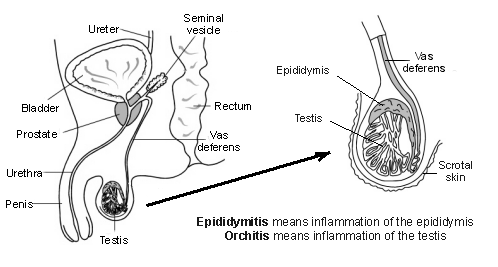
Causes of epididymo-orchitis
In boys who have not reached puberty, epididymo-orchitis is rare and symptoms are usually not due to an infection though they can occasionally occur as a result of a urine infection. The most common cause at this age is thought to be urine refluxing into the duct that sperm pass down (the ejaculatory duct, or vas deferens).
Rarely, epididymo-orchitis in children can be a complication of Henoch-Schönlein purpura, a condition caused by inflammation of the blood vessels.
In over-14s, most cases of epididymo-orchitis are due to an infection. Causes of infection include the following:
A complication from a urine infection
Germs (bacteria) such as E. coli that cause urine infections can sometimes track down the vas deferens (the tube that connects the epididymis to the urethra) to cause an epididymo-orchitis. This can happen at any age and is the most common cause of epididymo-orchitis in men aged over 35 years. This is because partial blockage of urine flow becomes more common with increasing age, either due to an enlarged prostate gland or narrowing of the urethra (urethral stricture). The urethra is the tube that urine flows out of from the bladder. Partial blockage of urine makes you more prone to develop urinary tract infections.
Sexually transmitted infection
A sexually transmitted infection (STI/STD) is the most common cause of epididymo-orchitis in young men (but can occur in any sexually active man). It most commonly occurs with chlamydial and gonorrhoeal infections. In men, these infections typically infect the urethra to cause a urethritis. However, sometimes the infection can track down the vas deferens to the epididymis and testicle (testis).
The mumps virus
The mumps virus used to be a common cause. Most people with mumps develop swelling of the parotid salivary glands near the jaw. However, mumps in boys also causes epididymo-orchitis in about 1 in 5 cases. The virus gets to the testicles via the bloodstream. This cause is now less common since the measles, mumps and rubella (MMR) immunisation is now routinely given to children.
An operation to the prostate gland or urethra
This may allow germs (bacteria) into the urethra which may track down to the testicles. Epididymo-orchitis used to be a common complication after removal of the prostate gland (prostatectomy). This is now rare due to newer surgical techniques.
Medication
Epididymo-orchitis can occasionally be a side-effect of a medicine called amiodarone (a medication used for heart rhythm problems). It normally occurs at doses above 200 mg, especially when the dosage range reaches 400-800 mg.
Uncommon causes of epididymo-orchitis
Other viral infections are uncommon causes of epididymo-orchitis. Infection from other parts of the body can travel in the blood to the testicles, such as tuberculosis (TB) and brucellosis. When this happens it is usually in people who have a problem with their immune system (for example, people with AIDS).
Schistosomiasis is a tropical infectious disease that can cause epididymo-orchitis. Men with Behçet's disease may develop inflamed testicles to cause a non-infective epididymo-orchitis. Injury to the scrotum can cause inflammation of the epididymis and testicle.
How common is epididymo-orchitis?
Epididymo-orchitis occurs in about 1 in 1,000 males. It is common in men aged 15-30 years and in men aged over 60 years and is rare before puberty. About 3 in 10 boys who have mumps after puberty develop orchitis. The risk of developing epididymo-orchitis is increased if a catheter or other instruments are inserted into the urethra.
Symptoms of epididymo-orchitis
Symptoms usually develop quickly - over a day or so. The affected epididymis and testicle can swell rapidly and the scrotum often becomes enlarged, tender and red. It can be very painful. Sometimes there is pain without significant swelling or redness but it will be very tender when examined.
There may be other symptoms if the epididymo-orchitis is a complication from another infection. For example, there may be pain on passing urine if there is a urine infection or a discharge from the penis if there is a sexually transmitted infection. As with any infection, there may be a high temperature (fever) and general symptoms of feeling unwell.
Diagnosing epididymo-orchitis
Tests to look for infecting germs (bacteria)
A urine test will usually be done if a urine infection appears to be the root cause. A urine sample might also be taken if a sexually transmitted infection is thought to be the root cause (swabs from the penis used to be taken but urine tests will often give the necessary results nowadays). Sexual partners of people with epididymo-orchitis caused by a sexually transmitted infection will also need testing.
Ideally, someone with epididymo-orchitis should be assessed in a sexual health clinic, particularly under the age of 40 where 50% of epididymo-orchitis infections will be due to a sexually transmitted infection.
See the separate leaflets called Chlamydia, Urethritis in men and Gonorrhoea for more details.
Blood tests
Blood tests may occasionally be requested including a full blood count or CRP to look for evidence of infection and inflammation. However, these would not usually be needed.
Tests of the urinary tract
Tests to look into the urethra and bladder may be needed if a urine infection is the cause and if this is thought to be due to other urinary tract abnormalities. Referral to a urology specialist may be considered depending on the results of some of the tests (eg if there is still urine left in the bladder after passing urine).
See the separate leaflets called Urine infection in men and Urine infection in children for more details.
Treatment for epididymo-orchitis
A course of antibiotic medicines is usually advised as soon as epididymo-orchitis is diagnosed; these are usually given for two weeks. These normally work well. Pain usually eases within a few days but swelling may take a week or so to go down, sometimes longer. The choice of the antibiotic depends on the most likely underlying cause of the infection.
Symptoms should start to improve within three days and further advice should be sought if there is no improvement or if the symptoms have not completely disappeared in two weeks.
If a sexually transmitted infection is the cause then sex should be avoided until treatment and follow-up have been completed. Sexual partners of men with epididymo-orchitis caused by a sexually transmitted infection may also need antibiotic treatment.
The vast majority of epididymo-orchitis infections are caused by bacteria which is why antibiotics are prescribed. Antibiotics do not kill viruses and they are not needed if a viral infection is the cause - for example, mumps.
Supportive underwear may help to ease the pain. Painkillers and ice packs (ice should never be applied directly to the skin) will also ease the pain.
Complications of epididymo-orchitis
Most people recover fully from epididymo-orchitis and complications are uncommon. Possible complications include:
Ongoing pain or swelling in the testicle - this settles within three months in more than four in five men with epididymo-orchitis.
A collection of pus due to infection (an abscess) occasionally develops in the scrotum. This may need a small operation to drain the pus.
Reduced fertility in the affected testicle (testis), especially in cases caused by the mumps virus.
An ongoing inflammation occasionally develops (chronic epididymitis).
Rarely, serious damage to the testicle may occur and result in dead tissue (gangrene) in the testicle that needs to be surgically removed.
Patient picks for Testicle and scrotum disorders

Men's health
Blood in semen
Haematospermia means there is blood in the semen. Usually there are no other symptoms such as pain. In men under 40 years old it is usually harmless and resolves without any treatment. However, it can also be caused by a number of conditions that need investigations and treatment.
by Dr Hayley Willacy, FRCGP

Men's health
Varicocele
A varicocele is like varicose veins of the small veins (blood vessels) next to one testicle (testis) or both testicles (testes).
by Dr Doug McKechnie, MRCGP
Frequently asked questions
What is the difference between epididymitis and orchitis?
Epididymitis refers to inflammation of the epididymis, a structure next to the testicle involved in sperm production, storage, and transport. Orchitis, on the other hand, is the inflammation of a testicle itself. Because these structures are so close, it's often hard to distinguish between them, so the combined term epididymo-orchitis is frequently used.
How can epididymo-orchitis affect men differently at various ages?
In boys who haven't reached puberty, epididymo-orchitis is rare and usually not due to infection, though a urine infection can sometimes be the cause. It's more commonly seen in men aged 15-30 and over 60. In men over 35, it's frequently caused by urine infections, often linked to age-related issues like an enlarged prostate. In younger, sexually active men, it's most commonly linked to sexually transmitted infections.
Are there common signs that might indicate what's causing my epididymo-orchitis?
Yes, depending on the underlying cause, you might experience additional symptoms. For example, if a urine infection is the cause, you might have pain when urinating. If it's a sexually transmitted infection, you might notice a discharge from the penis. General symptoms like a high temperature and feeling unwell can also occur with any infection.
What should I do if my symptoms don't improve after starting antibiotics for epididymo-orchitis?
If your symptoms don't start to improve within three days of starting antibiotics, or if they haven't completely disappeared within two weeks, you should seek further medical advice. It's important to ensure the treatment is effective or to check for other potential issues.
If epididymo-orchitis is caused by a sexually transmitted infection, do my sexual partners need treatment?
Yes, if your epididymo-orchitis is caused by a sexually transmitted infection, your sexual partners may also need antibiotic treatment. Additionally, you should avoid sexual activity until both your treatment and any follow-up care are complete.
Further reading and references
- Epididymitis and Orchitis; Urology Care Foundation
- Rupp TJ, Leslie SW; Epididymitis.
- BASHH patient leaflet epididymo-orchitis (2022)
About the authorView full bio
Updated by

Dr Rachel Hudson, MRCGP
General Practitioner and Medical Author
MBChB, MRCGP (2008), BSc (Medical Science), DFSRH, DRCOG, DCH
Dr Rachel Hudson, is an NHS GP working in the North West of England.
About the reviewerView full bio

Dr Colin Tidy, MRCGP
General Practitioner, Medical Author
MBBS, MRCGP, MRCP (Paediatrics), DCH
Dr Colin Tidy is an NHS Doctor, based in Oxfordshire.
Join the conversation
Share your thoughts or experiences with others in our patient communities.

Ask, share, connect.
Browse discussions, ask questions, and share experiences across hundreds of health topics.

Feeling unwell?
Assess your symptoms online for free
Sign up to the Patient newsletter
Your weekly dose of clear, trustworthy health advice - written to help you feel informed, confident and in control.
By subscribing you accept our Privacy Policy. You can unsubscribe at any time. We never sell your data.