IgA nephropathy
Berger's disease
Peer reviewed by Dr Adrian Bonsall, MBBSLast updated by Dr Colin Tidy, MRCGPLast updated 15 Jul 2017
Meets Patient’s editorial guidelines
- DownloadDownload
- Share
- Language
- Discussion
- Audio Version
- Add to preferred sources on Google
In this series:GlomerulonephritisNephrotic syndromeDMSA scanKidney biopsy
This page has been archived.
It has not been reviewed recently and is not up to date. External links and references may no longer work.
IgA nephropathy is a condition in which a protein causes damage to the kidneys. The protein is called immunoglobulin A or IgA. Nephropathy means an illness that damages the kidney.
At a glance
IgA nephropathy is a kidney condition where antibodies called IgA get trapped in the kidneys.
This causes scarring and inflammation in the tiny filters of the kidneys called glomeruli.
Many people with IgA nephropathy have no symptoms.
It can cause blood or protein in the urine, often found during routine check-ups.
Diagnosis usually requires a kidney biopsy.
There is no cure, but treatments help protect the kidneys, such as blood pressure control.
About 1 in 3 people with IgA nephropathy develop chronic kidney disease.
The main job of the kidneys is to clear waste materials from the body and maintain a normal balance of fluids and chemicals in the body. The kidneys also have other functions such as helping to control blood pressure.
What is the cause of IgA nephropathy?
Cross-section diagram of the urinary tract
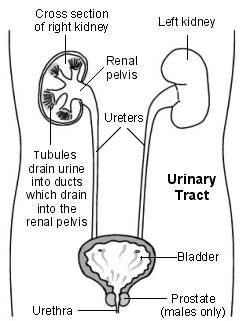
IgA nephropathy is one of a group of conditions called glomerulonephritis. In the outer part of the kidneys, tiny blood vessels cluster together to form structures called glomeruli. These filter the blood to make urine.
IgA nephropathy is caused by antibodies called IgA being trapped in the kidney and causing damage to the kidney. IgA is short for 'immunoglobulin A'. IgA is a type of antibody our body produces to fight infection. Antibodies are small proteins that circulate in the bloodstream. They are part of the body's defence (immune) system and are sometimes called immunoglobulins. They are made by B lymphocytes - a type of white blood cell.
The IgA gets to the kidneys in the bloodstream and then causes scarring and inflammation in the kidney. The scarring and inflammation are very small and can only be seen with a microscope. The glomeruli are damaged by deposits of IgA. IgA nephropathy does not usually run in families, so you need not worry about passing it on to your children.
The cause of IgA nephropathy is not completely understood. IgA is produced by glands around the throat and bowel to fight off infection. IgA is normally two antibody molecules stuck together.
In IgA nephropathy, these molecules appear to get joined up in longer chains. As these travel around in the blood and pass through the kidney they get stuck in the filters (glomeruli) in the kidney.
The trapped IgA then causes an inflammatory reaction. It is not known why these IgA chains develop.
How common is it?
IgA nephropathy is very uncommon. However, IgA nephropathy is the most common cause of glomerulonephritis. IgA nephropathy most often starts between 16 and 35 years of age.
What are the symptoms of IgA nephropathy?
The symptoms caused by IgA nephropathy are very variable from person to person. Many people with IgA nephropathy do not have any symptoms. IgA nephropathy is usually painless but sometimes an acute attack can cause pain over the kidneys and a feeling of sickness (nausea) for a couple of days.
However, the damage to the filters (glomeruli) of the kidneys may cause some blood to appear in the urine. Usually there is only a very small amount of blood in the urine. Therefore any traces of blood in the urine are often invisible and only detected on routine medical check-ups. In other cases there may be a lot more blood which you can see and comes in attacks every so often.
There may also be protein leakage from the kidneys. This may be slight and only detectable on urine tests. Occasionally, high levels of protein leakage cause swollen ankles, with very low levels of protein and high levels of cholesterol in your blood. This is called nephrotic syndrome.
Sometimes a flu-like illness causes an increase in IgA getting to the kidney. This can cause an increased amount of blood in the urine, which then clears after a few days.
What are the complications of IgA nephropathy?
IgA may cause the blood pressure to increase (hypertension). This damages the kidneys and may also put a strain on the heart. It is therefore very important to treat high blood pressure if it develops. Chronic kidney disease may sometimes occur. Very occasionally and much less often, IgA nephropathy may cause acute kidney injury before any other symptoms have developed.
How is it diagnosed?
The first tests include urine tests to check for a urine infection and to measure the protein in your urine. Collecting all of your urine over 24 hours may be needed to see how much protein is leaking from your kidneys. Blood tests will include tests to see how well your kidney is working.
The scarring and inflammation in the kidney can only be seen with a microscope. Therefore, IgA nephropathy is normally only diagnosed after a sample (biopsy test of the kidney) is taken.
What is the treatment for IgA nephropathy?
There is no specific treatment to cure IgA nephropathy. However, there are many treatments that can help to protect the kidneys and so improve the outlook:
It is very important to have regular blood pressure checks and to keep your blood pressure normal.
It is also important to have regular urine checks to see if there is any protein or blood in the urine.
Treatment needs to be started early if blood pressure levels become high. Treating high blood pressure levels helps to reduce any damage to the kidneys.
Treatment with steroids is controversial but steroids may reduce the amount of protein leaking from the kidneys into the urine. Steroids may also reduce the risk of chronic kidney disease and kidney failure (end-stage kidney disease).
The medicines used for blood pressure control with IgA nephropathy are angiotensin-converting enzyme (ACE) inhibitors or angiotensin receptor blockers (ARBs) - for example, losartan. Even if you don't have high blood pressure, Both ACE inhibitors and ARBs can reduce your risk of developing chronic kidney disease. Sometimes ACE inhibitors and ARBs are used together.
Steroids can also help to reduce the amount of protein in the urine and reduce your risk of chronic kidney disease.
Medicines called statins may be needed to treat high cholesterol. Your cholesterol may increase because of IgA nephropathy.
Other treatments that may help include other medicines to reduce your defence (immune) system (for example, azathioprine). Medicines that prevent blood clotting in your blood vessels (anticoagulants) have also been used. Removing your tonsils (tonsillectomy) may be used to reduce the amount of IgA in your bloodstream and so reduce any further damage to your kidneys.
If you develop chronic kidney disease, this may become severe (end-stage kidney disease). You will then probably need treatment with dialysis and a kidney transplant. Most people with IgA nephropathy do not develop chronic kidney disease. There is a risk of the transplanted kidney becoming affected by IgA nephropathy.
What is the outlook?
The outlook (prognosis) is very variable from person to person.
IgA nephropathy may get better on its own without any further problems.
IgA nephropathy may continue unchanged for many years. You will then only need regular check-ups with urine and blood tests.
About 1 in 3 people with IgA nephropathy develop chronic kidney disease.
Patient picks for Kidney disorders

Kidney and urinary tract
Diet in chronic kidney disease
Chronic kidney disease (CKD) is a common long-term condition where the kidneys aren't working as well as they should be. There are some dietary choices that are recommended for people with early CKD. People with more advanced CKD may be advised to follow a special diet, usually with the support of a specialist dietician.
by Dr Doug McKechnie, MRCGP

Kidney and urinary tract
Acute kidney injury
Acute kidney injury can be a confusing name as it suggests an accident or injury to that part of your body, eg from a fall or trauma. However, acute kidney injury is actually a condition where your kidneys suddenly stop working properly. This most often happens when you are unwell from another illness. If you are not in hospital already, you will be sent to hospital to be looked after. The earlier acute kidney injury is picked up, and the more carefully you are monitored and treated, the better the chance of your kidneys recovering. Acute kidney injury used to be called acute renal failure.
by Dr Philippa Vincent, MRCGP
Frequently asked questions
What is the difference between IgA nephropathy and glomerulonephritis?
IgA nephropathy is a specific type of glomerulonephritis. Glomerulonephritis is a general term for a group of conditions that involve inflammation of the glomeruli, the tiny blood filtering units in the kidneys. IgA nephropathy is characterised by IgA antibodies getting trapped in these glomeruli, causing damage.
If IgA nephropathy is caused by antibodies fighting infection, does it mean my immune system is overactive?
IgA is indeed produced by your body to fight infection, particularly from glands around the throat and bowel. In IgA nephropathy, these IgA molecules appear to form longer chains that get stuck in the kidney filters, causing inflammation and damage. The precise reason why these chains develop is not fully understood, but it's not necessarily an indication of an 'overactive' immune system in a general sense, but rather a specific issue with how these IgA molecules are behave.
Will I always need medication for IgA nephropathy, even if I feel well?
There is no specific cure for IgA nephropathy, but there are treatments to protect your kidneys. Even if you don't have high blood pressure, certain medications like ACE inhibitors or ARBs are often used to reduce your risk of developing chronic kidney disease. Regular blood pressure and urine checks are also very important to monitor your condition and adjust treatment as needed.
Can diet or lifestyle changes help manage IgA nephropathy?
The article focuses on medical treatments. It highlights the importance of managing blood pressure and cholesterol, which can be influenced by diet and lifestyle, though specific dietary recommendations are not detailed. Regular monitoring and medication for these conditions are emphasised to protect the kidneys.
What happens if I develop chronic kidney disease due to IgA nephropathy?
If IgA nephropathy leads to severe chronic kidney disease, this is known as end-stage kidney disease. At this point, you would likely require treatment with dialysis, which filters your blood, or a kidney transplant. Most people with IgA nephropathy do not reach this stage, and there is also a risk of the new kidney being affected by IgA nephropathy after a transplant.
Further reading and references
- Reid S, Cawthon PM, Craig JC, et al; Non-immunosuppressive treatment for IgA nephropathy. Cochrane Database Syst Rev. 2011 Mar 16;(3):CD003962. doi: 10.1002/14651858.CD003962.pub2.
- Kamei K, Nakanishi K, Ito S, et al; Long-term results of a randomized controlled trial in childhood IgA nephropathy. Clin J Am Soc Nephrol. 2011 Jun;6(6):1301-7. doi: 10.2215/CJN.08630910. Epub 2011 Apr 14.
- Cheng J, Zhang X, Tian J, et al; Combination therapy an ACE inhibitor and an angiotensin receptor blocker for IgA nephropathy: a meta-analysis. Int J Clin Pract. 2012 Oct;66(10):917-23. doi: 10.1111/j.1742-1241.2012.02970.x.
- Lv J, Xu D, Perkovic V, et al; Corticosteroid therapy in IgA nephropathy. J Am Soc Nephrol. 2012 Jun;23(6):1108-16. doi: 10.1681/ASN.2011111112. Epub 2012 Apr 26.
- Vecchio M, Bonerba B, Palmer SC, et al; Immunosuppressive agents for treating IgA nephropathy. Cochrane Database Syst Rev. 2015 Aug 3;(8):CD003965. doi: 10.1002/14651858.CD003965.pub2.
- Lai KN, Leung JC, Tang SC; Recent advances in the understanding and management of IgA nephropathy. F1000Res. 2016 Feb 11;5. pii: F1000 Faculty Rev-161. doi: 10.12688/f1000research.7352.1. eCollection 2016.
About the authorView full bio

Dr Colin Tidy, MRCGP
General Practitioner, Medical Author
MBBS, MRCGP, MRCP (Paediatrics), DCH
Dr Colin Tidy is an NHS Doctor, based in Oxfordshire.
About the reviewerView full bio

Dr Adrian Bonsall, MBBS
Medical Author
MA (Chemistry), MBBS (Hons), DCH
Since 2000 Adrian has been employed in emergency and critical care paediatrics based in Sydney, with particular interests in toxicology, trauma and resuscitation.
Article history
Article also available in English, German, Spanish, French, Italian, Portuguese, Hindi, Hebrew, Arabic, and Swedish.
15 Jul 2017 | Latest version
Join the conversation
Share your thoughts or experiences with others in our patient communities.

Ask, share, connect.
Browse discussions, ask questions, and share experiences across hundreds of health topics.

Feeling unwell?
Assess your symptoms online for free
Sign up to the Patient newsletter
Your weekly dose of clear, trustworthy health advice - written to help you feel informed, confident and in control.
By subscribing you accept our Privacy Policy. You can unsubscribe at any time. We never sell your data.
More in kidney and urinary tract
- Bladder cancer
- Chronic kidney disease
- Cystitis in women
- Cystoscopy
- Diet in chronic kidney disease
- Estimated glomerular filtration rate
- Intravenous urography
- Ketones in urine
- Lower urinary tract symptoms in men
- Nephrotic syndrome
- Polycystic kidney disease
- Routine kidney function blood test
- Urethral stricture
- Urinary retention
- Urine dipstick test
- Urine infection in men
- Urine infection in pregnancy
- Urodynamic testing
- Voiding cystourethrogram
- Wilms' tumour