
Strep A
Group A strep, GAS
Peer reviewed by Dr Krishna Vakharia, MRCGPLast updated by Dr Colin Tidy, MRCGPLast updated 27 Sept 2023
Meets Patient’s editorial guidelines
- DownloadDownload
- Share
- Language
- Discussion
- Audio Version
- Add to preferred sources on Google
Strep A, or Group A streptococcus, is a common type of bacteria, which has been recognised as a cause of infections for many years. Most Group A streptococcus infections are mild, but in rare cases, these can cause serious illness and even death.
At a glance
Strep A is a common bacterium, often found in healthy people without causing illness.
It can cause throat infections, scarlet fever, and skin conditions like impetigo and cellulitis.
Symptoms vary but can include sore throat, fever, rash, or skin sores.
Strep A infections are contagious and usually treated with antibiotics.
Invasive strep A infections are rare but serious and need urgent hospital treatment.
What is strep A?
Strep A, or Group A streptococcus (GAS), is a type of bacteria, with the scientific name Streptococcus pyogenes - 'pyogenes' means 'pus-forming'.
Strep A is commonly found in healthy people; between 5 and 20% of healthy children with no symptoms of infection will have strep A living in their throats.
Sometimes, strep A bacteria cause infections - usually throat or skin infections (see 'Strep A symptoms' below).
Strep A symptoms
Strep A infections cause various different types of illnesses. The symptoms depend on what type of infection it is:
Throat infections: this is a very common type of strep A infection. Symptoms of throat infections and tonsillitis ('strep throat') due to strep A include:
Pain on swallowing.
Enlarged lymph nodes in the neck.
Enlarged, swollen, and red tonsils.
White or yellow spots on the tonsils.
Throat infections due to strep A have very similar symptoms to throat infections from other causes, such as viruses. Scores have been developed for healthcare professionals to use to estimate how likely strep A infection is; one example is the FeverPAIN score (see Further Reading).
Clinicians use these to help determine who is likely to benefit from antibiotics. Some symptoms are less common in strep A infection and more common in viral infections, such as a cough.
Scarlet fever: this is less common than tonsillitis. Scarlet fever causes a distinctive pinkish or red rash over the body, which feels rough or 'like sandpaper'. In people with black or brown skin, the colour change may be difficult to see, but the change in skin texture can still be felt.
Scarlet fever rash
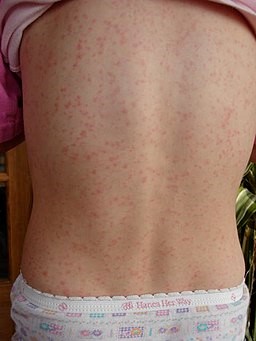
Other symptoms of scarlet fever, alongside the rash, include:
Symptoms of a throat infection, as above (such as fever and sore throat).
A white coating on the tongue; over a few days this is replaced by a bright red tongue with small dots - called a 'strawberry tongue' because it can look like a ripe strawberry.
Strawberry tongue
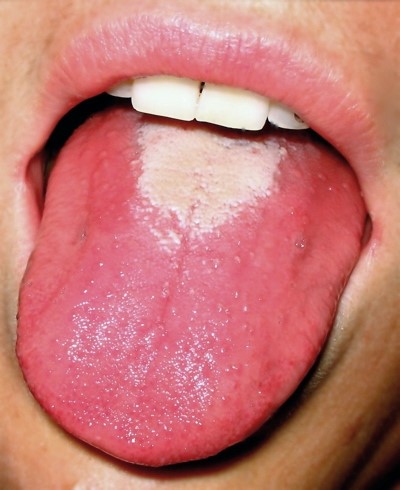
Strep A can cause a variety of skin infections, such as:
Impetigo, an infection of the top layer of the skin. Symptoms of impetigo include:
Red, itchy sores on the skin.
Blisters that ooze and burst.
Golden crusts or scabs on the skin.
Cellulitis, an infection of the deeper layers of the skin. Cellulitis can also be caused by other bacterial infections. Symptoms of cellulitis include:
A red, hot and painful area of skin, usually expanding over a few days.
A fever, in some cases.
Strep A can also cause 'invasive' infections, which are more serious. These are rare. See the section on 'What is invasive Group A streptococcal disease?' below.
Is strep A contagious?
People who have infections due to strep A are contagious and can spread the infection to others. For example, people with scarlet fever (see below) need to stay at home for at least 24 hours after starting antibiotics, to reduce the risk of spreading it.
People who carry strep A, but don't have any signs or symptoms of infection, are thought to be much less contagious and do not need to take any special precautions. Most people who carry strep A in this way will be unaware of it
How long does strep A last?
People with Group A streptococcus infection often start to feel unwell 2–5 days after catching the bacteria.
The symptoms of strep A usually get better within a week without antibiotics, but this can vary. For those who do take an antibiotic, most will start feeling better 1–2 days after starting the antibiotic course.
How to treat strep A
Strep A infections are effectively treated by antibiotics, especially penicillin-based antibiotics. Treatment depends on what type of infection is present.
People who carry strep A in their throat, or on their skin, without any symptoms at all, do not need any treatment. This will only be detected if they have a throat or a skin swab for another reason.
Throat infections
Throat infections with strep A, such as bacterial tonsillitis, can be treated with tablet or liquid antibiotics. Other treatments for sore throats, such as paracetamol and ibuprofen, can help with symptoms.
Healthcare professionals should use a clinical score system, such as FeverPAIN, to estimate how likely strep A infection is, and decide whether antibiotics might be helpful.
Most people with strep A throat infections will still get better without antibiotics; antibiotics seem to reduce the length of symptoms by about a day. Serious complications of strep A throat infections are rare, and most people get only minor benefits from antibiotics.
Scarlet fever
Scarlet fever should be treated with antibiotics, to reduce the risk of spreading it to other people. Penicillin antibiotics are best, but other drugs such as azithromycin can be used for people who are penicillin-allergic.
Children and adults with scarlet fever should stay away from school and work until 24 hours after starting antibiotics, to reduce the risk of spreading to others.
Healthcare professionals also need to tell the local public health team about any suspected cases of scarlet fever, so the public health doctors can monitor any outbreaks.
Impetigo
Impetigo can be treated with antibiotic creams if mild, or tablet/liquid antibiotics if more severe. People with impetigo should stay away from school or work until the skin rash has crusted or healed, or for the first 48 hours after starting antibiotic treatment.
Cellulitis
Cellulitis is treated with tablet or liquid antibiotics. If these don't work, or if the infection is severe, intravenous antibiotics (given with a drip) may be used.
Invasive Group A streptococcal infections
Invasive Group A streptococcal infections almost always need to be treated in hospital. People with these infections will usually be given intravenous antibiotics. If they become seriously ill, they may require treatment in intensive care.
Other treatments may be given depending on the infection; for example, people with necrotising fasciitis may have emergency surgery to remove infected areas. These infections also need to be reported to the public health team, so they can investigate any outbreaks.
Close contacts of someone with an invasive Group A streptococcal infection
These people may sometimes be offered preventative antibiotics. This will be decided upon by the public health team investigating the outbreak. There is debate about whether or not preventative antibiotics are actually useful in this situation, and the scientific evidence is not clear.
What other problems can strep A cause?
Strep A infection can also cause a series of delayed problems that develop after the initial infection. Some of these used to be common in the UK and elsewhere, but are much rarer now; the reason for this is not fully clear. It might relate to better hygiene, increased use of antibiotics, or changes in the types of strep A bacteria that are found in the population.
These problems include:
Rheumatic fever
This is a condition where Group A strep infection triggers an autoimmune reaction, leading to various problems such as heart, joint, and nerve inflammation.
Rheumatic fever has now almost completely disappeared in the UK and most developed countries, but remains a problem in other areas of the world, such as sub-Saharan Africa, the Middle East, Central and South Asia and the South Pacific.
Post-streptococcal glomerulonephritis
Post-streptococcal glomerulonephritis is a kidney problem which seems to be caused by an autoimmune reaction to previous Group A strep infection. This usually gets better on its own, so treatment usually involves managing symptoms and trying to prevent complications, and might include blood pressure control with tablets and antibiotics.
Paediatric autoimmune neuropsychiatic disorders associated with streptococcal infections (PANDAS)
PANDAS describes a condition where children suddenly develop symptoms of obsessive-compulsive disorder and other mental health problems; one theory is that strep A infection causes an autoimmune problem that leads to PANDAS.
There is controversy around PANDAS; it has been difficult to clearly demonstrate a link between the symptoms and Group A strep infection scientifically, and it may be that these symptoms are not caused by strep A at all in most children. There is also no clear diagnostic test to confirm PANDAS.
What is invasive Group A streptococcal disease?
'Invasive' means any infection with strep A that affects an area of the body where bacteria are not normally found - for example, the lungs (pneumonia) or blood (septicaemia).
People with invasive Group A streptococcal infections become extremely unwell, and these conditions are life-threatening. In the early stages, symptoms and signs of invasive infections can be the same as other, milder illnesses.
It's important to watch for symptoms that suggest serious illness, even if you think (or have been told) that you, or your child, have a minor illness, and that you seek medical attention urgently if they develop.
Invasive GAS can cause infections including:
Pneumonia
Pneumonia is an infection of the lungs. People with pneumonia may have a fever and a cough, but also tend to develop other symptoms which suggest serious infection, such as:
Difficulty breathing - breathing harder and faster, or feeling very out of breath when doing minor tasks, or feeling out of breath whilst resting.
Chest pain, particularly pain that is worse on taking a deep breath.
Symptoms of sepsis.
Streptococcal toxic shock syndrome (STSS)
This is a condition where strep A bacteria release a toxin into the blood, leading to dangerously low blood pressure and organ failure. (Toxic shock syndrome can also be caused by a different bacterium, called Staphylococcus aureus.)
In the early stages of toxic shock syndrome, the symptoms can be identical to mild illnesses such as flu - fever, muscle pain, and chills - but rapidly get worse. People with toxic shock syndrome may have:
A sudden high fever.
Vomiting.
A rash.
Fainting, or feeling faint.
Sudden confusion or disorientation.
A feeling of being extremely unwell.
Symptoms of sepsis.
Necrotising fasciitis
This is a rare but very serious infection under the skin, causing the skin and soft tissues beneath (such as fat and muscle) to die. Necrotising fasciitis is sometimes called 'flesh-eating bacteria'.
Necrotising fasciitis, in its early stages, can be difficult to tell apart from much more common, and less serious, skin infections, as it typically starts with pain, redness, and swelling of the skin, especially around a wound. Later symptoms include:
Pain that is much worse than expected, given the appearance of the skin infection.
Skin changes, such as purple or black blotches on the skin, as the skin and underlying tissues die.
Sudden confusion or disorientation.
Symptoms of sepsis.
Why have strep A cases spiked?
In December 2022, the UK Health Security Agency (UKHSA) reported a spike in the number of strep A infections reported in the UK, including reports of scarlet fever, invasive Group A streptococcus infection, and, tragically, deaths of young children as a result of invasive streptococcal infection.
Strep A infections typically come in waves. The last high season for strep A infections in the UK, before 2022, was in 2017/18. During that time, four children under 10 died from invasive Group A streptococcus infection.
In previous years, outbreaks have tended to peak around March to April; rates in the UK in December were unusually high for that time of year.
The exact reasons for this are not entirely clear yet. Some theories include:
Scarlet fever rates dropped significantly in 2020/21. It's likely that infection control measures designed to reduce the spread of COVID-19, such as lockdowns, school closures and social distancing, also prevented Group A streptococcus infections from spreading. A larger number than usual of children may not have built up immunity to Group A streptococcus infections as a result, meaning there were more children who could become infected with, and spread, the infection.
Lots of viral infections, such as RSV, influenza and COVID-19 were also going around at the same time, and exposure to these illnesses might have (temporarily) made children more vulnerable to catching Group A streptococcus, and potentially becoming seriously ill with it.
There does not seem to be any evidence that the type of strep A bacteria circulating had become more aggressive, or otherwise more likely to cause serious disease themselves.
Patient picks for Other infections

Infections
Abscess
An abscess can develop in many different parts of the body. A small operation may be needed to drain the pus. You may also need to take antibiotic medicine.
by Dr Hayley Willacy, FRCGP

Infections
Necrotising fasciitis
Necrotising fasciitis is an infection which destroys areas of the skin and the tissues underneath. It is a very severe condition which can be fatal. Necrotising fasciitis can be treated successfully if diagnosed quickly.
by Dr Mary Harding, MRCGP
Frequently asked questions
What is the likelihood of developing complications like rheumatic fever from a strep A infection?
Rheumatic fever was once common in the UK, but it is now very rare. The reasons for its decline aren't fully understood, but it might be due to better hygiene, increased antibiotic use, or changes in the types of strep A bacteria circulating. It remains more prevalent in some other parts of the world.
If I have impetigo caused by strep A, when can I return to school or work?
If you have impetigo, you should stay away from school or work until the rash has crusted over or healed. Alternatively, you can return after the first 48 hours of starting antibiotic treatment.
What should I look out for if I think a strep A infection is becoming serious, even if it started as a mild illness?
Even if you initially have mild symptoms, it's important to watch for signs that might suggest a more serious infection. These can include difficulty breathing, chest pain, coughing up blood, sudden high fever, vomiting, a rash, fainting or feeling faint, sudden confusion or disorientation, or feeling extremely unwell. If you notice any of these, seek urgent medical attention.
Does catching another virus, like the flu, make someone more susceptible to severe strep A?
Yes, there is a theory that having many viral infections circulating at the same time, such as RSV, influenza, and COVID-19, might temporarily make children more vulnerable to catching Group A streptococcus and potentially becoming seriously ill with it.
Why did strep A cases recently increase, particularly in 2022?
The exact reasons for the recent spike in strep A cases are not fully clear. Theories suggest that COVID-19 infection control measures might have led to fewer children building up immunity, making them more susceptible when restrictions eased. Additionally, a high prevalence of other viral infections might have temporarily made children more vulnerable to strep A.
What can I do to help relieve symptoms of a strep A throat infection?
Besides antibiotics if prescribed, over-the-counter pain relievers like paracetamol and ibuprofen can help manage the symptoms of a strep A throat infection.
Further reading and references
- Group A streptococcal infections, report on seasonal activity in England, 2022 to 2023; UK Health Security Agency (UKHSA). Updated June 2023.
- Group A Streptococcus; UK Health Security Agency. Last updated March 2023.
- Zuhlke LJ, Beaton A, Engel ME, et al; Group A Streptococcus, Acute Rheumatic Fever and Rheumatic Heart Disease: Epidemiology and Clinical Considerations. Curr Treat Options Cardiovasc Med. 2017 Feb;19(2):15. doi: 10.1007/s11936-017-0513-y.
- Dale JB, Walker MJ; Update on group A streptococcal vaccine development. Curr Opin Infect Dis. 2020 Jun;33(3):244-250. doi: 10.1097/QCO.0000000000000644.
About the authorView full bio
Updated by

Dr Colin Tidy, MRCGP
General Practitioner, Medical Author
MBBS, MRCGP, MRCP (Paediatrics), DCH
Dr Colin Tidy is an NHS Doctor, based in Oxfordshire.
Authored by

Dr Doug McKechnie, MRCGP
Medical Writer
MA, MBBS, MSc, DRCOG, MRCP(UK), MRCGP(2021), FHEA
Dr Doug McKechnie is an NHS GP working in London. He works full-time clinically and is also the Deputy Lead for the Clinical and Professional Practice module at University College London Medical School.
About the reviewerView full bio

Dr Krishna Vakharia, MRCGP
Chief Medical Officer for Health, Optum UK
MBChB, MRCGP(2013), BMedSci (hons), DFSRH, DRCOG, PGDipDerm (Distn)
Dr Krishna Vakharia is an NHS GP. She is also a regular examiner for the postgraduate Diploma in Practical Dermatology at Cardiff University as well as being the Chief Medical Officer for health at Optum UK.
Article history
Article also available in English, German, Spanish, French, Italian, Portuguese, Hindi, Hebrew, Arabic, and Swedish.
Next review due: 25 Sept 2028
27 Sept 2023 | Latest version
7 Dec 2022 | Originally published
Authored by:
Dr Doug McKechnie, MRCGP
Join the conversation
Share your thoughts or experiences with others in our patient communities.

Ask, share, connect.
Browse discussions, ask questions, and share experiences across hundreds of health topics.

Feeling unwell?
Assess your symptoms online for free
Sign up to the Patient newsletter
Your weekly dose of clear, trustworthy health advice - written to help you feel informed, confident and in control.
By subscribing you accept our Privacy Policy. You can unsubscribe at any time. We never sell your data.