
The male reproductive system
Peer reviewed by Dr Helen Huins, MRCGPAuthored by Dr Mary Harding, MRCGPOriginally published 31 May 2018
Meets Patient’s editorial guidelines
- DownloadDownload
- Share
- Language
- Discussion
- Audio Version
- Add to preferred sources on Google
The organs and structures of the male reproductive system give men the ability to fertilise a woman's egg (ovum) to produce a baby.
Male reproductive system
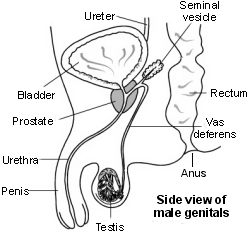
Several different organs and structures make up the male reproductive system. These include:
The scrotum, or scrotal sac. This is the loose bag of skin which hangs under the main body cavity between the upper thighs. It is divided into two, and each side contains one testicle (testis).
The testicles (testes). There are two testes. Each is an egg-shaped structure located in the scrotum. The testes produce sperm and also produce male hormones. The testes start developing inside the body cavity in a growing baby (fetus). About two months before a male baby is born, the testes start to drop down into the scrotal sacs. Because they are outside the main body cavity the testes are slightly cooler. This difference in temperature helps sperm production.
The epididymis. This is the tube attached to the testis where sperm is stored.
The vas deferens. This is the tube which carries the sperm from the epididymis. It may also be called the sperm duct. It meets a tube from the seminal vesicle (see below) to form a short tube called the ejaculatory duct. This then opens into the urethra, which is the tube that takes the sperm outside the body.
The accessory sex glands. There are three glands which produce fluids that mix with the sperm to make up semen. Semen is the liquid which is ejected from the penis during ejaculation. The three glands are located close to the bladder and are called:
The seminal vesicles
The prostate gland. The prostate gland lies just beneath the bladder (see diagram). It is normally about the size of a chestnut.
The bulbourethral glands
The penis. The penis has a single tube in it called the urethra. There are three main parts of the penis - the root, body and glans. The root is the part attached to the skin at the top of the scrotum. The body of the penis is made up of a spongy type of tissue, which swells when blood enters during an erection. The glans penis is the slightly larger area towards the end of the penis and contains the opening of the urethra.
The urethra. This is the tube which passes from the bladder down the penis to the outside. It carries both urine and semen.
What does the male reproductive system do?
The main function is to give men the ability to fertilise a woman's egg (ovum) by producing and delivering semen. The testicles (testes) also make hormones which help men develop the characteristics associated with being male. This includes:
The development of hair in a male distribution - for example, on the chest, under the arms, on the face and in the pubic area.
Enlargement of the penis.
Deepening of the voice.
Muscle growth.
Bone growth and increased height.
How does the male reproductive system work?
During puberty, the level of a hormone called gonadotrophin-releasing hormone (GnRH) increases. GnRH is produced in a part of the brain called the hypothalamus. In turn this causes an increase in the production of two hormones from another part of the brain, called the pituitary gland. These hormones are called luteinising hormone (LH) and follicle-stimulating hormone (FSH). LH in the bloodstream causes cells in the testicles (testes) to make and release testosterone, the main male hormone.
FSH and testosterone work together to stimulate the testes to produce sperm. Each sperm cell takes between 65-75 days to form and around 300 million are produced every day. Inside the testes sperm is made in structures called the seminiferous tubules. At the top and to the back of each testicle (testis) is the epididymis, which stores sperm.
Leading from the epididymis is the vas deferens. The vas deferens carries sperm towards the penis. Along the way it joins other tubes and during ejaculation collects fluids from the accessory sex glands. The mixture of sperm and fluids from the accessory sex glands is called semen. About two thirds of the volume of semen come from the seminal vesicles. The semen is then passed into the urethra.
When sexually aroused, a number of changes occur inside the penis. The arteries supplying the penis get bigger, allowing more blood to enter its tissues. The extra blood flow causes the penis to enlarge and to become more rigid. The extra blood flow plus signals from the nervous system and chemical changes cause an erection.
Ejaculation is the term for the contractions that release semen. This is a reflex action, which means it is not consciously controlled. As part of the reflex action, the opening that drains the bladder is closed. This means that urine is not released at the same time as semen. The volume of semen in a typical ejaculation is between 2.5-5 millilitres (mL). There are normally more than 20 million sperm in each mL of semen. During sexual intercourse, the penis of the male enters the vagina of the female, carrying the sperm to the neck of the womb (cervix) to fertilise the woman's egg.
Some disorders of the male reproductive system
Patient picks for Men's sexual health

Sexual health
What you need to know before you take erectile dysfunction medication
You can now buy erectile dysfunction (ED) medication over the counter at pharmacies. However, some men would be better off seeing their GP first as dosage and treatment options may need adjusting, and persistent ED can be an early warning sign of cardiovascular disease and other health conditions.
by Sally Turner

Sexual health
How to prevent premature ejaculation
Premature ejaculation is the most common form of male sexual dysfunction, but its ubiquity in no way diminishes the distress it can cause men of all ages - nor the stigma that prevents many of them from approaching a medical professional for help and advice.
by Julian Turner
About the authorView full bio
Authored by

Dr Mary Harding, MRCGP
General Practitioner, Medical Author
BA, MA, MB, BChir, MRCGP, DFFP
Dr Mary Harding qualified from Cambridge University medical school in 1989.
About the reviewerView full bio

Dr Helen Huins, MRCGP
General Practitioner, Medical Author
MB, BS, Lond, DCH, DRCOG, MRCGP, JCPTGP, DFFP
Helen qualified at Guy’s Hospital in 1989 and left London in 1990 to settle in the countryside.
Article history
Article also available in English, German, Spanish, French, Italian, Portuguese, Hindi, Hebrew, Arabic, and Swedish.
31 May 2018 | Originally published
Authored by:
Dr Mary Harding, MRCGPPeer reviewed by
Dr Helen Huins, MRCGP
Join the conversation
Share your thoughts or experiences with others in our patient communities.

Ask, share, connect.
Browse discussions, ask questions, and share experiences across hundreds of health topics.

Feeling unwell?
Assess your symptoms online for free
Sign up to the Patient newsletter
Your weekly dose of clear, trustworthy health advice - written to help you feel informed, confident and in control.
By subscribing you accept our Privacy Policy. You can unsubscribe at any time. We never sell your data.