
When is the flu most contagious?
Peer reviewed by Dr Sarah JarvisAuthored by Gillian HarveyOriginally published 14 Dec 2018
Meets Patient’s editorial guidelines
- DownloadDownload
- Share
- Language
- Discussion
- Audio Version
- Add to preferred sources on Google
Colds and flu share many of the same symptoms. So what distinguishes a bout of flu from the common cold? How can we avoid this potentially dangerous virus and, importantly, how can we protect others from infection?
Although flu often comes with far more severe symptoms than a cold, there's no hard-and-fast way to distinguish a bad cold from full-blown influenza.
"In the near future, we hope there will be a test that will be able to give you an instant answer, but these are still in development," explains John Oxford, one of the UK's top flu experts and Emeritus Professor of Virology at the University of London. Such tests may be useful to doctors in deciding how to treat patients in future years.
"However, one classic sign of flu is the rapidity at which symptoms come on. Often you get a cough and a headache, your temperature begins to rise and you feel like going to bed, all over a relatively short period of time. It's that speed of onset that helps to differentiate flu from any of the 150 common cold viruses."
Might I have passed it on?
If you've come down with a case of flu, it's natural to want to spare those around you from catching the virus. But might you have already spread the germs unknowingly?
"With flu, you're infectious for a day or so before the symptoms come roaring in," explains Oxford. "However, it's likely you won't be extremely infectious until the symptoms have developed, as it's the coughing and sneezing that accompany the illness that makes infecting others more likely."
How long will I be infectious for?
So, you've spent a couple of days in bed, and gradually you start to feel more like yourself again. But is it safe to go back to work, or to allow an elderly relative to visit?
"The length of time you're infectious for often depends on age," explains Oxford. "If you're a 6- or a 7-year-old, it's likely to be quite a short duration - perhaps four days or so. Whereas elderly people might have the infection for as long as two weeks."
"However, pretty soon after the symptoms clear up you'll be less infectious. There will be traces of virus in your system, but you won't be spreading it as much."
How can I protect myself?
If you want to give yourself the best chance of avoiding flu, it's sensible to get a flu vaccine this winter. Whilst this vaccine won’t offer complete protection, it remains the best way of keeping yourself safe. It's particularly important for people who are at high risk of developing serious complications from flu or where passing it on is more likely or could be more serious for others (carers or children, for instance). If you're in any of these groups, you'll be eligible for a free vaccine on the NHS, but anyone can have one from a pharmacist at a modest cost.
"Unlike mumps or polio, the flu has the propensity to change itself," explains Oxford. "This means we have to face that the vaccine is never going to be 100% effective. But there’s a long distance between 100% and 0%. Effectiveness will range from around 15% to 90%, but this means that it will always offer you some protection."
And even if the vaccine doesn't stop you contracting a dose of flu, it's likely it will help you to stave off its worst effects.
"It's likely that if the vaccine hasn't prevented you from getting the flu, you move into a halfway house where you have some protection," explains Oxford. "I think of the vaccine as having a spectrum effect - preventing the flu, reducing symptoms and stopping the virus being excreted."
Social distancing
If you haven't taken advantage of the seasonal flu vaccine, there are measures you can take to reduce your risk of exposure.
"One measure that is perhaps under-rated is social distancing," explains Oxford. "In other words, keep away from people who have got it. It's common sense and there's quite good scientific evidence that it works. If someone sitting on the train next to you is coughing and sneezing, you can take deliberate action - carefully move away and sit somewhere else."
We also have a responsibility to others, so if you have the flu yourself, avoid situations in which you might pass it on to others if at all possible.
Oxford also suggests that we practise 'cough and sneeze etiquette', using the crook of our arm to catch a cough or sneeze rather than our hand. "If you cough or sneeze into your hands, the virus can probably survive there for the rest of the day; and if you shake hands with people you'll pass on the virus."
Caring for someone with the flu
Of course, there are times when we simply can’t avoid someone with the flu - for example, if a relative or child is ill and we need to care for them. However, it's still sensible to be cautious in order to reduce the risk of the virus spreading.
"You may not be able to avoid a certain person, but you can avoid kissing them as there will be a lot of virus around their mouth, nose and cheeks as well as on their hands," explains Oxford. "It's about being careful. Whilst we don't know the exact figures, I suspect that a very small change could make a big difference to whether you get infected or not."
It's also better to avoid sleeping in the same bed as a partner whilst they're suffering from the flu.
"It's best to sleep in separate rooms if one of you has the flu, as if you're lying close to one another at night, the virus can easily move from one to the other.
Keeping safe this winter
As well as taking advantage of the flu vaccine, taking sensible precautions to keep ourselves and others safe should give us the best chance of avoiding or minimising the impact of flu this winter.
Patient picks for Flu and vaccination

Infections
Why you should consider the flu vaccine
After nearly 40 years in general practice, I think I’ve heard them all. “I don’t need a flu jab, doc, I’m as fit as a flea.” “I’ve never had a flu jab, and I’ve never had the flu”. And best of all: “I knew someone who never had the flu till he had the jab, and now he gets flu every year.”
by Dr Laurence Knott
Infections
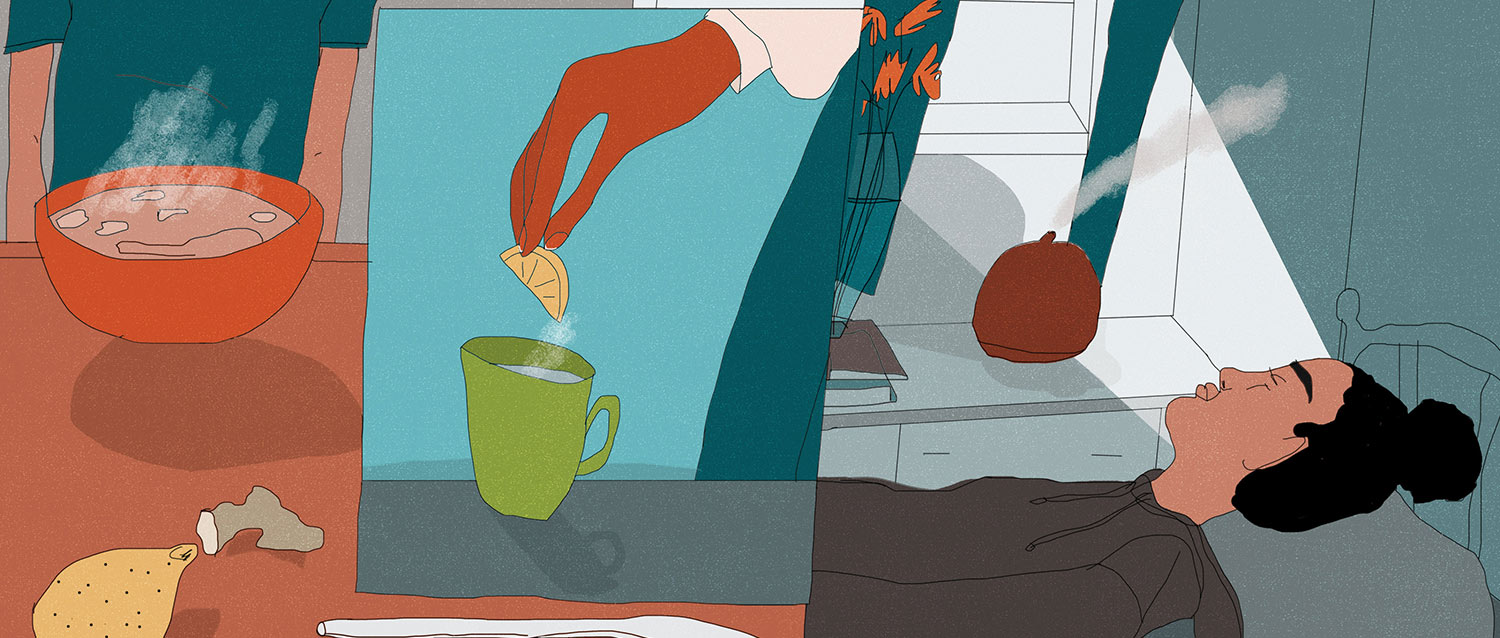
Do any traditional or herbal remedies work for flu?
Advice for flu treatment is, and has always been, simply 'fluids and bed rest' - little wonder some of us turn to family recipes or alternative medicine to get creative with our approach. A virologist and a GP explain which traditional and herbal remedies work for flu, and why.
by Ellie Broughton
About the authorView full bio
Authored by

Gillian Harvey
Freelance Writer
BA (Hons) English
Gillian is a freelance writer and columnist for a variety of national newspapers and magazines.
About the reviewerView full bio

Dr Sarah Jarvis
Clinical Consultant
MA (Cantab), BM, BCh (Oxon), DRCOG, FRCGP, MBE
After training in medicine at Cambridge and Oxford, Dr Sarah Jarvis MBE became a GP.
Article history
Article also available in English, German, Spanish, French, Italian, Portuguese, Hindi, Hebrew, Arabic, and Swedish.
14 Dec 2018 | Originally published
Authored by:
Gillian HarveyPeer reviewed by
Dr Sarah Jarvis
Join the conversation
Share your thoughts or experiences with others in our patient communities.

Ask, share, connect.
Browse discussions, ask questions, and share experiences across hundreds of health topics.

Feeling unwell?
Assess your symptoms online for free
Sign up to the Patient newsletter
Your weekly dose of clear, trustworthy health advice - written to help you feel informed, confident and in control.
By subscribing you accept our Privacy Policy. You can unsubscribe at any time. We never sell your data.