
What to do if you have an infected ingrown hair
Peer reviewed by Dr Krishna Vakharia, MRCGPAuthored by Matt BinnyOriginally published 4 Apr 2023
Meets Patient’s editorial guidelines
- DownloadDownload
- Share
- Language
- Discussion
- Audio Version
- Add to preferred sources on Google
Ingrown hairs happen when hair grows into the skin rather than outwards as it should. They often appear as small red bumps that are sometimes itchy. However, if an ingrown hair becomes infected, it can be very painful and may lead to more severe issues if left untreated. So what should you do if you have an infected ingrown hair?
Why do we get ingrown hairs?
An ingrown hair happens when people shave or remove hair, and the new one grows and curls back into the skin. Instead of growing from the follicle through the skin, the hair grows inwards.
There are several reasons why this happens. Sometimes dead skin clogs a follicle and forces the hair inwards, or the end of a cut hair can pierce your skin and begin to grow the wrong way.
Ingrown hairs mainly happen on parts of the body where you shave - such as the face and neck, legs, pubic region and armpits. If you shave regularly, you're more likely to get ingrown and infected ingrown hairs1. This is because shaving and waxing sharpen hair that can then get trapped in the skin. People with coarse or curly hair are also more prone to ingrown hairs, as these hair types tend to curl back rather than outwards.
Ingrown hair swelling and redness
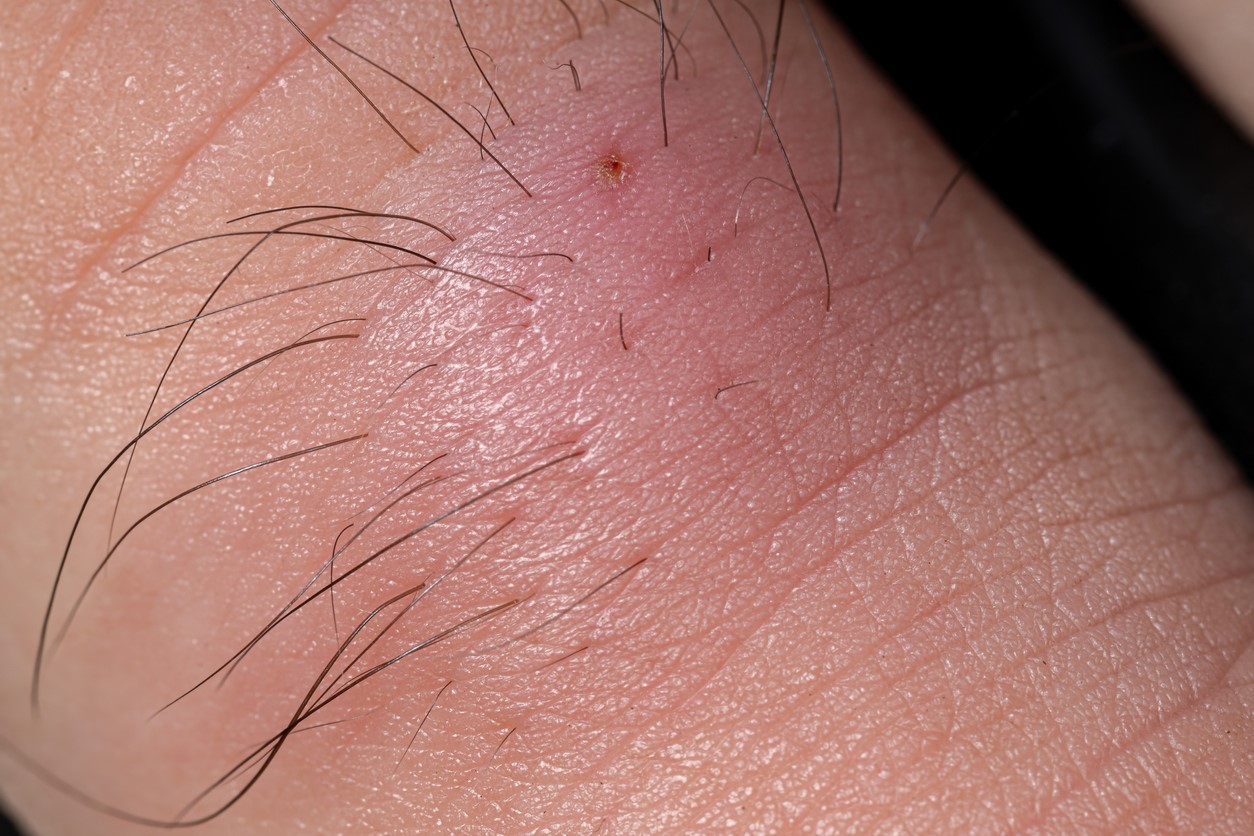
How to tell if your ingrown hair is infected?
An ingrown hair looks like an everyday spot or skin bump, varying in size and redness, and it may have swelling. Most ingrown hairs go away on their own if they're left alone and have time to heal. An infected ingrown hair looks similar, but there tends to be more swelling, redness and signs of pus.
Infected ingrown hairs can also be sore to touch. Mild infections are less noticeable and usually clear up without treatment. If you have a more serious infection that doesn't clear up in a few days or worsens, you should contact your doctor.
What's the difference between ingrown hairs and infected ingrown hairs?
Signs of ingrown hair
Small, round skin bumps.
Slightly itchy and sensitive.
Hair is sometimes visible underneath the skin.
Signs of an infected ingrown hair:
Redness and swelling.
Pain and irritation.
The skin around the bump may feel warm or hot.
Bumps may have a pus-filled head.
How long does an ingrown hair infection last?
Ingrown hairs tend to cure themselves in a few days but this can take longer if you pick, scratch, or interfere with the healing process in any other way.
Infected ingrown hairs take a bit longer to heal as your body is busy helping the ingrown hair exit the skin while fighting the infection. But you should see signs of improvement after a few days.
It’s important that you don’t miss any signs of a severe infection. Speak to your doctor if you have redness that is spreading, the swelling is increasing, your pain is getting worse, or you develop a fever, as these are all signs of a worsening infection.
Should you pop an infected ingrown hair?
You should treat ingrown hairs with caution. Do not pop them - especially those with a pus-filled head as it can lead to infection and scarring. If you have an infected ingrown hair, picking at it risks spreading and worsening the infection.
Infected ingrown hair treatment
Regular ingrown hairs or mildly infected ingrown hairs can be left alone until the condition resolves. It also helps if you don't shave the area or try any other type of hair removal method. However, speak to your doctor if you experience any pain, swelling, heat or feverish symptoms around an ingrown hair.
Medical treatment
If an ingrown hair becomes infected, your doctor may treat it by:
Prescribing antibiotic medication or creams if you develop more severe ingrown hair issues such as cysts or folliculitis.
Giving you a steroid cream if swelling or irritation occurs.
Removing the hair with a surgical blade or sterile needle.
Sending you to the emergency department in hospital if the infection is spreading or there is an abscess that needs lancing.
Home remedies
There are ways you can treat infected ingrown hairs at home to help heal and soothe the affected area.
These include:
Keeping the area clean by using small circular motions around the area and surrounding skin to prevent worse or prolonged infection.
Applying anti-bacterial ointment such as tea tree oil to help the infection and ensure it doesn't get worse.
Using over-the-counter products to relieve skin irritation and itching.
How to prevent ingrown hairs
Knowing how to treat and prevent ingrown hairs helps you avoid the hassle it causes and more severe concerns like an infection.
You can prevent ingrown hairs when shaving by:
Using warm water or shaving cream/gel to wet your skin when shaving.
Removing dead skin cells or moisturising if your skin is dry before shaving.
Not shaving too close to your skin.
Shaving in the direction your hair is growing.
Using a sharp razor and rinse after every stroke.
Using aftershave or lotion to soothe and clean the area.
Using alternative hair removal methods such as laser hair removal, chemical hair removal, or electric clippers.
You can't guarantee that these methods will prevent ingrown hairs, but they may reduce the likelihood of them developing and improve your skin's health overall.
Further reading
Patient picks for Hair and scalp
Skin, nail and hair health
Does rosemary oil actually help hair grow?
We’re always on the lookout for the latest miracle health product - especially if it’s inexpensive and easily found on the high street. And TikTok is full of claims that rosemary oil is a remedy for rapid hair growth. But is there any evidence it works?
by Lynn Stephen
Skin, nail and hair health
How often should you wash your hair?
While you likely have a hair care routine that works for you and your lifestyle, can you be sure you are washing your hair at the correct times and using the best products for your hair type? Let's explore how frequently you should be washing your hair (it's probably less often than you think) and the simple methods you can use to discover what type of hair you have.
by Emily Jane Bashforth
About the authorView full bio
Authored by

Matt Binny
Feature writer
BA Applied Media
About the reviewerView full bio

Dr Krishna Vakharia, MRCGP
Chief Medical Officer for Health, Optum UK
MBChB, MRCGP(2013), BMedSci (hons), DFSRH, DRCOG, PGDipDerm (Distn)
Dr Krishna Vakharia is an NHS GP. She is also a regular examiner for the postgraduate Diploma in Practical Dermatology at Cardiff University as well as being the Chief Medical Officer for health at Optum UK.
Article history
Article also available in English, German, Spanish, French, Italian, Portuguese, Hindi, Hebrew, Arabic, and Swedish.
Next review due: 2 May 2027
4 Apr 2023 | Originally published
Authored by:
Matt BinnyPeer reviewed by
Dr Krishna Vakharia, MRCGP
Join the conversation
Share your thoughts or experiences with others in our patient communities.

Ask, share, connect.
Browse discussions, ask questions, and share experiences across hundreds of health topics.

Feeling unwell?
Assess your symptoms online for free
Sign up to the Patient newsletter
Your weekly dose of clear, trustworthy health advice - written to help you feel informed, confident and in control.
By subscribing you accept our Privacy Policy. You can unsubscribe at any time. We never sell your data.