Os seios não são obstáculos — a campanha do «sutiã de RCP» da St John Ambulance
Revisado por Dr Colin Tidy, MRCGPAutoria de Claire KennyPublicado originalmente 21 de out. de 2026
Atende aos diretrizes editoriais
- BaixarBaixar
- Compartilhar
- Language
- Discussão
- Ask Patient
- Versão em Áudio
- Adicionar às fontes preferidas no Google
If someone needed cardiopulmonary resuscitation (CPR) and you had the skills, you’d give it to them without wasting a second, right?
Wrong. Almost a third of men say they would hesitate to perform CPR on a woman for fear of being accused of inappropriate touching. A similar number also worry about accidentally hurting women, and almost a quarter are concerned they could make the situation worse.
So, to remind everyone that it’s ok to touch someone’s chest when you’re trying to save their life, we’re raising awareness with St John Ambulance.
Reservations could cost lives
These insights came from a survey of 2,000 people, commissioned by the charity. It marks this year’s Restart a Heart Day, when it teaches vital CPR skills alongside other health partners.
The findings show that Millennials are most likely to fear being scrutinised on social media, with more than one in four worried about how they might appear online. Gen Zs (aged 18 to 28), follow with roughly one in six, and Gen X (aged 45 to 60) are at one in five. Perhaps unsurprisingly, fewer Baby Boomers (aged 61 to 79) share the same fear, at one in ten.
These reservations mean that in some cases, potentially lifesaving interventions are not taking place when needed.
Can we close the gap?
Nearly seven in ten men said they’d feel more confident performing CPR on a woman in public if they received more training. Six in ten said they were more likely to give CPR having seen or been made aware of the CPR Bra campaign.
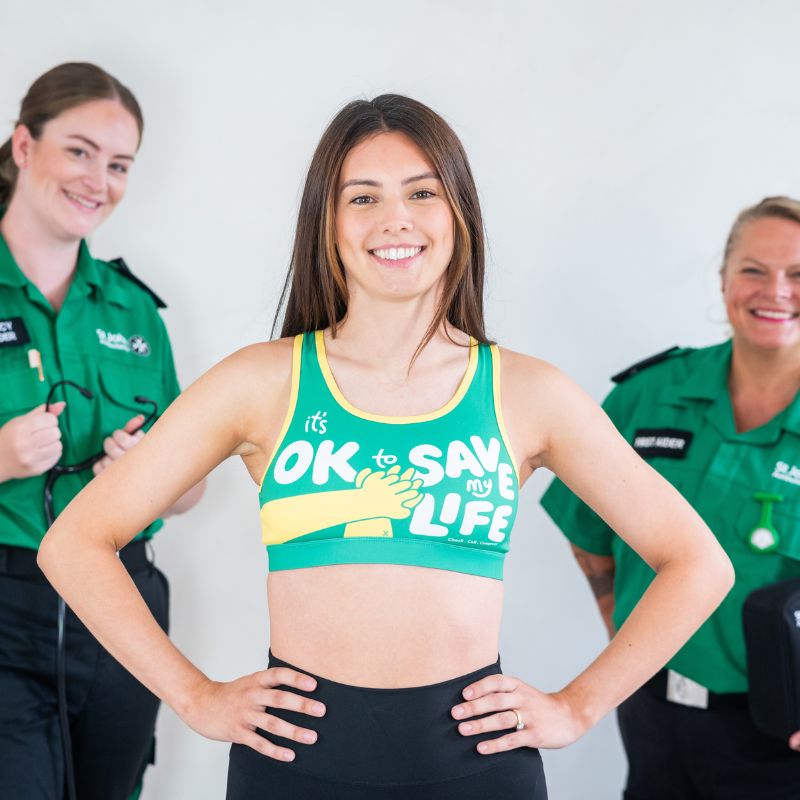
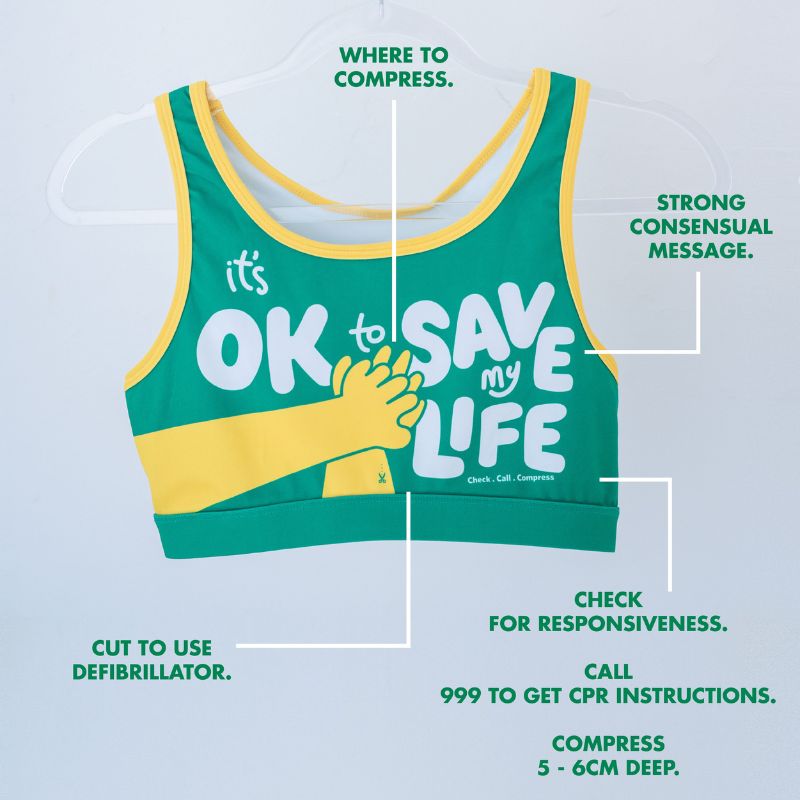
A new ‘CPR Bra’ has been released this year to help reassure people that taking fast action is the right thing to do to save a life, regardless of gender. The bra features the message ‘It’s OK to Save My Life’ on the front, along with scissor icons to illustrate where clothing should be cut to apply defibrillator pads. There’s also a reminder of the steps needed to respond to a cardiac arrest.
Estes são:
Check for breathing.
Call 999.
Give chest compressions.
St John Ambulance’s medical director, Dr Lynn Thomas says that hesitation is costing lives.
"Every second counts in a cardiac arrest, and doing something is always better than doing nothing," she explains. "It’s important we don’t shame anyone for hesitating as these fears are real and understandable, but no-one should ever feel afraid to try to save a life.
"Education is key to building confidence. The CPR Bra is our way of putting the power of first aid into more people’s hands and we hope to inspire more people to take action and give CPR to any person in need, whatever their gender."
How heart failure affects women
There are more than 40,000 out-of-hospital cardiac arrests (OHCAs) in the UK each year and the estimated survival rate is less than one in ten. 40% are in people aged 15 to 64, and around a third are women. The number is highest in women aged 55 to 59.
Early CPR and defibrillation can more than double the chances of survival, but every minute without them can reduce the likelihood of survival by up to 10%.
Heart failure (HF) risk factors for women include:
Gravidez‑related factors - the older a woman is when she first gives birth, and the number of births, can increase the risks. This is thought to relate to long‑term cardiovascular changes, metabolic strain, and pregnancy‑related complications such as gestational hypertension, and pre‑eclampsia.
Early menopause, either natural or surgical - this is because loss of oestrogen accelerates vascular ageing, increasing blood pressure, worsening lipid profiles, and raising inflammation.
Menopause ‘masking’ early HF symptoms and delaying diagnosis - symptoms such as fatigue, breathlessness, palpitations, and sleep disturbance overlap with menopausal complaints, which can complicate early detection.
Post-menopause - this is due to a range of issues, including the impact of hormonal decline, and changes to metabolism.
Chronic inflammatory and autoimmune conditions - these disproportionately affect women and include lupus and rheumatoid arthritis, which increase HF risk through sustained inflammation and vascular damage.
Social factors such as deprivation, obesity due to poor diet, and higher rates of depression are also classed as "under‑recognised” risks, but are still relevant, according to research.
Celebrity support
Hollyoaks and Coronation Street actor Nikki Sanderson, who is supporting the campaign, knows first-hand how critical CPR can be.
“It’s horrifying that so many people say they are less likely to help a woman in public,” she says. “Especially because they're afraid about people filming and sharing it online. That woman could be someone’s mum, sister, or daughter.
“In 2021 my mum had a cardiac arrest, and we had to perform CPR until paramedics arrived. If we’d hesitated, she wouldn’t be here today. We need to remove these barriers and ‘bust the taboo’ because everyone deserves the same chance of survival.”
Things to remember
In a cardiac arrest emergency, every second counts, so taking fast action is the right thing to do to save a life, regardless of gender.
Through Restart a Heart Day, St John Ambulance is calling on everyone to learn CPR and spread the word that it’s ok to touch part of someone’s chest to give CPR when they’re in cardiac arrest. This includes cutting their bra or binding off to use a defibrillator.
It’s also a great opportunity to remind everyone to consider how best to take care of your heart to ensure you stay healthy for years to come.
Escolhas do paciente para Saúde do coração

Tratamento e medicação
A importância de aprender RCP
De acordo com a British Heart Foundation (BHF), 30.000 pessoas sofrem parada cardíaca a cada ano. Menos de uma em cada dez dessas pessoas sobreviverá. A parada cardíaca pode acontecer com qualquer pessoa, em qualquer lugar, a qualquer momento - e sem aviso prévio. Saber como realizar RCP pode dobrar as chances de sobrevivência de alguém. Ouçamos histórias de heróis reais que salvaram vidas através da RCP. Seus relatos destacam a importância vital de aprender essa habilidade que salva vidas.
por Victoria Raw

Tratamento e medicação
A importância de aprender RCP: Emma conta sua história
De acordo com a British Heart Foundation (BHF), 30.000 pessoas sofrem parada cardíaca a cada ano. Menos de uma em cada dez dessas pessoas sobreviverá. A parada cardíaca pode acontecer com qualquer pessoa, em qualquer lugar, a qualquer momento - e sem aviso prévio. Saber como realizar RCP pode dobrar as chances de sobrevivência de alguém. Ouçamos histórias de heróis reais que salvaram vidas através da RCP. Seus relatos destacam a importância vital de aprender essa habilidade que salva vidas.
por Victoria Raw
Sobre o autorVer biografia completa
Autoria de
Claire Kenny
Claire is a company founder, writer and content creator. She has 25+ years of experience as a commercial copywriter and communications professional and is also a PR. Her clients include the production company behind a new comedy film set in Yorkshire.
Sobre o revisorVer biografia completa

Dr Colin Tidy, MRCGP
Médico Generalista, Autor Médico
MBBS, MRCGP, MRCP (Paediatrics), DCH
Dr Colin Tidy é um médico do NHS, baseado em Oxfordshire.
Histórico do artigo
Artigo também disponível em Inglês, Alemão, Espanhol, Francês, Italiano, Português, Hindi, Hebraico, Árabe, e Sueco.
Próxima revisão prevista: 21 de out. de 2029
21 de out. de 2026 | Publicado originalmente
Escrito por:
Claire KennyRevisado por
Dr Colin Tidy, MRCGP
Compartilhe seus pensamentos ou experiências com outros em nosso comunidades de pacientes.
Inscreva-se no boletim informativo do Patient
Sua dose semanal de conselhos de saúde claros e confiáveis - escritos para ajudá-lo a se sentir informado, confiante e no controle.
Ao se inscrever, você aceita nossos Política de Privacidade. Você pode cancelar a inscrição a qualquer momento. Nunca vendemos seus dados.