Can fitness trackers help boost activity levels in adults?
Peer reviewed by Dr Sarah JarvisAuthored by Emily Jane BashforthOriginally published 7 Mar 2022
Meets Patient’s editorial guidelines
- DownloadDownload
- Share
- Language
- Discussion
- Audio Version
- Add to preferred sources on Google
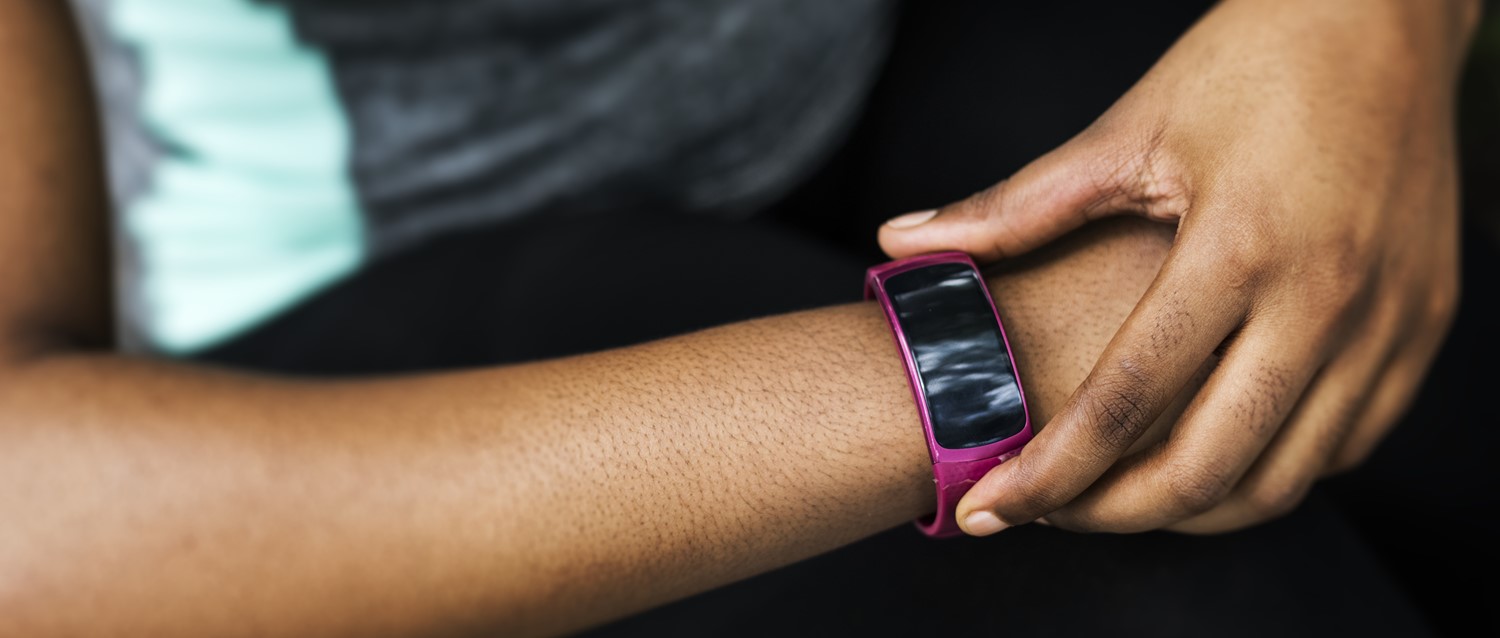
Wearable devices like fitness trackers have become a must-have accessory in recent years. There is a wide range of trackers available and many gym-goers use them regularly to monitor their progress. But, do fitness trackers actually have benefits? And can they improve physical activity in adults?
What does a fitness tracker do?
Fitness trackers and activity trackers use sensors to track orientation, movement and rotation. The devices collect data and convert it into a variety of measures depending on the tracker. Different devices may give information on steps, other exercises, standing time, calories, sleep quality and the general activity a user performs throughout the day.
Various companies, including Apple, Samsung and Fitbit, now sell fitness trackers. They have become increasingly popular and are now available in multiple customisable designs and colour schemes. They can be bought for as little as £20, or more expensive ones can set you back hundreds of pounds.
In a nutshell, fitness trackers give you an insight into your day-to-day activity levels. Basic designs might only track your number of steps per day, while more advanced devices support other exercises and sports, such as running, cycling or swimming. Some even have heart rate monitors and offer smart notifications, such as text messages or emails. Some devices also have built-in GPS for when you're out walking or jogging.
Pros and cons of fitness trackers
Pros
Allow you to set personal goals.
Monitor your progress.
Act as a source of motivation.
Hold you accountable.
Some trackers:
Encourage healthy eating and a balanced diet.
Monitor heart rate.
Track sleep.
Cons
Can cause fixation.
Can lead to obsessive calorie counting or exercise monitoring.
Accuracy can be questionable.
Can be expensive.
Do we need encouragement to exercise more?
From November 2019-November 2020, 27.1% of adults were considered to be inactive, doing less than 30 minutes of exercise on average per week. Men (70%) were more likely to be active than women (65%).
In the UK Chief Medical Officers' guidelines, it is recommended that adults (age 19 and over) do at least 150 minutes of moderate-intensity activity or 75 minutes of vigorous-intensity activity per week, or a combination of both. Adults should also aim to build strength on at least two days a week. The high proportion of the population doing less than a fifth of this amount of excerise suggests that many of us need encouragement to exercise more, which fitness trackers could help with.
Personal circumstances
Everyone's circumstances are different. Therefore, regular physical exercise can be difficult to incorporate into your daily routine. However, regular exercise offers a multitude of benefits, especially in terms of disease prevention. The Guidance Health matters: physical activity - prevention and management of long-term conditions says regular physical activity will improve your health, as well as your fitness and quality of life. It also helps reduce your risk of:
Type 2 diabetes.
Heart disease.
Many types of cancer.
Depression.
Anxiety.
Dementia.
Do fitness trackers increase physical activity?
A recent study has found that physical activity monitors and fitness trackers can indeed boost levels of physical activity in adults.
Modern fitness trackers have the potential to change people's behaviour, but studies looking at their effectiveness have often reached different conclusions.
To address this uncertainty, researchers in Denmark searched databases for trials comparing activity levels in adults who received feedback from wearing a fitness tracker with control interventions in which no feedback was provided.
They found 121 randomised controlled trials involving 16,743 mainly healthy 18 to 65-year-olds. The average age of study participants was 47 years, with a higher proportion of women than men.
Overall, the interventions showed:
A moderate effect on physical activity (equivalent to 1,235 daily steps).
A small effect on moderate to vigorous physical activity (equivalent to 48.5 weekly minutes).
A small but insignificant effect on sedentary time (equal to 9.9 daily minutes).
For all outcomes, fitness trackers that provided feedback were more effective than those that did not.
Limitations
The researchers acknowledge that the trials included in this study varied in design and methods. This may mean the results can't be compared directly with each other, so the conclusions reached by lumping them together may not be as reliable. In addition, they may not be relevant for all populations - results may not be applicable to lower-income countries, for example. Nevertheless, this is the first review of collated evidence across different patient populations and different types of physical activity monitors and fitness trackers.
Researchers are calling for further studies to investigate how fitness trackers can be used in combination with other behavioural change strategies, or how they might affect sedentary (resting or inactive) time.
Are fitness trackers safe for everyone?
While fitness trackers can be a way for people to monitor their activity levels and achieve goals, they may not be suitable for everyone.
If you are struggling with or trying to recover from, exercise addiction or an eating disorder, it is not recommended that you use a fitness tracker.
Martha Williams, a clinical advice coordinator at charity eating disorder charity Beat, explains.
"Fitness trackers can encourage a fixation on exercise and numbers, which can be very harmful to people with, or vulnerable to, eating disorders. For instance, trackers may have the option to measure distance travelled, time active, and the number of calories burned. This can motivate people with an eating disorder to continue harmful behaviours and become more unwell.
"At Beat, we would never recommend that somebody in recovery from an eating disorder uses a fitness tracker. We know from the people we support that calorie counting or consistently tracking exercise can create a feeling of control around their diet and delay their recovery from an eating disorder. However, every person's experience of recovery is different, and what is unhelpful for one person may be helpful for another."
If you're worried about your own or someone else's health, you can contact Beat, the UK's eating disorder charity, 365 days a year on 0808 801 0677 or beateatingdisorders.org.uk.
Patient picks for Exercise and physical activity

Healthy living
Can you do too much exercise?
Exercise should form part of our day-to-day lives but it is possible to overdo it and cause your body harm - we take a look at whether too much exercise can be bad for your health.
by Andrea Downey

Healthy living
Fun ways to keep fit without even realising it
Part of the journey to become someone who actually enjoys regular exercise is finding an activity that you love, especially if you have a health condition. But with so much choice out there, it can be hard to choose. We ask experts about three fun and alternative ways to keep fit that you may not have tried yet.
by Georgia Gallant
About the authorView full bio
Authored by

Emily Jane Bashforth
Feature Writer
NCTJ
Emily is a Feature Writer with Patient, writing articles on a variety of topics relating to health and well-being.
About the reviewerView full bio

Dr Sarah Jarvis
Clinical Consultant
MA (Cantab), BM, BCh (Oxon), DRCOG, FRCGP, MBE
After training in medicine at Cambridge and Oxford, Dr Sarah Jarvis MBE became a GP.
Article history
Article also available in English, German, Spanish, French, Italian, Portuguese, Hindi, Hebrew, Arabic, and Swedish.
7 Mar 2022 | Originally published
Authored by:
Emily Jane BashforthPeer reviewed by
Dr Sarah Jarvis
Join the conversation
Share your thoughts or experiences with others in our patient communities.

Ask, share, connect.
Browse discussions, ask questions, and share experiences across hundreds of health topics.

Feeling unwell?
Assess your symptoms online for free
Sign up to the Patient newsletter
Your weekly dose of clear, trustworthy health advice - written to help you feel informed, confident and in control.
By subscribing you accept our Privacy Policy. You can unsubscribe at any time. We never sell your data.