
What does the pancreas do?
Peer reviewed by Dr Adrian Bonsall, MBBSAuthored by Dr Roger Henderson, MBBSOriginally published 30 May 2018
Meets Patient’s editorial guidelines
- DownloadDownload
- Share
- Language
- Discussion
- Audio Version
- Add to preferred sources on Google
The pancreas is an organ in the upper tummy (abdomen). Chemicals (enzymes) made by cells in the pancreas pass into the gut to help digest food. The hormones insulin and glucagon are also made in the pancreas and help to regulate the blood sugar level.
What is the pancreas?
The pancreas is an organ which is about the size of a hand.
Cross-section of the gut
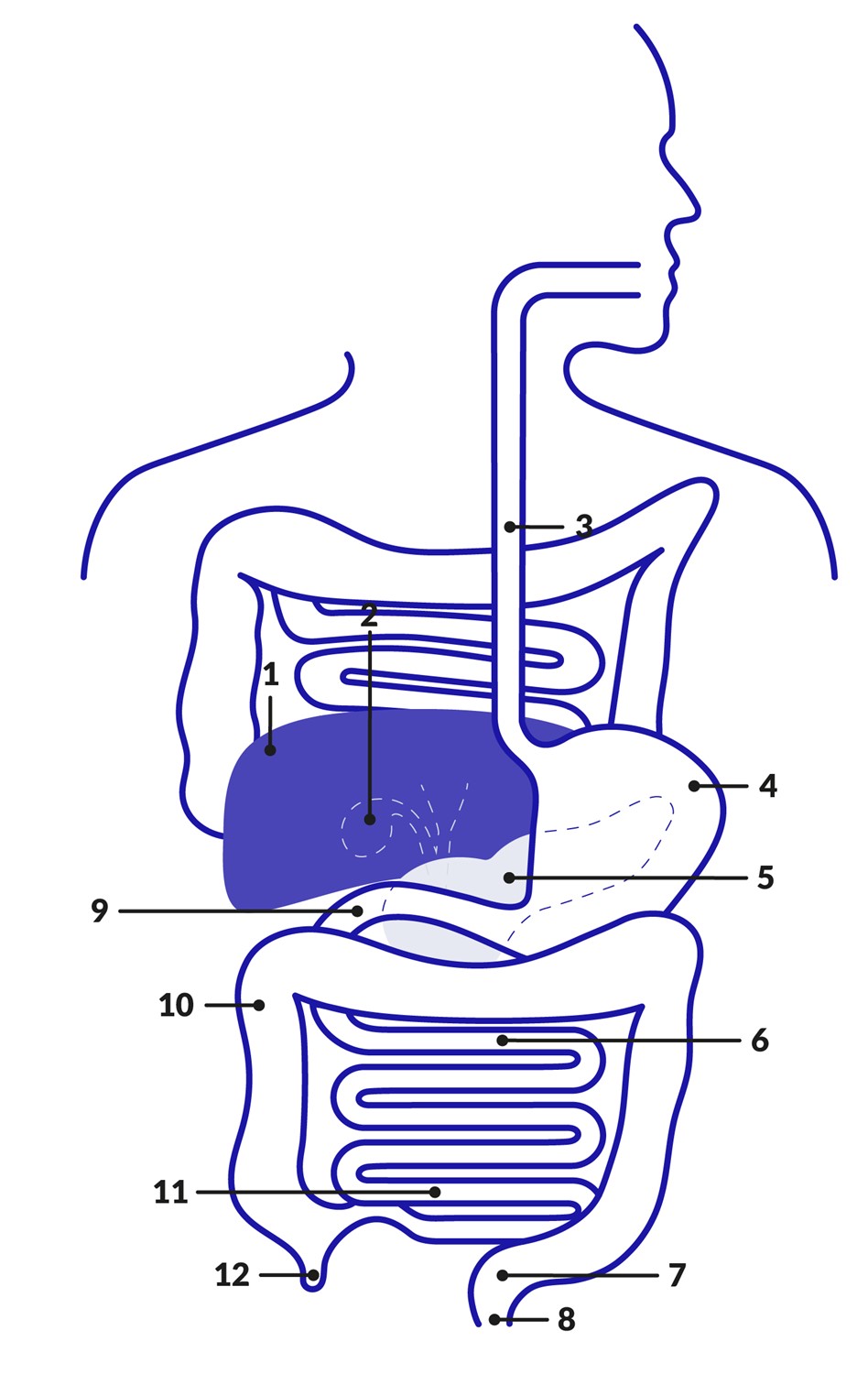
Key | |
|---|---|
1. Liver | 7. Rectum |
Where is the pancreas?
The pancreas is in the upper tummy (abdomen) and lies behind the stomach and guts (intestines). The pancreas has a connection via a tube (duct) to the first part of the gut (known as the duodenum) which is connected to the stomach. This connecting duct allows the chemicals (enzymes) produced by the pancreas to pass into the intestines.
What does the pancreas do?
The pancreas has two main functions:
To make digestive chemicals (enzymes) which help us to digest food. Enzymes help to speed up your body's processes.
To make hormones which regulate our metabolism. Hormones can be released into the bloodstream. They act as messengers, affecting cells and tissues in distant parts of your body.
About 90% of the pancreas is dedicated to making digestive enzymes. Cells called acinar cells within the pancreas produce these enzymes. The enzymes help to make proteins, fats and carbohydrates smaller. This helps the guts (intestines) to absorb these nutrients. The acinar cells also make a liquid which creates the right conditions for pancreatic enzymes to work. This is also known as pancreatic juice. The enzymes made by the pancreas include:
Pancreatic proteases (such as trypsin and chymotrypsin) - which help to digest proteins.
Pancreatic amylase - which helps to digest sugars (carbohydrates).
Pancreatic lipase - which helps to digest fat.
Approximately 5% of the pancreas makes hormones which help to regulate your body's metabolism. These hormones are made by several different cells which clump together like little islands (islets) within the pancreas. The islets are called islets of Langerhans and there are about one million islets dotted about in an adult pancreas. The hormones made by the cells in the islets of Langerhans within the pancreas include:
Insulin - which helps to regulate sugar levels in the blood.
Glucagon - which works with insulin to keep blood sugar levels balanced.
Somatostatin - which helps to control the release of other hormones.
Gastrin - which aids digestion in the stomach.
How does the pancreas work?
The pancreas
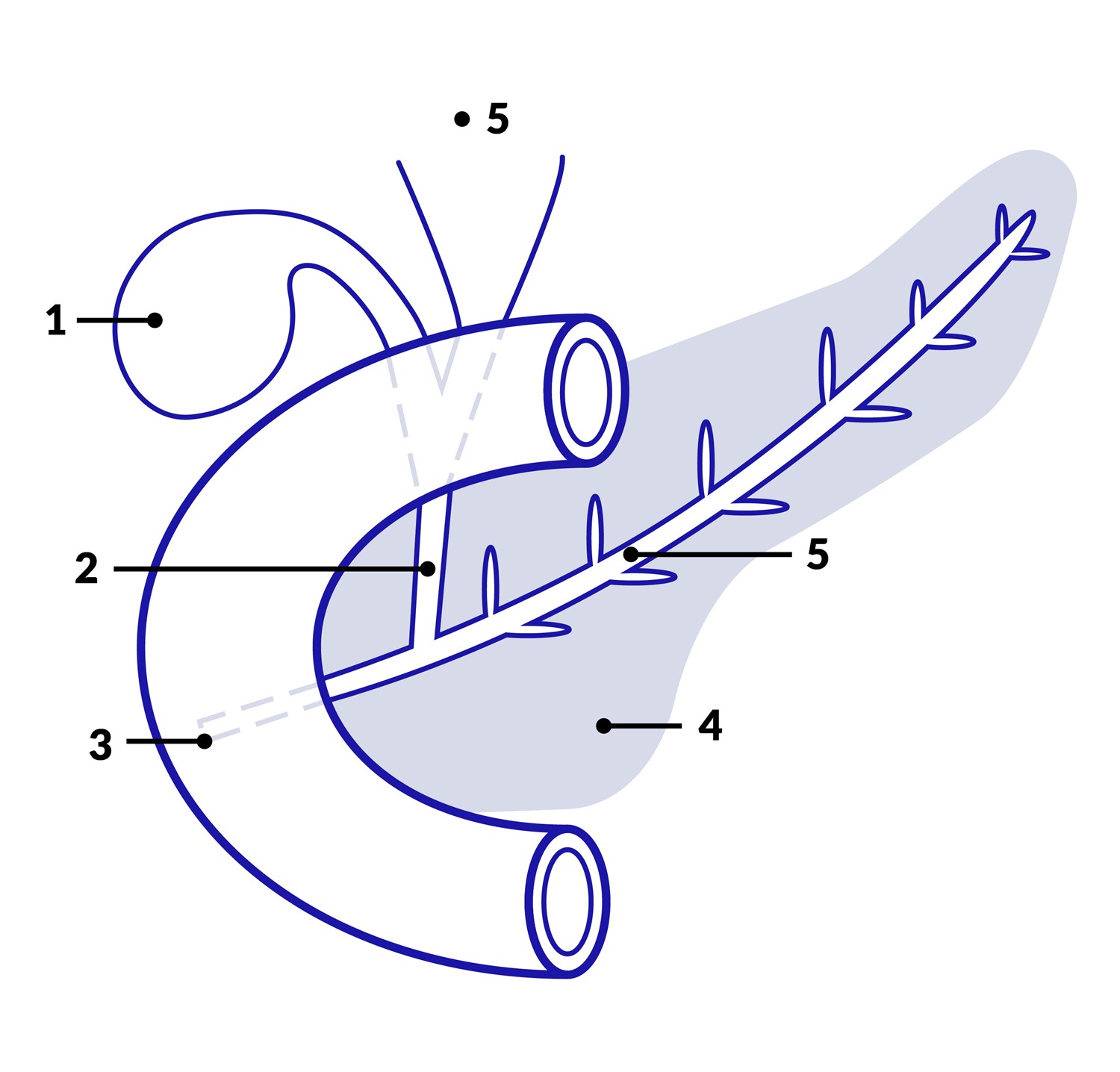
Key |
1. Gallbladder |
The digestive chemicals (enzymes) made by the pancreas are controlled by the body's nervous system and its hormones. When the body senses food in the stomach, electrical signals are sent to the pancreas via nerves. These signals stimulate the pancreas to put more enzymes into the pancreatic juice. Acinar cells respond by increasing the amount of enzymes they produce. The enzymes leave the cells and pass into tiny tubes (ducts). These ducts join together like branches of a tree to form the main pancreatic duct. The pancreatic duct drains the enzymes produced into the first part of the gut, known as the duodenum.
The enzymes are made in an inactive form so that they don't digest the pancreas itself. Once they enter the intestines the enzymes are activated and can begin breaking food down.
The main hormones released by the pancreas are insulin and glucagon. These hormones help to regulate the amount of sugar found in the blood and the body’s cells. The body's cells need energy to function. The most readily available form of energy is glucose, a type of sugar. Insulin helps to take glucose from the blood into the cells themselves. This allows the cells to function properly. Glucagon stimulates cells in the liver to release glucose into the blood when levels are low.
The pancreas carefully monitors the level of glucose in the blood. When levels of glucose are high in the blood, cells within the pancreas make insulin. Insulin gets released into the bloodstream where it causes glucose to move into cells. This decreases the amount of glucose in the bloodstream, lowering blood sugar levels. Low blood sugar levels stimulate the pancreas to make glucagon. Glucagon works on cells in the liver, causing the release of glucose. If sugar levels in the blood rise above normal, the pancreas stops releasing glucagon. Insulin may then be released to balance the system again.
This system helps to keep the level of glucose in your blood at a steady level. When you eat, levels of sugar in your blood rise and insulin helps to bring them down. Between meals, when your sugar levels fall, glucagon helps to keep them up.
Some disorders of the pancreas
Patient picks for General digestive health
Digestive health
What is small intestinal bacterial overgrowth (SIBO)?
SIBO (small intestinal bacterial overgrowth) is a common gut condition that's often confused with irritable bowel syndrome (IBS). What are the symptoms of SIBO and how is it treated?
by Amberley Davis

Digestive health
Could your pumpkin spice latte be giving you heartburn?
Autumn brings crisp leaves, cosy fireplaces and, of course, the return of the pumpkin spice latte. But if you’re taking weight loss medication, your favourite seasonal drink could leave you with more than just a pleasant aftertaste.
by Victoria Raw
About the authorView full bio
Authored by

Dr Roger Henderson, MBBS
General Practitioner, Medical Author
MBBS, LMSSA
Dr Roger Henderson qualified as a GP in 1985 and has authored for EMIS since early 2013.
About the reviewerView full bio

Dr Adrian Bonsall, MBBS
Medical Author
MA (Chemistry), MBBS (Hons), DCH
Since 2000 Adrian has been employed in emergency and critical care paediatrics based in Sydney, with particular interests in toxicology, trauma and resuscitation.
Article history
Article also available in English, German, Spanish, French, Italian, Portuguese, Hindi, Hebrew, Arabic, and Swedish.
30 May 2018 | Originally published
Authored by:
Dr Roger Henderson, MBBSPeer reviewed by
Dr Adrian Bonsall, MBBS
Join the conversation
Share your thoughts or experiences with others in our patient communities.

Ask, share, connect.
Browse discussions, ask questions, and share experiences across hundreds of health topics.

Feeling unwell?
Assess your symptoms online for free
Sign up to the Patient newsletter
Your weekly dose of clear, trustworthy health advice - written to help you feel informed, confident and in control.
By subscribing you accept our Privacy Policy. You can unsubscribe at any time. We never sell your data.