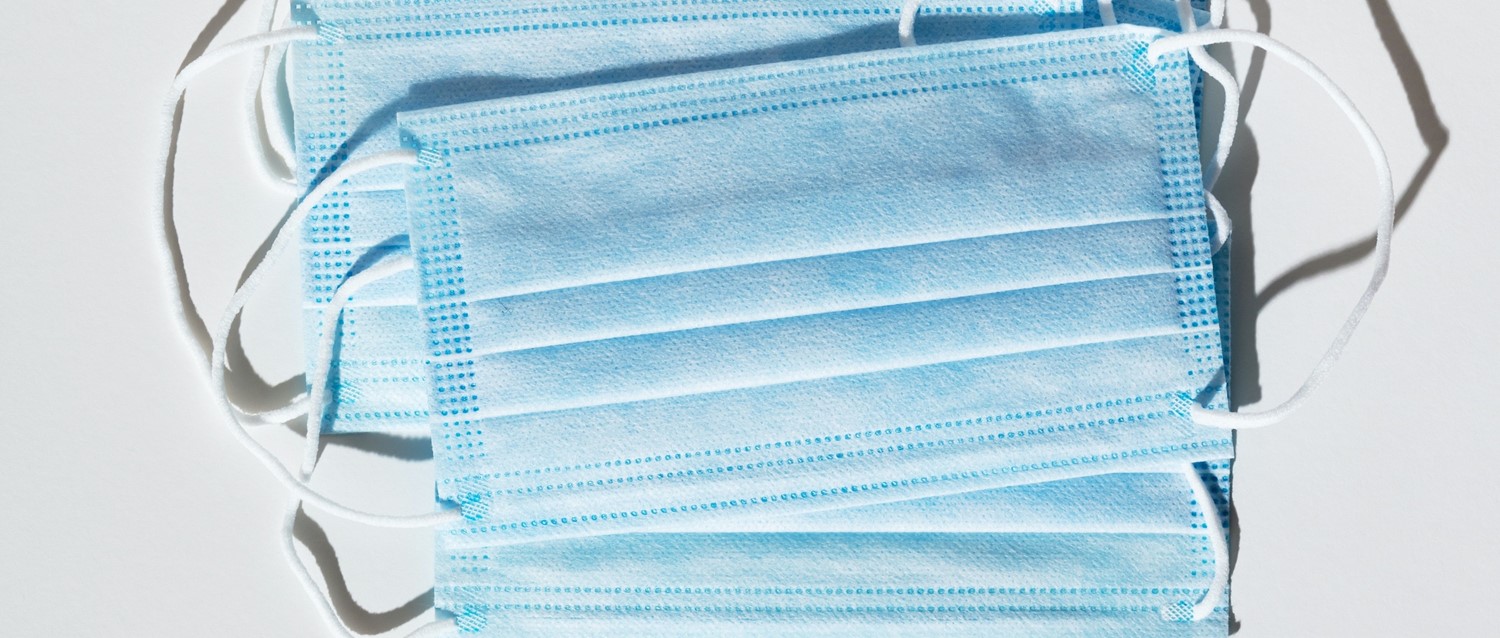
COVID-19: do you need to wear a mask to avoid coronavirus?
Peer reviewed by Dr Sarah JarvisAuthored by Milly EvansOriginally published 28 Apr 2020
Meets Patient’s editorial guidelines
- DownloadDownload
- Share
- Language
- Discussion
- Audio Version
- Add to preferred sources on Google
Many of us have anxiety about going out for essential journeys and exercise during the coronavirus pandemic. We all want to protect ourselves and others from COVID-19 as best we can. But how effective are face masks - and should you make your own?
Use Patient's coronavirus checker tool if you have any symptoms of fever or a new cough. Until you have used the tool and been advised what action to take, please stay at home and avoid contact with other people.
There are two well-accepted routes for the spread of coronavirus:
Droplet spread - droplets sprayed into the air when an infected person coughs, talks or sneezes.
'Fomites' - contaminated surfaces where virus has landed. People can pick the virus up on their hands and then touch their eyes, nose or mouth (routes through which the virus can enter the body).
The third route, aerosol spread, has been more controversial. Recent studies suggest that it may be possible for an infected person to spread the virus by breathing or speaking. What is not known is how 'effective' a route of transmission this is compared to droplet spread. The risk may be greater if you are breathing hard (for instance, if you are exercising) or singing.
To prevent the spread of the virus, some countries like Germany have made it compulsory to wear a face mask whilst on public transport or out shopping. The US public health institute, Centers for Disease Control and Prevention (CDC), is recommending that even healthy people wear masks or some kind of clean mouth and nose covering when leaving their homes.
In May 2020, Scotland, Northern Ireland and England introduced recommendations for people to wear:
A cloth face covering (as opposed to a surgical mask or respirators used as part of personal protective equipment):
For short periods.
In enclosed spaces where social distancing is not possible.
Northern Ireland and Wales suggests face coverings on public transport.
In Scotland, the use of face coverings became mandatory on public transport (including taxis, private hire cabs, buses, trains, trams, subways, planes and enclosed areas of ferries) on June 22nd.
In England, the use of face masks is mandatory on public transport and in hospitals, and recommended in general practice and in shops where social distancing is not possible.
There are no recommendations from any of the four countries that face coverings are needed routinely outdoors. However, they should be considered in extremely crowded environments outdoors.
Supply and demand
Unfortunately it's not as clear-cut as saying that masks are good or bad for preventing the spread of coronavirus in all settings. For clinicians or other key workers who may be exposed to coronavirus, personal protective equipment (PPE) is crucial for them to be able to carry out their jobs. But many countries, including the UK, are experiencing a shortage of the necessary equipment.
As you might expect, with every country in the world trying to order face masks to protect their most vulnerable from coronavirus, manufacturers haven't been able to keep up with demand. The World Health Organization recommends that only people who are sick and showing symptoms or caring for people who may have coronavirus should be wearing protective masks. This is largely so that the limited supply of masks can be prioritised for healthcare workers.
In hospitals, FFP3, N95 and FFP2 masks are used to provide the highest level of protection against coronavirus. For NHS staff in lower-risk situations, surgical masks can be used to provide some protection against the virus, especially if caring for patients who are coughing and you cannot socially distance.
Self-protection
It's crucial that people understand that the role of face coverings is to protect others, not themselves - 'mine protects you, yours protects me'. For most of the general public, wearing a face covering offers very little protection from coronavirus for them personally even if supplies of surgical (rather than FFP3) masks were available. This is because:
Air breathed in tends to take the 'path of least resistance'. Surgical masks are not closely fitted, so most air travels round the edges of the mask rather than through it. They therefore only protect against large droplets, not small, airborne particles.
Following social distancing and handwashing guidelines is more effective than wearing a mask. Large droplets are highly unlikely to spread more than 2 metres.
Wearing a face mask might also make you more likely to touch your face because they are uncomfortable or affecting your breathing.
Face masks can offer a false sense of security, making you think you're protected against coronavirus and so more willing to take risks.
Most people don't know how to put on, wear, take off or dispose of face masks effectively. This means they could expose themselves to the virus when putting the mask on or taking it off.
Cloth face coverings are, relatively speaking, extremely ineffective at preventing virus getting through to the nose and mouth. The arguments for wearing these to protect yourself against infection are even less compelling.
Up to 90% of particles penetrate cloth masks.
Once damp (after you've been breathing while wearing one for more than a few minutes) they may actually retain virus on their surfaces.
The European Centre for Disease Control states 'common fabric cloth masks are not considered protective against respiratory viruses and their use should not be encouraged'.
Protecting others
The main reason for members of the public wearing masks, particularly non-surgical masks, is to reduce the risk of passing coronavirus to someone else. There is evidence that they reduce both droplet and aerosol spread of virus. People who are asymptomatic or pre-symptomatic might not realise they are infected and spreading the virus.
A recent study shows many people test positive for coronavirus before they develop symptoms. Another suggests people may be infectious for over two days before symptoms begin. However, the majority of the time period during which people are infectious is in the first week after developing symptoms. And under current UK guidance, anyone with symptoms should self-isolate immediately.
So the recommendation to wear face coverings has absolutely not changed other guidance. If you have any symptoms of a new, continuous cough, temperature or loss of sense of smell, you should stay at home and self-isolate until you have been tested and have the results. If the results are positive, you must self-isolate for at least seven days from the onset of your symptoms.
Anyone in your household, and any other close contacts, should self-isolate for fourteen days from their last contact with you. if they develop symptoms, they too must get tested.
But in addition, we should all be following social distancing measures to reduce our risk of infection. This means always staying at least 2 metres from people outside of your household, and washing your hands frequently. You should make sure to cover your mouth and nose when you cough or sneeze and avoid touching your face, nose, eyes and mouth. These measures are crucial in stopping the spread.
So if you choose to wear a face covering, it should be as well as following these rules. Wearing a face covering doesn't mean you can take more risks or increase your contact with others.
DIY masks
If you do want to wear a mask to protect others, you might think about ordering one online. However, many sellers have sold out, prices have been inflated and the safety of their masks can't be guaranteed. Many supplies of masks are being redirected into the NHS and to other key workers. So should you make your own?
It's important to remember that any face mask you make at home won't be regulated or have to meet the safety requirements of officially manufactured masks.
If you are going to make your own face masks, make sure to cover from the bridge of your nose to your chin. Use a very closely woven fabric, using multiple layers to limit the penetration or escape of droplets as much as possible.
And once again, this is for the protection of others, not yourself - you still need to follow social distancing and handwashing measures. If used inappropriately, the European Centre for Disease Prevention and Control suggests that they "may even increase the risk of infection due to moisture, liquid diffusion and retention of the virus."
How to wear a face mask safely
If you decide to wear a face mask, special measures need to be taken to avoid contamination.
The face mask should cover the face from the bridge of the nose to the chin.
Wash your hands for twenty seconds with soap and water or use hand sanitiser before putting on or taking off a face mask.
Remove it from behind and avoid touching the front of the mask.
Dispose of the face mask safely and wash your hands or apply hand sanitiser if it is disposable.
If the mask is reusable, wash the mask as soon as possible after use, using normal detergent (Scotland specifies a 60°C wash). Wash your hands or apply sanitiser as soon as possible after touching the mask.
Editor’s note
This article was updated on 26th May and 2nd July 2020 following a change in guidance on the wearing of face coverings in some UK countries.
Patient picks for General information

COVID-19
Why it's normal to feel anxious about a post-COVID future
As lockdown restrictions start to ease across the UK, mental health experts are noticing an emerging phenomenon - anxiety about life after coronavirus. So what will life look like after the COVID-19 pandemic and how can you prepare?
by Lydia Smith

COVID-19
COVID-19: how to stay safe this Christmas
Christmas is just around the corner, and after it was effectively cancelled last year courtesy of the pandemic, hopes are high for more festive fun this time around. But COVID-19 hasn't gone away, and this festive season it's still really important to make sure we're being 'COVID-safe' and mitigating the risks of the virus as much as possible.
by Dr Sarah Jarvis
About the authorView full bio
Authored by

Milly Evans
Editor
Milly writes on a range of health topics, with a particular interest in health inequality and sexual health.
About the reviewerView full bio

Dr Sarah Jarvis
Clinical Consultant
MA (Cantab), BM, BCh (Oxon), DRCOG, FRCGP, MBE
After training in medicine at Cambridge and Oxford, Dr Sarah Jarvis MBE became a GP.
Article history
Article also available in English, German, Spanish, French, Italian, Portuguese, Hindi, Hebrew, Arabic, and Swedish.
28 Apr 2020 | Originally published
Authored by:
Milly EvansPeer reviewed by
Dr Sarah Jarvis
Join the conversation
Share your thoughts or experiences with others in our patient communities.

Ask, share, connect.
Browse discussions, ask questions, and share experiences across hundreds of health topics.

Feeling unwell?
Assess your symptoms online for free
Sign up to the Patient newsletter
Your weekly dose of clear, trustworthy health advice - written to help you feel informed, confident and in control.
By subscribing you accept our Privacy Policy. You can unsubscribe at any time. We never sell your data.