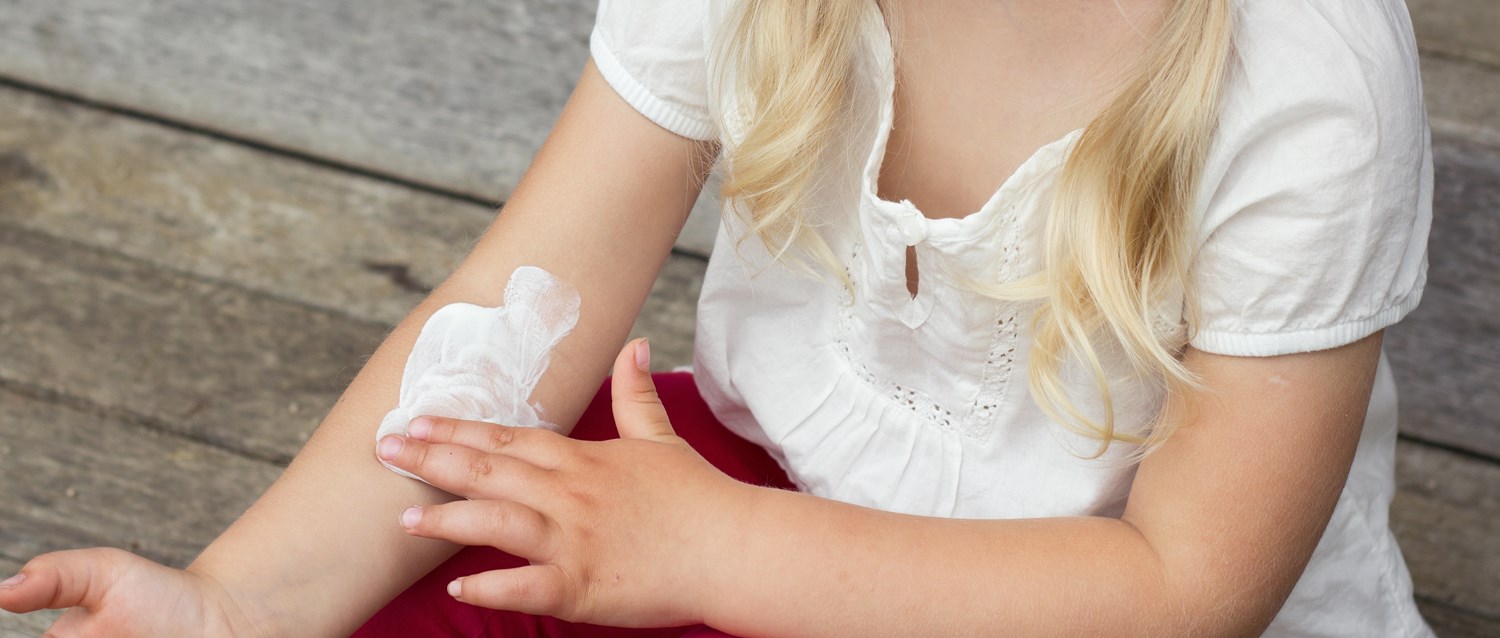
Will a gluten-free diet help my child's eczema?
Peer reviewed by Dr Sarah JarvisAuthored by Allie AndersonOriginally published 20 Dec 2017
Meets Patient’s editorial guidelines
- DownloadDownload
- Share
- Language
- Discussion
- Audio Version
- Add to preferred sources on Google
One in five children in the UK has eczema. Many children develop the condition in their first year of life and often, the earlier symptoms become apparent, the more severe the child's eczema.
Eczema is one of a group of 'atopic' conditions that also includes asthma, hay fever and food allergy, so they commonly occur together to varying degrees. The term 'atopic' means sensitive to allergens: in people with atopic conditions, their immune system overreacts to a substance and attacks the body, resulting in the symptoms of the allergy.
Food allergy as a driver for eczema
Food allergies in children with eczema most often develop in early infancy, by way of what's called the dual-allergen exposure hypothesis. "There is a window of opportunity in the first year of life whereby, based on whether the child is exposed to a food through the skin or through the gut, either sensitisation or tolerance develops respectively," explains paediatric allergy consultant Dr Helen Brough.
If, at a very young age, a baby is exposed to the food through the gut, the immune system tends to build a tolerance to it. But if the child is exposed to the same food allergen through the skin - for example, if the mother uses creams that contain peanut oil - the skin's immune response can predispose the child to sensitisation and allergy to peanuts.
An infant with healthy skin would not typically have this response. But in a baby with eczema, whose skin is damaged and inflamed, the allergen particles are more likely to penetrate the skin's barrier. "This is why children who have eczema before 3 to 6 months of age are much more likely to have food allergy," adds Dr Brough. "In older children - those who develop eczema after the age of 2 - it's very unlikely that it's associated with or driven by food allergy."
Gluten in the spotlight
In eczema, the usual food allergen suspects are cow's milk and egg. But there has been a lot of hype in recent years about gluten. Cutting gluten from the diet has been touted as a cure-all for everything from eczema, migraines and bloating to depression and anxiety. Much of the debate surrounding gluten arises from confusion over what it actually is.
Gluten is a type of protein found in the grains wheat, barley and rye. While a reaction to gluten in the gut causes the autoimmune condition coeliac disease, it's more likely that skin-related allergies are in fact a response to gluten-containing grains - commonly wheat - and not to gluten itself. "There is no strong evidence to support removal of gluten from the diet of children with eczema," says Dr Brough, "but on a case-by-case basis, there may be clues that wheat could be a contributing factor."
So how can you tell if wheat is causing or aggravating your child’s eczema? It helps to understand the processes that create an allergic response.
Types of allergy
There are two types of allergy. The first is IgE allergies, which occur immediately after coming into contact with a trigger. When a child is exposed to the allergen - peanuts, for example - their immune system produces antibodies called immunoglobulin E, which travel to cells in the body that release chemicals and cause an allergic reaction. At their most severe, IgE reactions can result in life-threatening anaphylaxis. IgE allergies are usually diagnosed easily by a blood or skin test.
Non-IgE allergies, on the other hand, also involve the immune system but it's less clear how they develop. Symptoms can arise hours, or even days, after exposure to the trigger.
Atopic eczema involves a non-IgE allergic response to a food. "Parents will often suspect that their child is allergic to something, because they start scratching and their eczema flares up some time after eating," says Amena Warner, head of clinical services at Allergy UK.
Usually the first clue that wheat is responsible is a very clear reaction soon after eating something containing wheat, like bread, pasta or cereals. But there are myriad wheat-containing substances and symptoms can be mild - and often gastrointestinal (tummy pain, bloating, wind, diarrhoea), rather than skin-related in nature - making it hard to identify wheat as a trigger.
"If you suspect that wheat might be driving your child’s eczema, a food diary can be a very useful tool," Ms Warner adds.
A new approach to food allergy
As our understanding of food allergy has evolved, so has the way in which it is treated. Since identification of the dual-allergen exposure hypothesis, studies have shown that avoiding food triggers is often ineffective because sensitisation to the allergen occurs through the skin. Not only that, but introducing allergenic foods into a baby's diet from as early as 3 months could actually be effective in preventing allergies. This should never be done without specialist advice, however - the Department of Health recommends babies should be exclusively breast (or bottle) fed until 6 months, and potentially allergenic foods should not be introduced before this age.
"In a child with mild to moderate eczema who's about to wean, we would recommend introducing all of the allergenic foods into the diet - including wheat - from around 6 months of age," says Dr Brough.
In older children, eczema is more likely to be rooted in or exacerbated by environmental factors, such as stress or infection. But that doesn't mean diet is never a factor, as paediatric dietician Clare Thornton-Wood explains.
"I have seen a number of children with severe eczema who have experienced a great improvement in their eczema by cutting wheat out of their diet," she says. "However, this must be done with the support of an appropriately trained healthcare professional, such as a registered dietician, because eliminating wheat can leave children lacking important nutrients."
For parents who suspect that wheat allergy is responsible for triggering eczema in their child, Ms Warner's advice is simple: "Go to your GP, show them your child's food diary and discuss your concerns. If there is a strong case, ask about a referral to a dietician." In addition, an all-round healthy, nutritious diet rich in fruit, vegetables and oily fish is important for all children, whether or not they have eczema.
Patient picks for Eczema
Skin, nail and hair health
Everything you need to know about baby eczema
Babies get all sorts of rashes and skin complaints, from nappy rash to cradle cap. Most are harmless and will disappear over time with the right care, but eczema can be a persistent problem. So what is baby eczema and how do you treat it?
by Lawrence Higgins
Skin, nail and hair health
Which natural remedies help soothe eczema?
Itchy and sore, eczema can be very unpleasant - and often, unbearable. Although there is no cure for eczema, conventional treatments like creams and ointments can help relieve dry, irritated skin. However, some natural products - like coconut oil - may provide some much-needed relief too.
by Lydia Smith
About the authorView full bio
Authored by

Allie Anderson
Freelance Journalist
NCTJ
Allie Anderson is an NCTJ-qualified journalist with many years of experience writing and editing for a range of publishers.
About the reviewerView full bio

Dr Sarah Jarvis
Clinical Consultant
MA (Cantab), BM, BCh (Oxon), DRCOG, FRCGP, MBE
After training in medicine at Cambridge and Oxford, Dr Sarah Jarvis MBE became a GP.
Article history
Article also available in English, German, Spanish, French, Italian, Portuguese, Hindi, Hebrew, Arabic, and Swedish.
20 Dec 2017 | Originally published
Authored by:
Allie AndersonPeer reviewed by
Dr Sarah Jarvis
Join the conversation
Share your thoughts or experiences with others in our patient communities.

Ask, share, connect.
Browse discussions, ask questions, and share experiences across hundreds of health topics.

Feeling unwell?
Assess your symptoms online for free
Sign up to the Patient newsletter
Your weekly dose of clear, trustworthy health advice - written to help you feel informed, confident and in control.
By subscribing you accept our Privacy Policy. You can unsubscribe at any time. We never sell your data.