
How to avoid back-to-school head lice
Peer reviewed by Dr Sarah JarvisAuthored by Kerry Taylor-SmithOriginally published 23 Aug 2018
Meets Patient’s editorial guidelines
- DownloadDownload
- Share
- Language
- Discussion
- Audio Version
- Add to preferred sources on Google
It's the day you've been preparing for: your child is starting school. You send them off in their pristine uniform and shiny shoes along with their ginormous new school bag. Everything goes according to plan, albeit with a few tears - you, not them - and they absolutely love school. A few weeks later, you get the dreaded email: head lice have been reported - you weren't prepared for this.
You frantically start searching your child's hair, combing back and forth in search of ... what exactly?
You'll be looking for two things - lice and nits. Although the two terms are often used to mean the same thing, they aren't. Lice are small grey-brown insects that cling to the hair close to the scalp while nits are the empty yellow-white shells left after their eggs have hatched.
Lice feed on the blood from your scalp. Many people think their biting causes the itching that often alerts you to their presence - it's actually the skin's reaction to the louse saliva. During their stay, lice will lay eggs on strands of hair, which take around seven to 10 days to hatch. A baby louse will reach adulthood in seven to 10 days and begin laying its own eggs.
How to diagnose
"To diagnose a case of head lice, you need to find them alive. Lice range in size from a full stop to a sesame seed and they remain close to the scalp; however, you will need to check all over from the back of the head to behind the ears and under the fringe," explains head lice expert Ian Burgess, director of the Medical Entomology Centre.
Head lice are incredibly common and it's likely that your child will experience them several times while at school. Lice require close hair-to-hair contact to walk from one head to another, so unfortunately, they tend to be more common in girls, especially with long hair which isn't tied back.
"It has been estimated that between 10% and 20% of UK children have head lice at any one time, according to a survey by Hedrin," says pharmacist Daniel Brash, managing director of Healthcare4all. "As they're so common it's nothing to feel embarrassed about. Head lice are no reflection on the cleanliness of your child - lice aren't choosy, as long as there's hair they'll want to live there."
Getting rid of it
Your child's hair is covered in these little sesame seed-sized lice - what next? There a few tried-and-tested methods for ridding your child of head lice, and numerous products lining the shelves of the local pharmacy - but what actually works?
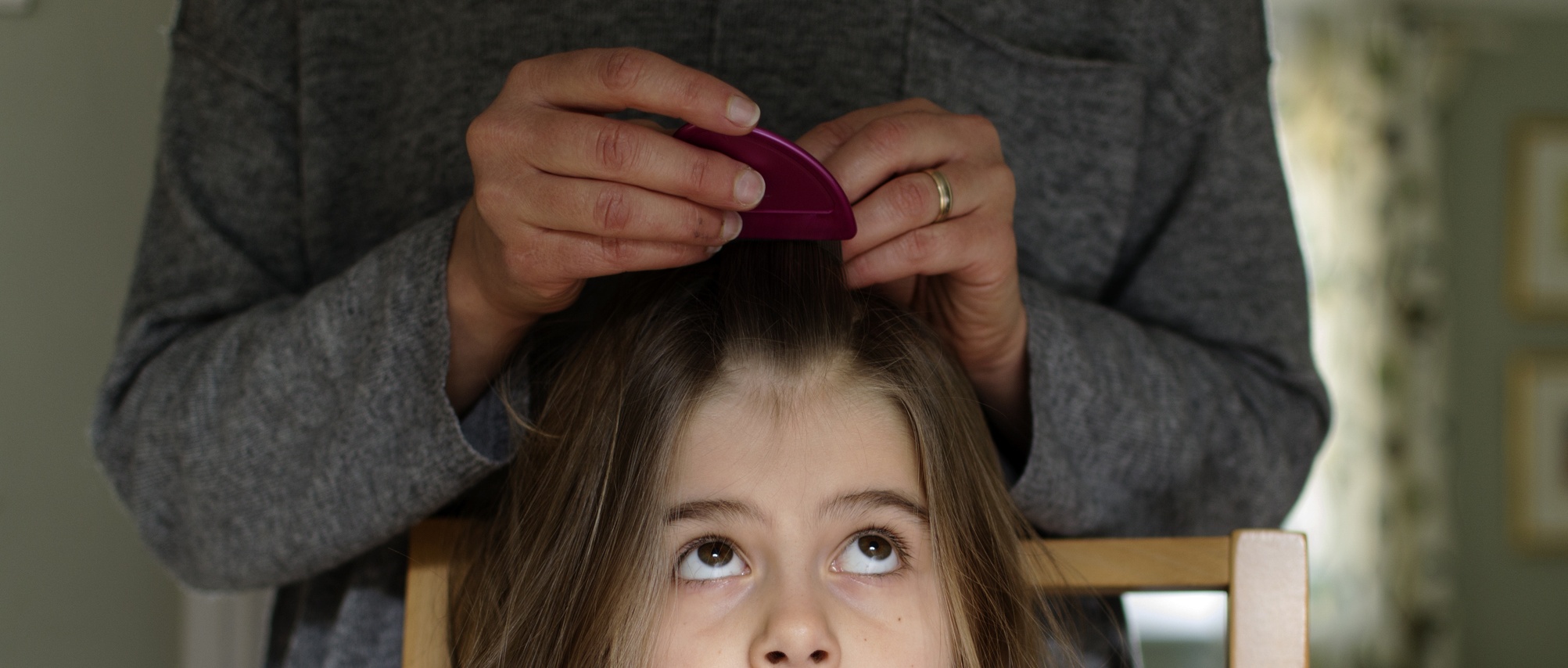
"Head lice can be treated without seeing your GP," says Dr Zubair Ahmed of MedicSpot GP. "I would recommend treating head lice as soon as you detect any live ones - finding eggs alone doesn't necessarily mean your child is still infested, so don't treat at this stage. If you see eggs, check for live lice by wet combing, which involves using a fine-toothed comb through wet hair with conditioner. Comb all hair from roots to the ends and repeat every few days for a couple of weeks to ensure all head lice are removed. This usually takes around 10 minutes for those with short hair but can take up to half an hour for those with long, frizzy or curly hair.
"If after two weeks your child is still struggling with head lice, I would recommend using a medicated lotion or spray to kill the lice. This treatment should kill all live lice within a day and might need to be repeated after a week to kill any newly hatched lice."
If your child has head lice, everyone in the household should be checked for lice and treated at the same time as your child if live lice are still around after two weeks.
Is 'natural' treatment best?
Many parents opt to physically remove the lice, using traditional nit combs, while others choose to use a treatment from a pharmacy. If this is the case, the advice is to avoid those containing insecticides, as research shows lice are becoming resistant to pyrethrins and permethrins - the main ingredients in over-the-counter treatments. Instead, a pharmacist might recommend one of the many non-pesticide lotions and shampoos such as Hedrin, Lyclear or Full Marks Solution, which are thought to be effective in around 80-90% of cases.
"You should use a non-pesticide treatment that smothers the lice instead of poisoning them. Research suggests that lice have become resistant to traditional pesticide treatments so they are less effective although most people do use a non-pesticide product these days," says Burgess.
"Home remedies are sometimes used by parents, such as dosing the hair in vinegar, mayonnaise and olive oil; however, none of these is clinically proven to eradicate lice. If you are unsure about what treatment to use, speak to your pharmacist."
Experts are divided over whether preventative medicated lotions and sprays can actually avert infestations. Some claim to protect children from the parasites by breaking the life cycle and killing lice before an infestation can be established but Ahmed believes such sprays can irritate the scalp and would not recommend these to his patients.
Be vigilant
It is impossible to protect against head lice entirely but there are ways you can minimise the chance of any repeat infestations, including tying back long hair, avoiding or minimising head-to-head contact, and checking and treating family members if necessary. The key is to be vigilant; check your children's hair regularly to catch and treat any lice early on before they get the chance to lay eggs.
Patient picks for Childhood infections
Children's health
The best ways to get rid of head lice
They’re difficult to spot and are becoming increasingly difficult to treat; almost 50% of children in the UK have had head lice in the past five years. But don’t despair – the battle might be getting harder, but you can still win the war against head lice.
by Danny Chadburn
Children's health
Is it whooping cough or just a cold?
The UK Health Security Agency (UKHSA) has announced that a baby has died of whooping cough - the first fatality of 2025. The baby's mother had not been vaccinated against the illness. Here we look at how to spot the signs of this highly contagious infection which can effect anyone but can be particularly serious for babies and infants - and how to tell if it less serious. We also look at the need to get vaccinated.
by Lawrence Higgins
About the authorView full bio

Kerry Taylor-Smith
Freelance journalist
BSc (Hons) Natural Sciences
Kerry has been a freelance writer, editor and proofreader since 2016; she specialises in science and health-related topics.
About the reviewerView full bio

Dr Sarah Jarvis
Clinical Consultant
MA (Cantab), BM, BCh (Oxon), DRCOG, FRCGP, MBE
After training in medicine at Cambridge and Oxford, Dr Sarah Jarvis MBE became a GP.
Article history
Article also available in English, German, Spanish, French, Italian, Portuguese, Hindi, Hebrew, Arabic, and Swedish.
23 Aug 2018 | Originally published
Authored by:
Kerry Taylor-SmithPeer reviewed by
Dr Sarah Jarvis
Join the conversation
Share your thoughts or experiences with others in our patient communities.

Ask, share, connect.
Browse discussions, ask questions, and share experiences across hundreds of health topics.

Feeling unwell?
Assess your symptoms online for free
Sign up to the Patient newsletter
Your weekly dose of clear, trustworthy health advice - written to help you feel informed, confident and in control.
By subscribing you accept our Privacy Policy. You can unsubscribe at any time. We never sell your data.
More in children's health
- Grief and young people: how to cope with loss
- How should we support children with autism?
- How to explain autism to your child
- How to help your autistic child cope with Bonfire Night
- How to help your kids eat healthily over Christmas
- How to protect your child's teeth
- How to spot the signs of gaming addiction in children
- How to talk to children about death
- Should all children be screened for mental health problems?
- Should parents worry about 'dry drowning'?
- Should your child get the chickenpox vaccine?
- Signs of tinnitus to look out for in children
- Signs your child is struggling with their mental health
- What to do if your teen has a drug problem
- What to expect when your child starts talking therapy
- What works best for treating hay fever in children?
- What you need to know about parenting with a mental health issue
- Why isn't the chickenpox vaccine available on the NHS?
- Why too much sugar is bad for children
- Winter babies at greater risk of mental health problems