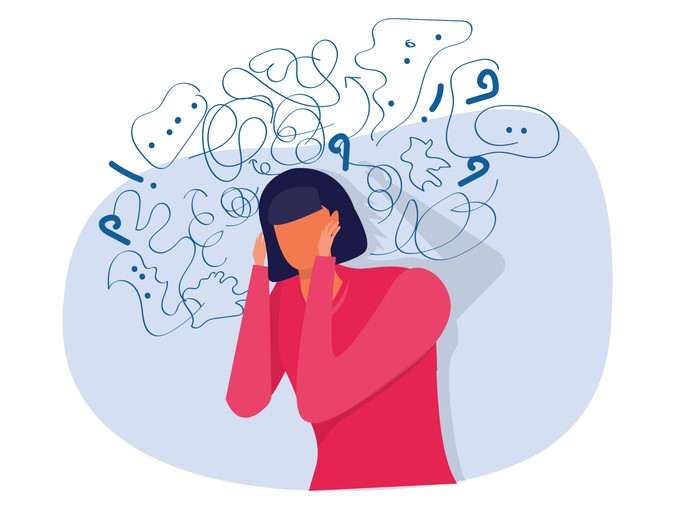
What are the signs of ADHD in women?
Peer reviewed by Dr Krishna Vakharia, MRCGPAuthored by Amberley DavisOriginally published 5 Apr 2023
Meets Patient’s editorial guidelines
- DownloadDownload
- Share
- Language
- Discussion
- Audio Version
- Add to preferred sources on Google
In school, boys are twice as likely to be diagnosed with attention deficit hyperactivity disorder (ADHD) as girls. Experts now believe that this gap isn't because more boys develop ADHD, but because many girls go undiagnosed. As ADHD diagnoses in adult women surge, we explore the differences in symptoms between girls/women and boys/men, as well as the signs grown women can look out for in daily life.
Spotting the signs of ADHD in adult women
Life with ADHD can present issues, and it can be even more difficult if your condition hasn't been identified. This is the case for many adult women who have gone through much of their life without the right support in place.
Without coping strategies, many women and girls with ADHD also struggle with other mental health disorders, such as anxiety disorders, depression, and eating disorders and experience difficulties in all areas of life. For example, they are more at risk of1:
Unplanned pregnancy.
Antisocial behaviour.
Relationship problems.
Work-life problems.
The earlier ADHD is detected, the better chance there is of improving someone's quality of life. Below are some common challenges faced by adult women with ADHD.
They can also be symptoms of other conditions - or may not even be symptoms of a clinical problem at all.
If you recognise a lot of these traits in yourself, and believe you may have undiagnosed ADHD, you can read more about the ADHD diagnosis process before talking to your doctor or mental health professional for a more accurate evaluation.
In day-to-day life, is it normal for you to:
Find decisions overwhelming - for example, what to buy in supermarkets.
Struggle with time management - for example, you forget deadlines at work.
Feel disorganised - for example, your living space feels cluttered.
Drop a task in the middle of it and start another - for example, you start another chore before the one you're on is complete.
Overspend to compensate for other issues - for example, you buy someone an expensive present to make up for forgetting their birthday.
Stop listening - for example, when someone talks at length your mind drifts.
Feel anxious about social situations - for example, your over-thinking causes you to fear people's judgement or criticism.
Some women become very good at hiding their symptoms from others because they feel shame or fear rejection. A diagnosis can make life a lot easier. Treatment for ADHD may include therapy, lifestyle changes, medications, and helpful adjustments in your workplace.
Why are more women being diagnosed?
There is a significant increase in adult women who are being diagnosed with attention deficit hyperactivity disorder (ADHD) - a behavioural condition that has traditionally been associated with school age boys.
This surge in diagnoses coincides with a greater awareness and understanding of ADHD among the public. What was once thought of as a schoolboy problem with hyperactivity and aggression is now being understood as a multi-faceted condition that can affect both boys and girls in different ways.
Research is now telling us that girls may be just as likely to develop ADHD, but if this is the case, how have so many gone through school and adulthood without having their condition recognised and managed?
There are several reasons at play:
1. The signs of ADHD in women and girls can be different
There are three main subtypes of ADHD and these are responsible for different characteristics:
Hyperactive/impulsive ADHD - people with this type tend to be energetic, disruptive, talkative, impulsive, impatient, may fidget more, and can experience mood swings.
Inattentive ADHD - people with this type can find it difficult to focus on one task for long, listen for long, pay attention to details, and remember things.
A combination of the above two.
Experts now believe that hyperactive/impulsive ADHD is more common in boys and men while inattentive ADHD is more common in girls and women1. This means that, although girls and boys with ADHD can be more alike in their behaviours than not, there are some important differences when it comes to spotting the signs.
2. Research has focussed on boys and men
The problem has been compounded by the lack of ADHD research for women and girls. In the past, studies have focussed on the typical behaviours that boys present - such as hyperactivity and aggression - and this has led the ADHD symptoms that affect more girls - such as inattention and low self-esteem - to largely be missed and ignored for decades.
3. Gendered stereotypes
Gendered stereotypes and language may also play a role in the underdiagnosis and misdiagnosis of ADHD in women and girls. For example, girls can often be stereotyped as shy, forgetful, or 'spacey' - characteristics that could be signs of inattentive ADHD.
Inattentive ADHD and women - a closer look
Generally speaking, the trend for girls to develop inattentive ADHD and boys to develop hyperactive and impulsive ADHD accounts for a lot of the gender disparity between symptoms and diagnosis:
More girls/women have more trouble focussing on one thing - the hallmark of inattentive ADHD - rather than struggling with impulsivity or hyperactivity - the traits most often viewed as hallmarks of ADHD by society.
Girls/women tend to have fewer externalising symptoms than boys/men. These behaviours are directed outward into the world and are therefore more obvious for others to spot. Externalised ADHD traits include antisocial, disruptive, or aggressive behaviour toward others.
More girls/women internalise their symptoms - turn their feelings inward. As a result, they experience lower self-esteem and higher rates of anxiety and depression than males with ADHD2.
Other signs of ADHD in women
The different characteristics of inattentive ADHD and hyperactive/impulsive ADHD are important for understanding ADHD in women and girls compared to ADHD in boys and men - but this isn't the whole story. There are other ways that ADHD presents differently in the two sexes.
Symptoms and puberty
In boys, ADHD tends to present in childhood, and these behavioural traits often calm down at puberty. In girls, research shows that ADHD symptoms in women may in fact become worse during puberty. This is due to an increase of oestrogen - the female sex hormone - which affects the part of the brain the controls ADHD traits and functions3.
Symptoms and the menstrual cycle
In the same way that puberty can spur on ADHD symptoms, hormonal fluctuations during a women's menstrual cycle can affect the severity of symptoms throughout the month. Many girls and women with ADHD have described how their condition seems to worsen during the premenstrual period - the time in their cycle when premenstrual syndrome (PMS) symptoms also peak3.
Further reading
Patient picks for ADHD
Brain and nerves
Can diet affect your ADHD?
As more people are diagnosed with ADHD, there is growing interest in effective ways to help control its symptoms. One promising area of focus is nutrition, with emerging evidence suggesting that what you eat may play a role in managing the condition. We spoke to the experts for their take on whether your diet can impact ADHD symptoms.
by Victoria Raw
Brain and nerves
ADHD Diagnosis: How to get diagnosed and what to expect
If you’ve ever suspected you might have ADHD, the idea of getting diagnosed can feel both relieving and intimidating at the same time. In this article, we speak to Dr Khan, an ADHD expert from Well Life Clinic, about the diagnosis process and what to expect if you think you may have ADHD.
by Heather Ainsworth
Frequently asked questions
Why do ADHD symptoms in women get worse during puberty or their menstrual cycle?
Research indicates that ADHD symptoms in women may intensify during puberty due to an increase in oestrogen, a female sex hormone. This hormone affects the part of the brain that controls ADHD traits and functions. Similarly, hormonal fluctuations during a woman's menstrual cycle, particularly during the premenstrual period, can also exacerbate the severity of symptoms.
What are some common coping mechanisms adult women with ADHD might use to hide their symptoms?
Some women become very good at hiding their symptoms from others. This often happens because they feel shame or fear rejection related to their ADHD traits. The article doesn't specify particular mechanisms but implies they are strategies to mask the condition from others.
Does ADHD in women only appear as inattentive type, or can they also have the hyperactive/impulsive type or a combination?
While experts believe that inattentive ADHD is more common in girls and women, it's important to note that women can also have hyperactive/impulsive ADHD or a combination of both types. The article states there are three main subtypes: hyperactive/impulsive, inattentive, and a combination of both.
About the authorView full bio
Authored by

Amberley Davis
Senior writer
BA (Hons), CPD
Amberley is a senior writer with Patient and has written extensively on a range of health and wellbeing topics.
About the reviewerView full bio

Dr Krishna Vakharia, MRCGP
Chief Medical Officer for Health, Optum UK
MBChB, MRCGP(2013), BMedSci (hons), DFSRH, DRCOG, PGDipDerm (Distn)
Dr Krishna Vakharia is an NHS GP. She is also a regular examiner for the postgraduate Diploma in Practical Dermatology at Cardiff University as well as being the Chief Medical Officer for health at Optum UK.
Article history
Article also available in English, German, Spanish, French, Italian, Portuguese, Hindi, Hebrew, Arabic, and Swedish.
5 Apr 2023 | Originally published
Authored by:
Amberley DavisPeer reviewed by
Dr Krishna Vakharia, MRCGP
Join the conversation
Share your thoughts or experiences with others in our patient communities.

Ask, share, connect.
Browse discussions, ask questions, and share experiences across hundreds of health topics.

Feeling unwell?
Assess your symptoms online for free
Sign up to the Patient newsletter
Your weekly dose of clear, trustworthy health advice - written to help you feel informed, confident and in control.
By subscribing you accept our Privacy Policy. You can unsubscribe at any time. We never sell your data.