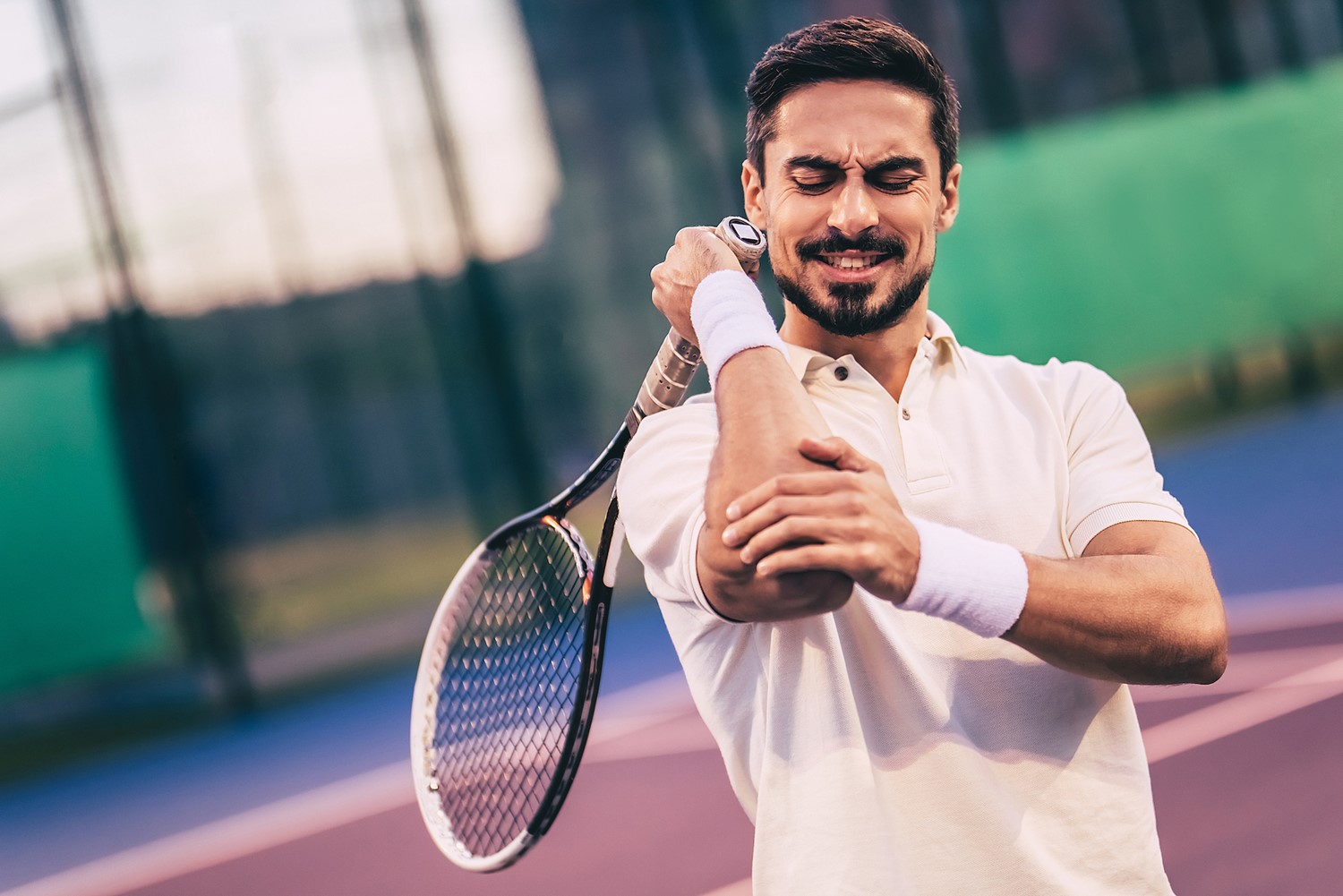
Opções de tratamento para cotovelo de tenista
Revisado por Dr Hayley Willacy, FRCGP Última atualização por Dr Colin Tidy, MRCGPÚltima atualização 1 Jul 2018
Atende aos diretrizes editoriais
- BaixarBaixar
- Compartilhar
- Language
- Discussão
- Versão em Áudio
Tennis elbow is a condition where you have pain on the outer side of the elbow. It is often caused by overuse, which causes damage to tendons around your elbow. In many people, symptoms improve over time just by stopping activities that bring on the symptoms.
Studies have not yet confirmed the best way to treat tennis elbow. Therefore it's very important to consider which treatment (if any) is best for you.
Neste artigo:
Vídeos selecionados para Lesões esportivas
There are six options for the management of cotovelo de tenista:
Changing your activities - rest and/or changing the way you use your arm.
Alívio da dor - in the form of ice, creams/gels, tablets or patches.
Supports - usually in the form of a supportive strap.
Fisioterapia - can use a variety of treatments.
Steroid injection.
Other types of injection such as injecting a sample of the patient's own blood (autologous blood), and botulinum toxin may be available.
Cirurgia - usually only considered if other options have not worked well and symptoms have been present for over 12 months.
Continue lendo abaixo
No treatment apart from modifying activity
| Benefícios | Riscos |
|---|---|---|
No active treatment. Resting the arm and avoiding doing things that make it worse. | Pain from tennis elbow usually lasts for 6 to12 weeks. In some people it can go after as little as three weeks. It is likely to settle more quickly if you can avoid any activities that bring on symptoms. There are no side-effects and there is no need for hospital treatment. You can choose another option at any time. | In about 1 in 10 people, pain can last for longer than 12 months. Once you have had tennis elbow, it may return. It may already have an impact on your life and well-being. It can be very hard to rest your arm, even just with usual day-to-day activities. |
Simple treatments
Voltar ao conteúdoBenefícios | Riscos | |
|---|---|---|
Ice cubes in a plastic bag, held on the elbow for 10 minutes repeatedly. | Simple and will ease pain for a while. Avoids potential side-effects from medication. | Need to be prepared to apply it for up to 10 minutes at a time. Often need to repeat as relief does not last very long. |
Topical non-steroidal anti-inflammatory drugs (NSAIDs), such as ibuprofen gel. | Can reduce pain a little. Less risk of side-effects compared with oral NSAIDs. | Rarely, the gel can irritate the skin. |
Oral non-steroidal anti-inflammatory drugs (NSAIDs), such as ibuprofen as a tablet. | Sometimes helps to ease the pain. | Stomach pain is common. Bleeding from the stomach is the most serious side-effect. Other medication can be prescribed to protect the stomach if necessary. Some people with asthma, high blood pressure, kidney problems and heart failure may not be able to take NSAIDs. |
Nitrate (GTN) patches, applied daily to the skin over the elbow. | Can help to reduce pain over 1-3 months. About 4 in 5 people are pain-free after 6 months. | 1 in 5 people will not be better after six months of treatment. Potential side-effects include headaches, dizziness and low blood pressure. |
Continue lendo abaixo
Supports and physiotherapy
Voltar ao conteúdoBenefícios | Riscos | |
|---|---|---|
Supportive strap. Small disc of plastic with a Velcro® strap that is fastened around the arm, just below the elbow. | Can help to reduce pain by taking the pressure away from the tendon insertion. This may help to allow natural healing. | Some people do not find this helpful. Some people find it uncomfortable to wear. |
Fisioterapia. Can use a variety of treatments including exercises, soft tissue massage, ultrasound, laser therapy, acupuncture, and nerve mobilisations. | There is some evidence that exercises can help the tendon to repair and therefore improve the chances of long-term benefit. Low-level laser treatment may be effective in the short term. | Requires time and repeated visits to a physiotherapist. Most physiotherapy treatments have uncertain effectiveness. |
Injeções
Voltar ao conteúdoBenefícios | Riscos | |
|---|---|---|
Steroid (cortisone) injection. An injection into the painful area. | In the short term often helps to reduce the pain during the first 3 months. It can be useful if you absolutely have to be able to use the arm in the near future. | A number of studies have shown that for many people, the pain tends to come back and the problem may recur more often than for other treatments. May be a painful injection and can ache for a few days. Potential side-effects include infection, shrinking (atrophy) of the fatty tissue under the skin, change in skin colour, bruising, bleeding and, rarely, damage to the tendon. |
Injecting part of your own blood. This procedure is generally only considered if other treatments have failed, as research is ongoing. | Long-term outcomes may be better than steroid injection. It is thought that blood helps to heal the tendon. | Not enough evidence to suggest better than other treatments. May be a painful injection. May require more than one hospital visit. Potential side-effects include infection, bruising, and bleeding. May not be available locally. |
Botulinum toxin A injections | Has been shown to be effective in some studies. | May be a painful injection. May not be available locally. Sometimes offered as an alternative treatment to surgery. |
Continue lendo abaixo
Cirurgia
Voltar ao conteúdoBenefícios | Riscos | |
|---|---|---|
Cirurgia. Only considered if other treatments have failed and symptoms have been present for over 12 months. Involves an incision and release of the tendon. | Good to excellent long-term results have been reported. | It can take up to six months to recover fully from the operation. Potential side-effects include infection and a small risk of damage to other structures - eg, nerves or blood vessels. Usually reserved for people who have more severe and more long-standing problems. |
Escolhas do paciente para Lesões esportivas

Ossos, articulações e músculos
Por que lesões na cabeça no esporte precisam ser levadas mais a sério
Lesões na cabeça são comuns no mundo esportivo. Muitas vezes, elas podem ser muito leves e os sintomas podem desaparecer em questão de horas ou dias. No entanto, às vezes uma pancada na cabeça, especialmente se houver múltiplas pancadas em um curto espaço de tempo, pode levar a danos cerebrais graves ou até mesmo à morte.
por Milly Evans
Ossos, articulações e músculos
Como uma lesão esportiva pode afetar sua saúde mental
Quando se trata de lesões esportivas, é mais provável que nos concentremos na dor e em como ela afeta nossa saúde física. Mas as lesões também podem ter um impacto profundo em nosso bem-estar emocional.
por Lydia Smith
Continue lendo abaixo
Histórico do artigo
As informações nesta página são revisadas por pares por clínicos qualificados.
1 Jul 2018 | Última versão

Pergunte, compartilhe, conecte-se.
Navegue por discussões, faça perguntas e compartilhe experiências em centenas de tópicos de saúde.

Sentindo-se mal?
Avalie seus sintomas online gratuitamente
Inscreva-se no boletim informativo do Patient
Sua dose semanal de conselhos de saúde claros e confiáveis - escritos para ajudá-lo a se sentir informado, confiante e no controle.
Ao se inscrever, você aceita nossos Política de Privacidade. Você pode cancelar a inscrição a qualquer momento. Nunca vendemos seus dados.