
How to build muscle on a vegan diet
Peer reviewed by Dr Colin Tidy, MRCGPLast updated by Lynn StephenLast updated 8 Jul 2026
Meets Patient’s editorial guidelines
- DownloadDownload
- Share
- Language
- Discussion
- Audio Version
- Add to preferred sources on Google
With 3.1% of adults now following plant-based diets, veganism in Great Britain is on the rise. There are growing numbers of people interested in making 'vegan gains' - building muscle on a vegan diet. With careful planning, it is possible to maximise muscle growth on a plant-based diet.
Three rules for muscle building
Whether you consume a plant or animal-based diet, if your goal is to build muscle there are three key things that you need to do:
Establish a regular strength-training routine.
Ensure you consume the optimum amount of protein for muscle repair and growth.
Rachel Ball, registered British Dietetic Association (BDA) freelance dietitian, explains that the most important factor when trying to build muscle is progressive overload during your workouts.
"Each session, try for a heavier weight, more repetitions or better form," she says.
To support this progression in your workouts you need a diet that is high in protein and also rich in a range of nutrients and other food groups that can support strength training.
A vegan muscle-building diet
While veganism has its own dietary challenges for strength training, vegan muscle building is possible. Research shows that both strategic food management and food supplementation are effective in supporting athletes and others who engage in intense strength training and have a vegan diet.1
Reema Pillai, dietitian at Dietitian Fit & Co, says: "For someone who follows a vegan diet, it can take careful planning to ensure your diet contains the required intake of protein, calories, and nutrients to optimise health and muscle growth. Eating well, combined with regular muscle-strengthening exercise, will help to build muscle over time."
Vegan sources of protein
It's a common misconception that only animal-based products can provide the protein needed for muscle gain. Protein contains essential amino acids that are needed to repair and increase muscle mass - a process called muscle protein synthesis (MPS).
Patel advises that protein intake needs to be higher than average at around 1.6-2 grams of protein per kilogram of body weight to help maximise muscle growth.
"Concentrating on consuming a variety of high protein plant foods is important, as some plant proteins do not contain all the essential amino acids and are not as well absorbed as animal proteins," she says. "Plant-based proteins that contain all the essential amino acids are sometimes called 'complete proteins'.
"These include tofu, tempeh, seitan, edamame or soya beans, quinoa, and chia seeds. Other plant foods such as beans, legumes, and grains also contain protein, though they will need to be eaten as a part of a varied diet to obtain all the essential amino acids the body cannot produce itself."
Some common vegan protein sources are:
Beans - such as black beans, kidney beans, and green beans.
Seeds - for example, hemp seeds, pumpkin seeds, and chia seeds.
Nuts - including almonds, pine nuts, and peanuts.
Lentils.
Tofu.
Soy milk.
Quinoa.
Artichokes.
Green peas.
Oatmeal.
Edamame.
Hemp milk.
Black-eyed peas.
Spinach.
Asparagus.
Broccoli.
Chickpeas.
Vegan protein powder can also help you to reach your protein requirements. If you want to maximise muscle growth, you may want to consider the pros and cons of protein supplementation to support your vegan gains.
Vegan sources of carbs
Carbohydrates are a primary source of energy in your diet.2 They are partially converted to glycogen, a form of energy that's stored in your muscles. According to Ball, this makes carbs really important, providing essential fuel for your workouts.
Simple carbs are great before a workout because they're digested quickly which makes them a fast-working source of energy. Before a workout, Ball recommends choosing easily digested carbohydrates such as fruit, smoothies, or cereal bars.
"Anything too high in fibre or fat before exercise might cause pain, poor performance, or diarrhoea," she says.
Experts also recommend consuming carbs straight after high-intensity exercise.3 This helps to replenish depleted glycogen stores needed for muscle repair and recovery. In addition, it helps prevent gluconeogenesis. This is the process by which the body turns to protein stores for energy that could otherwise be used in MPS to build muscle.
Not having enough carbs can also cause protein loss because carb restriction leads to an increase in the amount of nitrogen being excreted by the body. Nitrogen is a component of amino acids - the essential substances for MPS.
Common carbohydrates
Whole fruits, such as apples, peaches, and clementines.
Beans, including black beans, kidney beans, and butter beans.
Squash.
Sweet potatoes.
Whole corn.
Lentils.
Quinoa.
Oats.
Brown rice.
Whole wheat pasta.
Whole grain bread.
Vegan sources of dietary fat
Dietary fats are your body's other main source of energy. Fats have a bad reputation when it comes to your health and body composition, but consuming unsaturated rather than saturated fats can not only help when vegan muscle building but can also aid vitamin absorption.
Both mono-unsaturated and polyunsaturated fats, known as the 'good' fats, aid muscle movement and growth. They increase levels of HDL, the 'good' cholesterol, which in turn may lead to greater growth hormone production and more amino acids for MPS.
Furthermore, while saturated fats may raise 'bad' cholesterol and increase your chance of heart issues such as heart disease, polyunsaturated fats are broken down into omega-3 fatty acids which can actually benefit heart health.
Good vegan sources of unsaturated fats
Seeds - for example, hemp seeds, chia seeds, and brazil nuts.
Nuts - such as almonds, peanuts, and walnuts.
Oil - including rape seed oil, sunflower oil, and olive oil.
Avocados.
Calorie surplus
Ball also recommends making sure that you are eating sufficient calories. If you intend to build a lot of muscle then creating a calorie surplus - consuming more than you burn - provides your body with the extra energy it needs for strength training.4
This particular method of muscle building is commonly referred to as bulking. You should be careful that you only increase your calorie intake enough to build muscle but not unnecessary body fat - this can be a fine balance.
Experts recommend consuming 10-20% above your daily weight maintenance calorie needs for an average weight gain of 0.25-0.5% of your body weight per week.4 You can use a calorie calculator to estimate how many calories you need each day.
Vegan muscle building may require a little more planning when it comes to bulking, as plant-based foods are typically lower in calories than animal-based foods. That said, there are still several high-calorie vegan foods.
Common high-calorie vegan foods
Nuts - such as almonds, peanuts, and walnuts.
Nut butter - for example, peanut butter.
Dried fruit - including prunes, dried apricots, and dried mango.
Avocado.
Quinoa.
Tahini.
Olive oil.
Legumes.
Sweet potatoes.
Other dietary supplements
Vegan diets are lacking in both creatine and carnosine which also aid muscle growth.1 As a result, you might want to consider taking supplements to support your vegan gains.
Creatine is made from amino acids, and it is used to make a molecule called adenosine triphosphate (ATP). This substance is your body's main source of energy for muscle contractions. Creatine also helps you to build muscle in other ways.
Patient picks for Vegan and vegetarian
Diet and nutrition
10 sources of plant-based protein for bone health
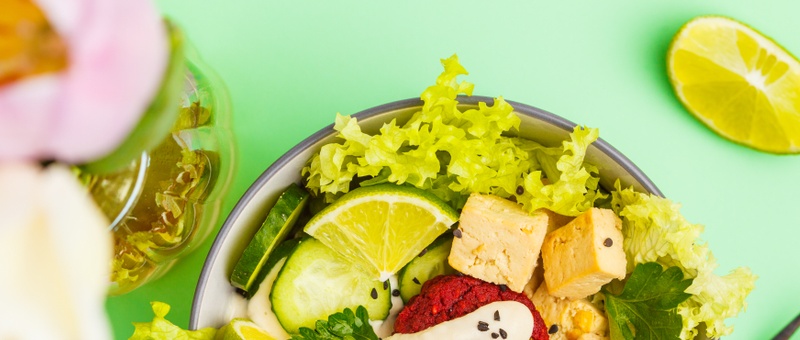
Plant-based diets are growing in popularity. People choose this way of eating for various reasons - to boost their health, help animals, and protect the environment. But switching to a plant-based diet may mean you're missing out on vital, bone-friendly nutrients. One of these is protein.
by Victoria Raw
Diet and nutrition
5 high-protein vegetarian meals to keep your strength up
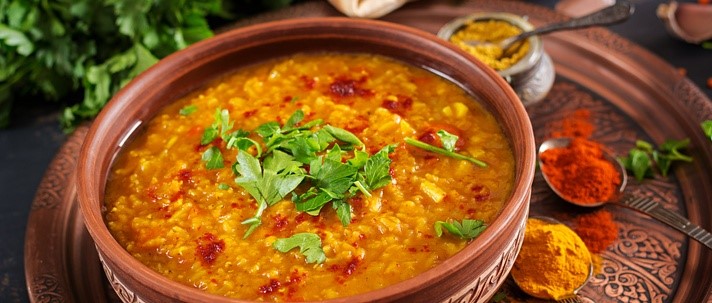
It wasn't long ago that people thought to be strong, toned and healthy you had to follow a meat-heavy diet. We now know that this is not the case, and vegetarian sources of protein can be used in a variety of exciting, nutritious, and delicious meals.
by Amberley Davis
Further reading and references
- Rogerson D; Vegan diets: practical advice for athletes and exercisers. J Int Soc Sports Nutr. 2017 Sep 13;14:36. doi: 10.1186/s12970-017-0192-9. eCollection 2017.
- Jequier E; Carbohydrates as a source of energy. Am J Clin Nutr. 1994 Mar;59(3 Suppl):682S-685S. doi: 10.1093/ajcn/59.3.682S.
- Ivy JL; Regulation of muscle glycogen repletion, muscle protein synthesis and repair following exercise. J Sports Sci Med. 2004 Sep 1;3(3):131-8. eCollection 2004 Sep.
- Iraki J, Fitschen P, Espinar S, et al; Nutrition Recommendations for Bodybuilders in the Off-Season: A Narrative Review. Sports (Basel). 2019 Jun 26;7(7):154. doi: 10.3390/sports7070154.
About the authorView full bio
Updated by

Lynn Stephen
Content developer
MA (Hons)
Lynn joined Patient in 2023 and her role includes checking all the professional leaflets, patient information leaflets and medicine leaflets, to ensure consistency of spelling, grammar, reference material and brand style, working with the medical authors and clinical director to coordinate the authoring and peer reviewing of the leaflets.
Authored by

Amberley Davis
Senior writer
BA (Hons), CPD
Amberley is a senior writer with Patient and has written extensively on a range of health and wellbeing topics.
About the reviewerView full bio

Dr Colin Tidy, MRCGP
General Practitioner, Medical Author
MBBS, MRCGP, MRCP (Paediatrics), DCH
Dr Colin Tidy is an NHS Doctor, based in Oxfordshire.
Article history
Article also available in English, German, Spanish, French, Italian, Portuguese, Hindi, Hebrew, Arabic, and Swedish.
Next review due: 7 Jul 2029
8 Jul 2026 | Latest version
1 Feb 2022 | Originally published
Authored by:
Amberley Davis
Join the conversation
Share your thoughts or experiences with others in our patient communities.

Ask, share, connect.
Browse discussions, ask questions, and share experiences across hundreds of health topics.

Feeling unwell?
Assess your symptoms online for free
Sign up to the Patient newsletter
Your weekly dose of clear, trustworthy health advice - written to help you feel informed, confident and in control.
By subscribing you accept our Privacy Policy. You can unsubscribe at any time. We never sell your data.