
Cow's milk allergy in babies: What is the milk ladder?
Peer reviewed by Dr Colin Tidy, MRCGPLast updated by Lawrence HigginsLast updated 10 Jun 2026
Meets Patient’s editorial guidelines
- DownloadDownload
- Share
- Language
- Discussion
- Audio Version
- Add to preferred sources on Google
It can be worrying if your baby is diagnosed with a cow’s milk allergy, but there’s a good chance your child will grow out of it. Most children will become tolerant to cow’s milk before the age of five, if they are gradually reintroduced to it in a process called the milk ladder.
What is a milk allergy?
Cow’s milk allergy, also known as a cow's milk protein allergy, is a reaction to the proteins found in cow's milk. The symptoms can appear either immediately after consuming cow's milk - an IgE mediated reaction - or the reaction may be delayed by up to 48 hours, a non-IgE mediated reaction. Some babies may have both immediate and delayed reactions.
Cow's milk allergy symptoms range from mild to severe and can include:
Bloody mucus in the stools.
Once your baby has received a diagnosis of a cow's milk allergy the goal is to manage the allergy to eliminate the symptoms. This means excluding cow's milk and foods containing cow's milk from their diet for a period of time, with the aim of reintroducing it later.
Often, cow's milk products can be introduced from 12 months of age, although this can depend on the child and the severity of their allergy. This process is called the milk ladder.
What is the milk ladder?
The milk ladder is a process by which cow's milk is introduced into a baby's diet very gradually. Each food that is introduced contains increasing levels of cow's milk protein. The process starts with cooked or processed milk products before moving onto raw, uncooked dairy items.
Who can use the milk ladder?
The milk ladder can only be followed by infants and children with a mild to moderate cow's milk allergy - a non-IgE mediated milk allergy. It is not suitable for children with a cow's milk allergy that results in severe or immediate allergic reactions, such as breathing problems and wheezing.
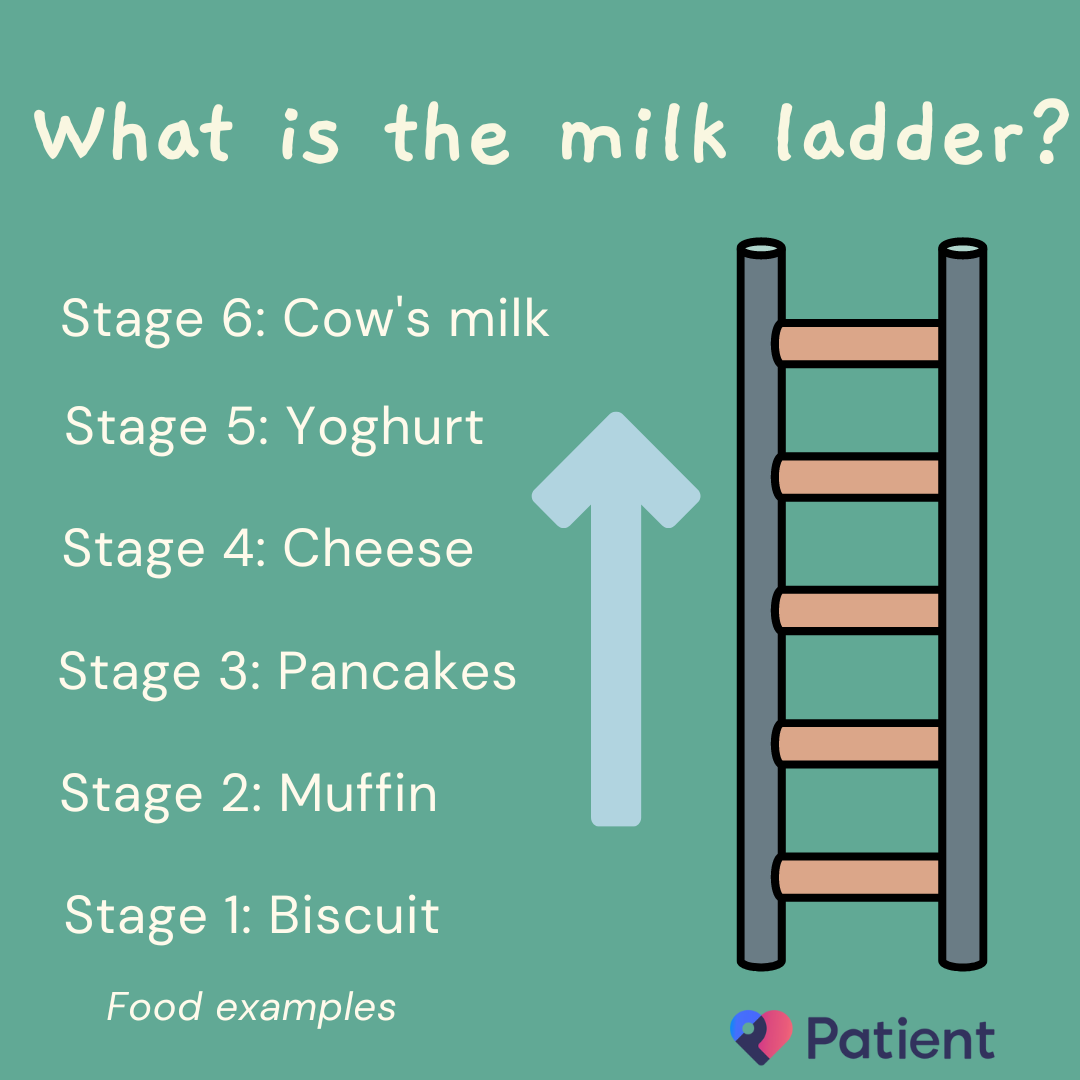
Milk ladder graphic
When should your baby start the milk ladder?
Normally, the milk ladder is only started once your child has been on a milk-free diet for at least six months and they are well.
Your doctor or dietitian will advise which step of the milk ladder to start on. Most children will start by trying the foods in the first step.
There are six steps on the milk ladder, which include specific foods and the amount you should give your baby. However, you may be advised to give your baby other quantities depending on their needs and you should always stick to the advice given by your doctor or dietitian.
Some of the foods included on the milk ladder may seem unusual, but they are included because they contain a specific amount of cow's milk protein which is suitable for the dairy reintroduction process.
You can speak to your doctor about using alternative foods to those suggested on the milk ladder.
You should only start the milk ladder when your child is healthy and well. It’s also a good idea to start it in the morning so you can monitor whether they have a reaction to the cow's milk over the day.
How long will the milk ladder take?
How long the reintroduction process takes depends on the child and how they react to dairy. Although many children do grow out of a cow's milk allergy, not all children are able to tolerate it.
Your child will only be able to move on to the next step on the milk ladder once they are fully tolerating the milk containing food in the step they are on. This means that they have been able to eat the food more than once, in the quantities suggested on the milk ladder and don’t suffer any allergic reactions as a result.
Sometimes, it can take up to two or three days for allergy symptoms to appear after eating a food. Therefore, it is advisable to allow at least three days on a step before considering whether to move up the milk ladder.
How to tell if your baby is reacting to foods on the milk ladder
Symptoms can include vomiting, stomach ache, bloating, diarrhoea, eczema, swelling to the face, and wheezing. Any allergic reactions that affect breathing should be treated as a medical emergency.
If your child has a severe or immediate reaction, stop the milk ladder and speak to your doctor before restarting it, or seek emergency treatment if necessary.
Patient picks for Food allergy and intolerance
Allergies, blood and immune system
How to introduce your baby to allergenic foods
Moving your baby on to solid foods can be a fun process, especially as you watch their faces as they try new flavours and textures. But it can also be nerve-wracking to introduce your baby to foods that can trigger an allergic reaction, such as peanuts or shellfish. So how can you do it safely?
by Lawrence Higgins

Allergies, blood and immune system
Could you have a nightshade allergy?
Do you have a sneaking suspicion that meals containing aubergines, peppers, or potatoes don't quite agree with you? We explore the difference between a nightshade allergy and a nightshade intolerance, plus the symptoms these foods can trigger in those who are susceptible.
by Elizabeth Sulis Kim
About the authorView full bio
Updated by

Lawrence Higgins
Managing editor
BSc, Post Graduate Diploma
Lawrence has worked as both Managing Editor of Patient.info and a contributing author. He is also a member of the Guild of Health Writers.
Authored by

Lydia Smith
Feature writer
BA, MA, MSc
Lydia Smith is an award-winning journalist and feature writer who has written extensively on women's health and mental health. She is currently studying for an MSc in psychology.
About the reviewerView full bio

Dr Colin Tidy, MRCGP
General Practitioner, Medical Author
MBBS, MRCGP, MRCP (Paediatrics), DCH
Dr Colin Tidy is an NHS Doctor, based in Oxfordshire.
Article history
Article also available in English, German, Spanish, French, Italian, Portuguese, Hindi, Hebrew, Arabic, and Swedish.
Next review due: 10 Jun 2029
10 Jun 2026 | Latest version
22 Nov 2022 | Originally published
Authored by:
Lydia Smith
Join the conversation
Share your thoughts or experiences with others in our patient communities.

Ask, share, connect.
Browse discussions, ask questions, and share experiences across hundreds of health topics.

Feeling unwell?
Assess your symptoms online for free
Sign up to the Patient newsletter
Your weekly dose of clear, trustworthy health advice - written to help you feel informed, confident and in control.
By subscribing you accept our Privacy Policy. You can unsubscribe at any time. We never sell your data.