Subdural haematoma
Peer reviewed by Dr Hannah Gronow, MBACPLast updated by Dr Gurvinder Rull, MBBSLast updated 24 Sept 2017
Meets Patient’s editorial guidelines
- DownloadDownload
- Share
- Language
- Discussion
- Audio Version
- Add to preferred sources on Google
This page has been archived.
It has not been reviewed recently and is not up to date. External links and references may no longer work.
A subdural haematoma is a collection of clotting blood that forms in the subdural space. This is the space between two of the meninges, which form the protective lining that covers the brain. It usually occurs because of a head injury. It is a serious condition and emergency treatment may be needed. A CT scan can show a subdural haematoma. An operation to remove the haematoma may be needed. Many people with a small subdural haematoma can make a quick and full recovery.
At a glance
A subdural haematoma is a collection of blood that forms in the space between the brain's protective layers.
It is often caused by a head injury, but can also occur due to blood clotting problems or medication.
Symptoms vary depending on how quickly the blood collects, and can include headache, confusion, and weakness.
If a subdural haematoma is suspected, you should go to hospital immediately.
Treatment can involve monitoring for small haematomas, or surgery to remove the blood.
What are the meninges and the subdural space?
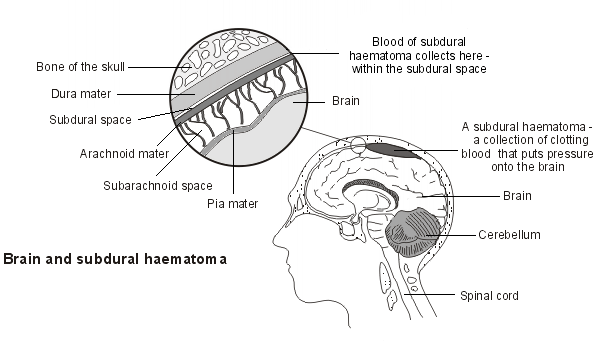
The meninges are the protective lining that surrounds the brain within the skull, and the spinal cord within the backbone.
There are three layers of meninges:
The outermost layer that lies next to the skull or the vertebral column is called the dura mater.
The middle layer is called the arachnoid mater.
The inner layer that is closest to the brain or the spinal cord is called the pia mater.
There are also three thin spaces between the layers of meninges:
The epidural space is the space between the vertebral column and the dura mater. (There is only a potential epidural space in the skull.)
The subdural space is the space between the dura mater and the arachnoid mater.
The subarachnoid space is the space between the arachnoid mater and the pia mater.
Subdural haematoma
What is a subdural haematoma and what causes it?
A subdural haematoma is a collection of clotting blood that forms in the subdural space. It usually occurs because of an injury to the head. For example, someone falling and hitting their head, or being involved in an accident that causes a head injury. The head injury can damage and cause bleeding from one or more blood vessels near to or within the subdural space. The blood from the bleeding blood vessel(s) collects in the subdural space. The head injury may also cause injury to the brain tissue at the same time.
Sometimes a subdural haematoma can be due to spontaneous bleeding and not as a result of injury. This can happen if you have a blood clotting problem and therefore are more likely to bleed. This can either be:
As a result of medication - for example, anticoagulants (such as warfarin) or one of the 'newer oral anticoagualants' known as NOACs (such as dabigatran, rivaroxaban and apixaban); or
As a result of a condition such as haemophilia or thrombocytopenia.
Another rare cause of a subdural haematoma is bleeding from a swollen blood vessel within the brain, called an aneurysm. The swelling makes the artery wall weaker and it can tear and cause bleeding.
A subdural haematoma may be:
Acute - where the blood collects quickly after a head injury; symptoms can occur immediately or within hours.
Subacute - where symptoms develop between 3-7 days after the injury.
Chronic - the blood collects slowly after a head injury; symptoms can occur 2-3 weeks after the initial injury.
Who gets a subdural haematoma?
A subdural haematoma can occur at any age. However, some people are more at risk of developing a subdural haematoma after a head injury:
Older people. In people over the age of 60 some of the blood vessels around the brain can become a little weaker. This makes them more susceptible to injury and bleeding. As we get older, the brain can shrink a little inside the skull. This puts extra strain on the blood vessels and makes them more likely to bleed after a head injury.
People who misuse alcohol. Alcohol misuse can affect the clotting of the blood. It can also cause a similar shrinking of the brain that happens as we get older. Also it can put extra strain on blood vessels and make them more likely to bleed. People who misuse alcohol are also more likely to fall over and hit their head.
People on anticoagulation treatment. Anticoagulation treatment (including treatment with aspirin, warfarin or a NOAC) can also make a subdural haematoma more likely after a head injury.
Babies. In babies a subdural haematoma can be caused by tearing of veins in the subdural space. This may be caused by physical abuse to the child. However, not all subdural haematomas in babies are caused by physical abuse and this should not be assumed. A subdural haematoma can also occur for other reasons in a baby or child. This is more likely to be an accidental head injury, for example.
How common is a subdural haematoma?
Head injuries are often minor and not serious. Most people with a minor head injury will not get a subdural haematoma.
However, one in three people with a severe head injury will have a subdural haematoma. For the reasons described above, it is more common with increasing age.
What are the symptoms of a subdural haematoma?
The brain, with the meninges covering it, fits tightly within the skull. If a subdural haematoma forms, the growing blood clot occupies space within the skull and squashes the brain tissue. It also causes the pressure within the skull (the intracranial pressure) to increase. This increase in pressure can mean that the brain is not able to function normally. Symptoms can start to develop then. Sometimes, however, small subdural haematomas do not produce any symptoms.
Acute subdural haematoma
The symptoms of an acute subdural haematoma usually appear soon after a head injury. This may be minutes to within 24-48 hours. You may black out at the time of the head injury but this does not always happen. You may have a period of a few hours after the head injury where you appear relatively well but later become unwell. You may pass out as the haematoma forms. If you do not pass out, you may feel drowsy or have a really bad headache. You may also feel sick (nausea) or be sick (vomit). You may also become confused and may develop weakness of the limbs on one side of your body and speech difficulties. Sometimes a fit (seizure) can occur.
Subacute subdural haematoma
The symptoms will be similar to the acute form described above (change in conscious level or becoming drowsy; headache, nausea and/or vomiting) but they will only become apparent after 3-7 days.
Chronic subdural haematoma
The symptoms of a chronic subdural haematoma do not usually appear until about 2-3 weeks after the initial head injury. In some people it may be months after the injury. In fact, often the injury may be relatively trivial or forgotten. In particular, this may occur in an older person taking anticoagulant medication, or in someone who misuses alcohol.
The symptoms tend to progress gradually. There is often appetite loss, nausea and/or vomiting. There is usually a headache that becomes progressively more severe. You (or others) may notice gradually worsening weakness of the limbs on one side of the body, speech difficulties or visual disturbance. There may also be increasing drowsiness and confusion or personality changes. Sometimes a seizure can occur. A chronic subdural haematoma can be difficult to detect and can go unrecognised for some time.
What tests are needed for a suspected subdural haematoma?
Someone with a suspected subdural haematoma should be seen in a hospital immediately. It is a serious condition and emergency treatment may be needed. A full examination will be done to look for signs of a possible subdural haematoma and for signs of any other injury that you may have. They will be able to check your level of consciousness, look for any signs of limb weakness and also examine the back of your eyes to look for any signs of raised pressure within the skull.
Blood tests may be taken to look for other possible reasons for why you are confused or have passed out. Blood tests may also show any problems with blood clotting. A computerised tomography (CT) scan of the head (or sometimes a magnetic resonance imaging (MRI) scan) is good at detecting a subdural haematoma. You may also need other scans or X-rays, depending on whether any other injuries are suspected.
What is the treatment for a subdural haematoma?
The treatment will depend on whether the haematoma is sudden (acute) or long-standing (chronic), the size of the haematoma, and the symptoms that you have.
If there is a small, acute subdural haematoma that is not producing any symptoms (or the symptoms are not severe), it can sometimes be treated just by careful monitoring and observation. The blood clot is left to re-absorb and clear by itself. Repeated physical examinations are usually carried out to assess your level of consciousness and to look for any symptoms that may appear, such as headache, limb weakness, etc. Repeated CT scanning may also be used to ensure that the haematoma is not increasing in size. Surgery is usually needed to treat a subdural haematoma if symptoms start to appear and the person's condition worsens.
Surgery may be used at the outset if there is a large subdural haematoma, there are signs of raised pressure within the skull or there are problems such as limb weakness or speech disturbance. Surgery involves either making holes in the skull (called burr holes) or an operation called a craniotomy.
Burr holes are small holes that are drilled through the skull over the area where the subdural haematoma has formed. They allow the blood to be removed or sucked out through the holes. Stitches or staples are then used to close the incision.
A craniotomy entails a portion of the skull being removed so that the brain and meninges are exposed. It can relieve any raised pressure inside the skull and also means that the clotting blood in the subdural space can be removed. The section of skull that was removed is then replaced and fixed back in place.
What is the outlook for people with a subdural haematoma?
The outlook (prognosis) will depend on the severity of the initial head injury that caused the subdural haematoma. Many people with a small subdural haematoma can make a quick and full recovery. If there is no damage to underlying brain tissue, 4 out of 5 people with an acute subdural haematoma survive. If there is also damage to the brain tissue, the outlook is usually worse (than if there is no brain tissue damage). Some people die as a result of the effects of a large haematoma on the brain.
Infection or meningitis can be a complication after surgery for subdural haematoma. Sometimes as a result of the clot pressing on the brain there may be permanent damage such as weakness of the limbs, speech impairment or memory problems. If this is the case, rehabilitation and support from physiotherapists, occupational therapists and speech therapists may help to improve a person's function.
Can a subdural haematoma be prevented?
If you are taking anticoagulant medication, make sure that you attend for your regular blood tests (although these are not usually required if taking a NOAC). These are to check that you are taking the correct dose and that your blood is not becoming too thin. If your blood becomes too thin, you are more likely to experience a subdural haematoma if you fall over and hit your head.
Everyone should also take care to try to reduce the risk of falling and hitting their head. This may include simple measures around the home such as removing loose rugs and other obstacles. People who have problems with the amount of alcohol that they drink may also wish to seek help to cut down on their drinking.
If you or your children take part in sports such as cycling, rollerblading, skiing, boxing or skateboarding, you should wear a helmet/protective headgear to reduce the risk of serious head injury.
Patient picks for Head injury

Brain and nerves
Concussion
Concussion is a mild traumatic brain injury that can happen after a blow to the head or a sudden, severe jolt.
by Dr Philippa Vincent, MRCGP
Brain and nerves
Post-concussion syndrome
Concussion is an injury to your brain that can occur after a minor head injury. Post-concussion syndrome is a collection of symptoms that some people develop after they have had concussion. It is a complication of concussion. Common symptoms of post-concussion syndrome can include headache, dizziness and memory and concentration problems. Symptoms usually clear within three months after the initial head injury. Treatment is aimed at relieving symptoms. Many people find that it helps to have a diagnosis and explanation for their symptoms.
by Dr Toni Hazell, FRCGP
Frequently asked questions
What does subdural mean?
The term 'subdural' refers to the location of the haematoma. It specifically means 'below the dura mater', which is the outermost protective lining of the brain. The subdural space is the area between this dura mater and the arachnoid mater, the middle layer of the brain's protective coverings.
Are all headaches a sign of a subdural haematoma?
No, not all headaches indicate a subdural haematoma. While a significant headache can be a symptom, especially if it's severe or progressively worsening after a head injury, many headaches are not related to this condition. Other symptoms like changes in consciousness, weakness on one side of the body, or speech difficulties would also typically be present if a subdural haematoma was causing symptoms.
Can a mild head injury cause a subdural haematoma?
Yes, a subdural haematoma can occur even after a relatively trivial or forgotten head injury, especially in older people or those on anticoagulant medication. While most minor head injuries are not serious, the severity of the initial injury doesn't always directly correlate with the development of a chronic subdural haematoma, which can take weeks or months to show symptoms.
What is the difference between an acute and chronic subdural haematoma?
The main difference between acute and chronic subdural haematomas lies in the speed of blood collection and symptom onset. An acute haematoma involves blood collecting quickly after an injury, with symptoms appearing immediately or within hours. A chronic haematoma involves blood collecting slowly, and symptoms may not appear until 2-3 weeks, or even months, after the initial, often minor, head injury.
How long does it take to recover from a subdural haematoma?
The recovery period for a subdural haematoma varies significantly depending on several factors, including the severity of the original head injury, the size of the haematoma, and whether there was any underlying brain tissue damage. Many individuals with a small haematoma and no brain damage can make a quick and full recovery. However, if there's extensive brain tissue damage or complications from surgery, recovery might be longer and could involve rehabilitation for permanent damage such as weakness or speech issues.
If I am on blood thinners and hit my head, what should I do?
If you are on blood thinners (anticoagulant medication) and hit your head, it's particularly important to be vigilant for symptoms of a subdural haematoma. The article indicates that people on these medications are at higher risk. Although not explicitly stated, any significant head injury, especially accompanied by symptoms like headache, confusion, or weakness, warrants immediate medical attention, as a subdural haematoma can be serious and may not show immediate symptoms.
Further reading and references
- Head injury: assessment and early management; NICE Clinical Guideline (January 2014, updated September 2019) (Replaced by NG232 (refid=66597)
- Head injury; NICE CKS, July 2016 (UK access only)
- ACS TQIP Best Practices in the Management of Traumatic Brain Injury Jan 2015
About the authorView full bio

Dr Gurvinder Rull, MBBS
Medical Author, Consultant: Clinical Pharmacology, Therapeutics and General Internal Medicine
BSC (Hons), MBBS, FRCP, MA (Medical Ethics)
Dr Gurvinder Rull qualified in 2000, joining EMIS’s content authoring team (now Patient.info) in 2007.
About the reviewerView full bio

Dr Hannah Gronow, MBACP
General Practitioner
MB, ChB, MBACP
Hannah qualified as a GP in 1997. She joined EMIS (Patient) as a peer reviewer in August 2006.
Article history
The information on this page is written and peer reviewed by qualified clinicians.
Article also available in English, German, Spanish, French, Italian, Portuguese, Hindi, Hebrew, Arabic, and Swedish.
24 Sept 2017 | Latest version
Join the conversation
Share your thoughts or experiences with others in our patient communities.

Ask, share, connect.
Browse discussions, ask questions, and share experiences across hundreds of health topics.

Feeling unwell?
Assess your symptoms online for free
Sign up to the Patient newsletter
Your weekly dose of clear, trustworthy health advice - written to help you feel informed, confident and in control.
By subscribing you accept our Privacy Policy. You can unsubscribe at any time. We never sell your data.